

Why AI Powered Automation is Reshaping Modern Business
For large companies competing in crowded markets, AI powered automation is becoming a core part of modern SEO strategy. By combining automation with machine learning and natural language processing, enterprises can manage large, complex digital footprints at scale while maintaining high-quality optimization across thousands of pages and multiple markets.
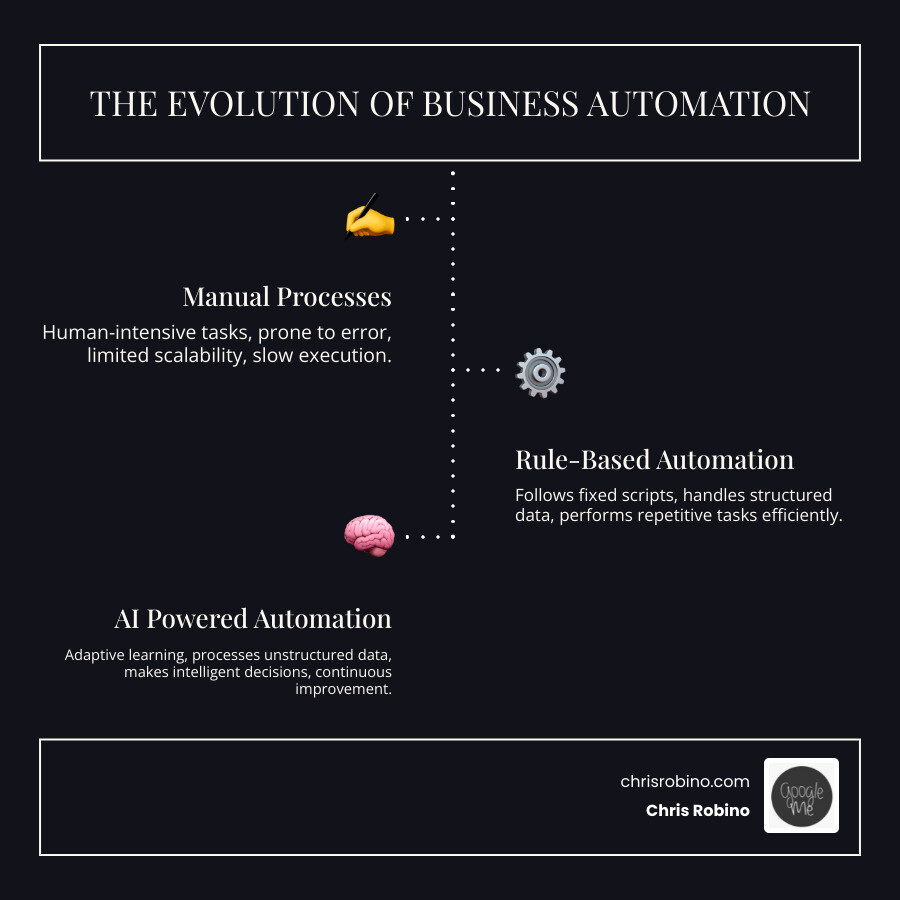
Unlike rigid, rule-based automation, AI-powered systems learn from data, adapt to new scenarios, and make intelligent decisions. Applied to SEO, that means:
- Dynamically optimizing large websites with millions of URLs
- Scaling content production without sacrificing quality
- Continuously testing and refining on-page and technical elements
- Responding quickly to search trend shifts and algorithm changes
Quick Answer: How AI Powered Automation Elevates Enterprise SEO
- Unifies SEO efforts across global sites, brands, and teams
- Automates analysis of millions of keywords and pages
- Improves content relevance and search intent matching
- Maintains high technical quality at scale
- Speeds up experimentation and A/B testing
- Surfaces strategic insights for executives and stakeholders
For large organizations, SEO is no longer just about keywords on a page. It’s an operational capability: the ability to consistently structure, publish, and optimize content in a way that search engines and users trust. AI powered automation supports this by handling the heavy lifting—data processing, pattern detection, and routine optimization—so teams can focus on strategy, brand, and high-impact initiatives.
As search becomes more AI-driven, enterprise SEO strategies must evolve. The goal is not only better rankings, but also consistent visibility across regions, devices, and formats, while preserving governance, compliance, and brand standards.
Your Strategic Blueprint for AI Powered Automation in Enterprise SEO
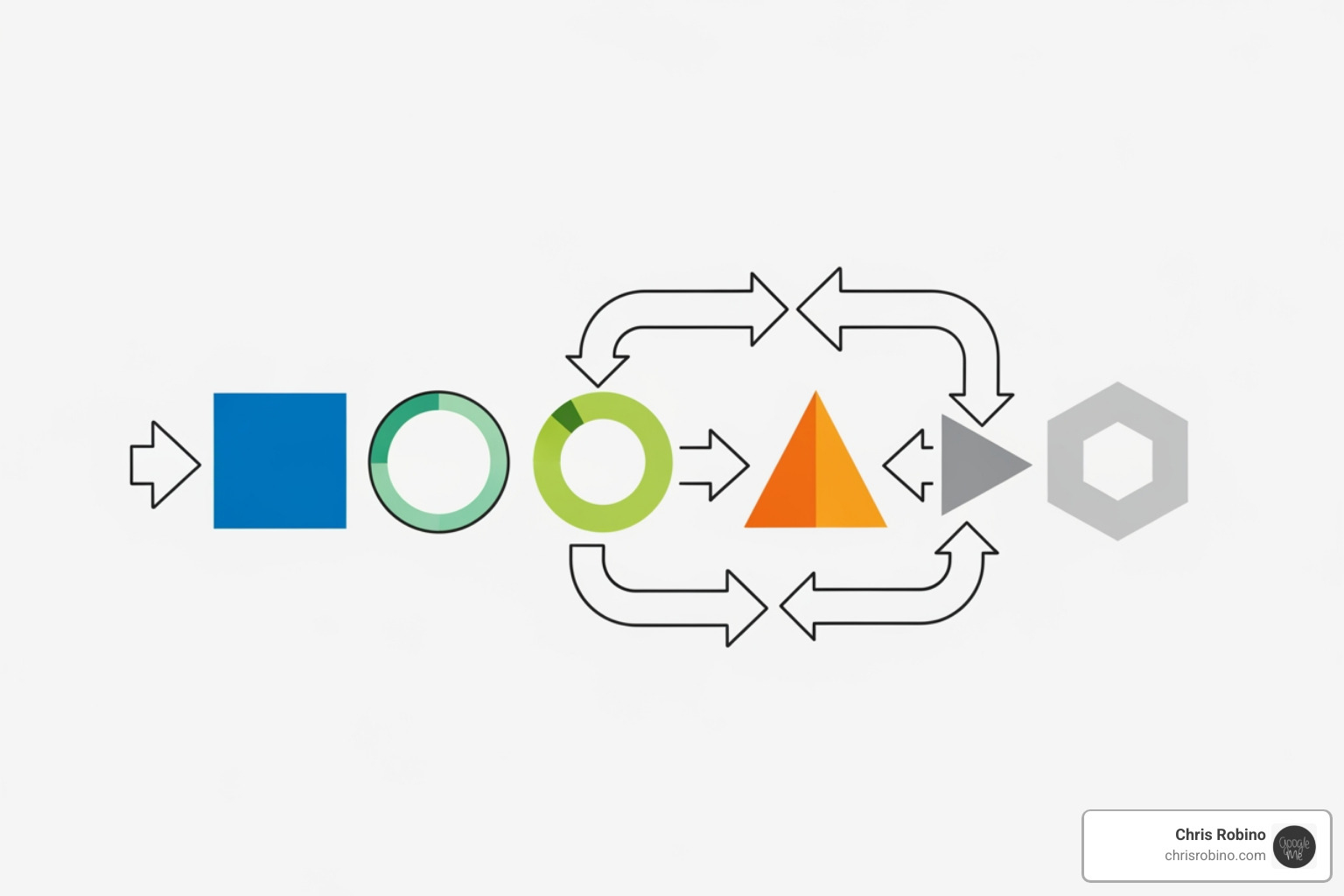
An AI powered automation journey for SEO requires a clear strategic blueprint. Large companies must coordinate multiple teams, systems, and markets while avoiding fragmentation and duplicated work. The objective is to build sustainable, repeatable SEO performance that aligns with broader digital and business goals.
Defining the Technology: What Sets AI Automation Apart for SEO?
AI powered automation in SEO uses AI to analyze search behavior, content performance, and technical signals across massive datasets. It enables:
- Automated keyword and topic clustering at scale
- Intent-based content planning and optimization
- Large-scale technical health monitoring
- Intelligent internal linking recommendations
- Continuous performance forecasting and anomaly detection
How does this differ from traditional automation?
- Traditional Automation: Relies on simple scripts and rules (for example, basic XML sitemap generation or templated metadata). It works for predictable, repetitive tasks but struggles with nuanced tasks like understanding user intent or prioritizing changes by business impact.
- AI Powered Automation: Learns from real performance data, adapts to changing search behavior, and handles unstructured information such as long-form content, user queries, and regional variations.
Key components include:
- Artificial Intelligence (AI): The “brain” that powers keyword intent analysis, content scoring, and predictive modeling for traffic and rankings.
- Robotic Process Automation (RPA): The “hands” that apply changes at scale—updating metadata, fixing broken links, and standardizing tags across thousands of pages.
- Business Process Management (BPM): The “nervous system” that coordinates approvals, content workflows, localization, and cross-team collaboration.
AI can be used to power existing SEO workflows (AI-powered) or to become the central driver of decisions (AI-driven), such as automated prioritization of technical issues based on revenue impact. For large companies, the right balance is typically a hybrid model: AI recommends and automates where appropriate, while humans set strategy and guardrails.
Opening Up the Benefits: Why Large Companies Should Invest in AI Powered SEO Automation
Enterprise SEO challenges are different from those of smaller organizations: complex site structures, multiple brands, international domains, strict compliance rules, and many stakeholders. AI powered automation directly addresses these challenges.
Key benefits include:
-
Consistent On-Page Optimization at Scale
AI can recommend and help implement optimized titles, meta descriptions, headings, and schema markup across extensive page sets. This ensures that large catalogs—such as product, service, or content libraries—adhere to best practices without requiring manual page-by-page work. -
Better Alignment With Search Intent
By analyzing query patterns, click behavior, and content performance, AI models help align pages with user intent (informational, navigational, transactional, or local). This is crucial for large companies covering many topics or product categories. -
Stronger Technical Foundation Across Complex Sites
AI can continuously scan for crawl issues, indexation gaps, page speed problems, and structured data errors. It then helps prioritize fixes based on potential impact, ensuring that SEO efforts focus where they matter most. -
Improved Global and Multilingual SEO
Large companies often operate in multiple regions and languages. AI helps manage hreflang, regional content variations, and localized keyword strategies, reducing duplication and avoiding conflicts between markets. -
Data-Driven Content Strategy
AI aggregates search trends, competitive gaps, and performance metrics to recommend content themes, clusters, and refresh opportunities. This leads to more focused editorial calendars and better use of existing assets. -
Faster Experimentation and Learning
AI powered automation makes it easier to run SEO experiments (such as template changes, internal link adjustments, or structured data tests) and measure their impact quickly, guiding continuous improvement.
For large organizations, these benefits translate into more stable organic visibility, greater resilience to algorithm shifts, and better integration of SEO into overall digital strategy.
Building the Business Case for Executive Buy-In
To secure investment in AI powered SEO automation, the business case must connect directly to strategic priorities.
Key steps:
-
Align With Corporate Objectives
Show how improved organic visibility supports revenue growth, lead generation, customer acquisition cost reduction, and brand authority. -
Quantify the Opportunity
Use baseline data: current organic traffic, conversion rates, and revenue contribution. Estimate impact from improved rankings, click-through rates, and coverage of high-value queries. -
Frame SEO as a Scalable Asset
Emphasize that AI-powered SEO builds long-term value: content, technical foundations, and domain authority that continue to pay off over time. -
Highlight Risk Reduction
Explain how better technical monitoring and governance reduce the risk of traffic loss from site migrations, redesigns, or platform changes. -
Propose a Phased Rollout
Start with focused pilots—such as optimizing a key product category or a single region—and then expand to entire domains and markets once value is proven. -
Define Clear Ownership and Governance
Clarify how Marketing, Product, IT, and Analytics will collaborate. Set roles for approvals, change management, and ongoing oversight so automation doesn’t introduce inconsistency or compliance issues.
A structured, data-backed business case makes AI powered automation a clear enabler of enterprise SEO success rather than a purely technical initiative.
Overcoming Implementation Problems and Challenges
Implementing AI powered automation for SEO in large organizations brings specific challenges.
Common issues and responses:
-
Fragmented Websites and Tech Stacks
Large companies often have multiple CMS platforms, subdomains, and legacy systems.- Solution: Prioritize high-impact properties first, standardize core SEO templates, and use integration layers or APIs to connect AI tools with various platforms.
-
Data Silos
SEO, paid media, analytics, and product data may live in separate systems.- Solution: Establish a central data layer or warehouse and connect AI systems to it. Align metrics and definitions across teams to enable accurate modeling and reporting.
-
Change Management and Governance
Automated changes at scale can create concern around risk and control.- Solution: Implement approval workflows, version control, and sandbox environments. Start with read-only recommendations, then gradually allow automated execution under defined rules.
-
Skill Gaps in SEO and AI
Teams may have strong marketing or technical expertise but limited exposure to AI-driven workflows.- Solution: Invest in training that covers both SEO fundamentals and how AI models work in practice. Empower a core team to champion best practices and documentation.
-
Regulatory and Brand Compliance
Content and metadata must follow regulatory, legal, and brand guidelines.- Solution: Encode constraints into automation rules and review processes. Require human review for sensitive content areas while automating safer, low-risk changes.
Addressing these challenges proactively ensures AI powered SEO automation supports, rather than disrupts, enterprise operations.
The Future of SEO: Human-AI Collaboration and Enterprise-Grade Automation
The future of AI powered automation in SEO is built on collaboration. AI systems will increasingly handle the scale, complexity, and pattern recognition, while human teams provide strategy, creativity, domain knowledge, and ethical oversight.

Key trends for large companies:
-
AI Agents for SEO Operations
AI agents will monitor site health, surface opportunities, and propose prioritized SEO tasks. They may manage recurring workflows such as redirect management, internal linking, and structured data upkeep. -
Unified Search Strategy Across Channels
Organic search insights will inform paid media, product development, and content strategy. AI will help identify patterns that span search, social, and on-site behavior. -
Richer, More Structured Content
As search engines rely more on structured data and semantic understanding, AI will help generate and maintain schema markup and knowledge-graph-friendly content at scale. -
Continuous Optimization, Not One-Off Projects
Instead of periodic SEO overhauls, large organizations will adopt continuous, AI-assisted optimization loops—measure, learn, adjust—embedded into regular digital operations. -
Evolving Skills and Roles
SEO professionals will spend less time on manual audits and more time on strategy, experimentation design, and interpreting AI-driven insights. New hybrid roles will emerge that bridge marketing, data science, and engineering.
Conclusion: Begin Your Change
For large companies, AI powered automation is a practical path to high-performing, scalable SEO. It moves optimization beyond manual checklists and isolated initiatives to a disciplined, data-driven capability integrated across teams, channels, and markets.
By combining AI with clear governance and human expertise, enterprises can:
- Maintain strong technical health across complex sites
- Align content with real user intent at scale
- React quickly to changes in search behavior and technology
- Turn SEO into a durable, compounding growth engine
The most effective way to start is small and focused: select a high-value area, apply AI powered automation under defined guardrails, measure the impact, and then expand. Over time, this approach builds a culture of continuous optimization that keeps your organization visible, competitive, and prepared for the future of search.