

Why Enterprise SEO Is Your Strategic Compass
Enterprise SEO is the disciplined, scalable approach to organic growth for large organizations. It blends technical excellence, content at scale, and rigorous governance to compound visibility, demand, and revenue across expansive websites, complex tech stacks, and multiple business units.
What sets enterprise SEO apart isn’t a different playbook—it’s the ability to operationalize the fundamentals at scale. Hundreds of thousands of URLs, dynamic templates, global footprints, cross-functional teams, and strict compliance requirements demand a program that is systematic, test-driven, and built for collaboration.
Done right, enterprise SEO becomes a strategic growth engine. It:
- Builds durable, compounding traffic that reduces dependency on paid channels.
- Increases discoverability across the full funnel—from informational queries to high-intent commercial searches.
- Expands total addressable demand by earning visibility in new regions, languages, and product lines.
- Improves customer experience through faster pages, cleaner architecture, and more relevant content.
The risk for large companies is rarely a lack of opportunity—it’s fragmentation: disconnected site sections, inconsistent governance, slow publishing cycles, technical debt, and unclear ownership. A modern enterprise SEO program solves that with clear strategy, shared metrics, automation where it helps, and high-quality human review where it matters.
As Chris Robino, I’ve spent over two decades helping organizations turn organic search into a strategic asset. The lesson is consistent: the winners operationalize SEO, not as a campaign, but as a product—prioritized, resourced, measured, and continuously improved.
The Enterprise SEO Playbook: What Scales and What Works
At scale, SEO is a systems problem. You need the right pillars, governance, and measurement in place so improvements cascade across templates, components, and markets.
Pillars of Enterprise SEO
1) Technical foundation
- Crawl efficiency: Optimize faceted navigation, parameters, and pagination to prevent index bloat. Use robots directives, canonical tags, and sitemaps to guide findy.
- Rendering and performance: Ensure server-side or hybrid rendering for critical pages; meet Core Web Vitals and tune for mobile-first indexing. Monitor at the template level.
- Information architecture: Create clear hierarchies, logical pathways, and descriptive internal links that map to user intent and demand. Prioritize hubs and clusters.
- Structured data: Use schema to clarify entities, products, how-to content, reviews, and events to qualify for rich results.
- Internationalization: Implement correct hreflang, language declarations, and site structures (ccTLDs, subfolders, or subdomains) aligned with org realities.
2) Content at scale
- Demand-led taxonomy: Build an entity- and topic-based content map that captures the full buyer journey: problems, solutions, products, and post-purchase needs.
- Template-driven creation: Use reusable page templates (product, category, comparison, guides) with strict quality standards. Scale production with human editorial oversight.
- Depth and authority: Establish pillar pages supported by clusters that answer intent comprehensively. Incorporate first-party data, case studies, and subject-matter expertise.
- Freshness and maintenance: Institute content lifecycle management (audits, updates, consolidations, and redirects) to preserve equity and relevancy.
3) Authority and trust
- Digital PR and editorial partnerships: Earn high-quality coverage tied to original insights and useful assets—maps, tools, reports, and research.
- Reputation and E-E-A-T: Showcase expertise with clear authorship, credentials, references, and helpful policies. Align content with real-world authority and brand values.
- Brand search and SERP control: Optimize for branded queries, manage site links, and publish official resources that answer navigational and support intent.
4) Analytics and governance
- Shared KPIs: Agree on non-brand organic growth, share of voice, qualified traffic, conversions, revenue contribution, and technical health indices.
- Workflow and ownership: Create an SEO council, align on a clear RACI across product, engineering, content, and legal. Set SLAs for deployments and fixes.
- Experimentation: Run controlled tests by template/segment. Quantify impact before and after changes. Prioritize the roadmap by estimated value and confidence.
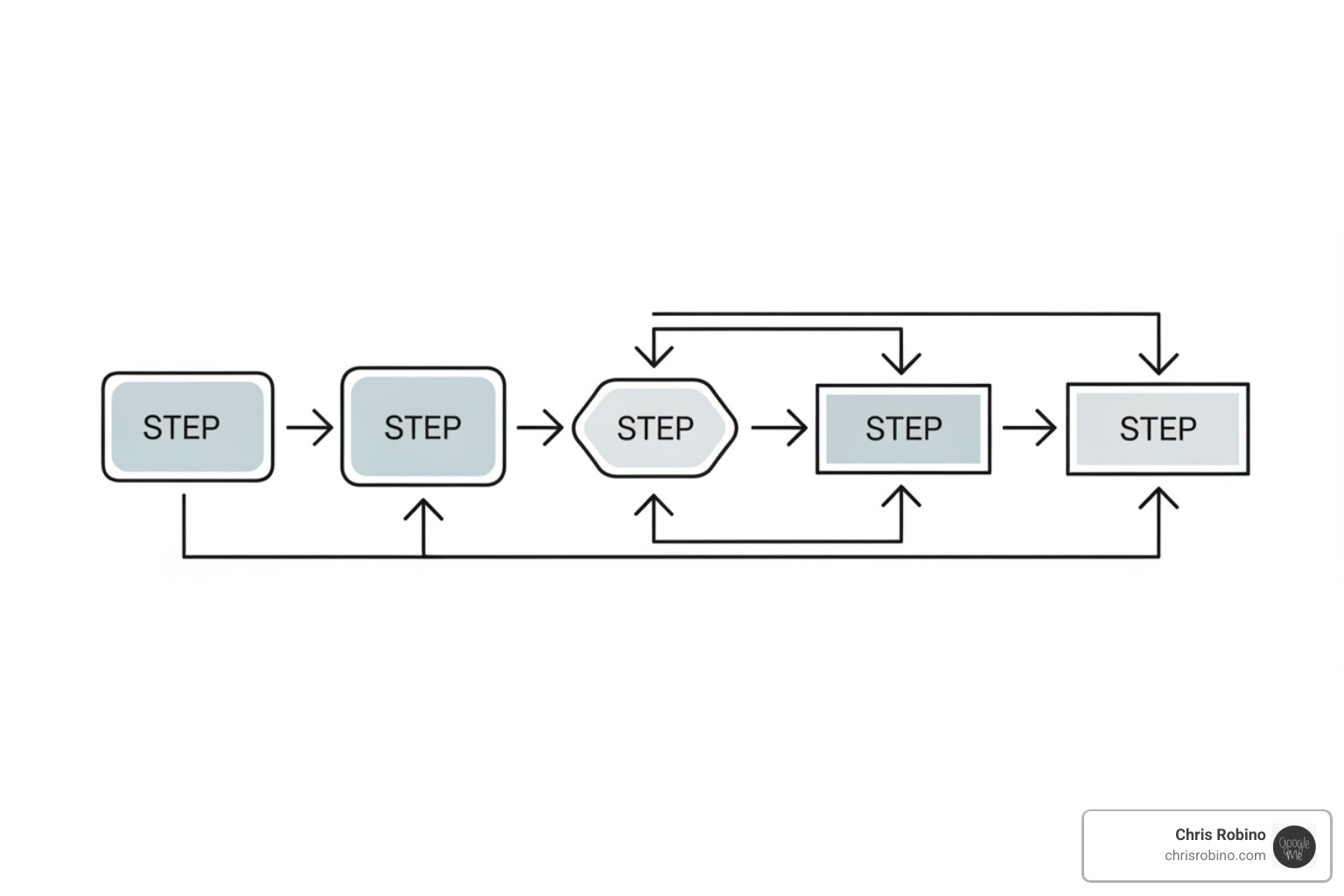
Step-by-Step: How Large Companies Operationalize SEO
1) Align on objectives and scope
- Define what success looks like: new-market entry, category dominance, improved conversion, lower acquisition cost, or product-led growth.
- Choose primary KPIs and leading indicators, segmented by business line and region.
2) Audit with precision
- Technical audit: Crawl your full site and log files; map indexable vs. non-indexable pages; identify duplication, thinness, and rendering issues; profile performance by template.
- Content audit: Inventory pages, topics, and performance. Identify overlap, gaps, and cannibalization; score content quality, depth, and intent match.
- SERP audit: Analyze features by query class (snippets, PAA, video, images, shopping) and patterns in search results. Map opportunities to markup and media formats.
3) Build the strategy and roadmap
- IA and template plan: Restructure hubs and clusters, improve internal links, and update templates to reflect intent and schema. Consolidate redundant content.
- Content plan: Prioritize topics by demand, business value, and difficulty. Balance net-new creation with updates, expansions, and de-indexing where appropriate.
- Technical plan: Sequence high-impact fixes (crawl, indexation, rendering, vitals) with realistic sprint planning; set error budgets and monitoring.
4) Implement with robust processes
- Governance: Establish a single source of truth for guidelines, workflows, and standards. Bake SEO checks into PR reviews and CI/CD pipelines.
- Localization and international: Use translation memories and in-market editors. Respect cultural nuance and legal requirements. Validate hreflang in staging.
- Compliance and brand: Collaborate early with legal, accessibility, and brand teams so SEO-friendly templates pass reviews without rework.
5) Measure, learn, and scale
- Reporting: Segment performance by intent, template, and market. Track non-brand growth, conversion rates, assisted revenue, and total search share.
- Testing: Use holdout groups or template-level experiments. Validate impact on both rankings and business outcomes.
- Continuous improvement: Institutionalize quarterly audits, content refreshes, and regression checks after deployments.
Technical Priorities That Move the Needle
- Crawl and indexation control: Ensure only valuable, unique pages are indexable. Use canonicals, noindex, and parameter handling to prevent duplication and bloat.
- Site speed and Core Web Vitals: Prioritize LCP, CLS, and INP fixes at the component and CDN level. Reduce JS, defer non-critical resources, optimize images, and cache strategically.
- JavaScript SEO: Where client-side rendering is needed, enable hydration or server rendering for critical content; pre-render at scale where viable.
- Structured data: Implement schema across core templates and validate continuously. Track rich result eligibility and CTR deltas.
Content Systems That Win at Scale
- Intent mapping: Group keywords by intent and journey stage; write to the question behind the query. Avoid thin variations—consolidate and deepen.
- Editorial operations: Create briefs with entity coverage, expert inputs, and sources. Enforce review, fact-check, and brand voice.
- Media diversity: Earn visibility in universal search by incorporating images, short-form video, and step-by-step formats where they match intent.
- Maintenance program: Update statistics, retire outdated pages, 301 to the best canonical, and refresh high-potential underperformers.
Digital PR and Link Earning for Enterprises
- Newsworthy assets: Publish original research, interactive tools, and proprietary data stories. Pitch to relevant publications with clear angles.
- Brand-aligned outreach: Build relationships in your category, academic circles, and industry groups. Focus on relevance and editorial value.
- Risk management: Avoid tactics that jeopardize domain trust. Think reputation-first; links follow value.
Local and International SEO at Scale
- Multi-location excellence: Standardize store pages, manage NAP consistency, automate listings, and publish localized content and offers. Monitor reviews and Q&A.
- Global structure: Choose ccTLDs, subfolders, or subdomains based on resources, legal, and analytics needs. Implement hreflang and regional content differentiation.
- In-market content: Go beyond translation—localize examples, pricing, units, and regulations. Empower regional teams with guidelines and guardrails.
AI in Enterprise SEO: Acceleration with Accountability
AI can speed up research, clustering, outline creation, and metadata drafting. It can also help predict demand shifts and surface technical anomalies. Guardrails are essential:
- Human-in-the-loop: All public content should be edited by subject-matter experts and brand editors for accuracy, originality, and tone.
- Source transparency: Reference primary data and validate facts. Avoid generic output that reduces authority and user trust.
- Governance and QA: Maintain model usage policies, plagiarism checks, and bias reviews. Measure outcomes, not just velocity.
Measurement, Forecasting, and Executive Communication
- KPIs that matter: Non-brand organic sessions, qualified visits, assisted and last-click conversions, revenue, and cost avoidance vs. paid.
- Share of voice: Track coverage across priority topics and markets. Benchmark against category demand and seasonality.
- Forecasts: Use historical trends, backlog impact models, and testing data to project gains by template and initiative.
- Executive-ready reporting: Tie initiatives to revenue, risk reduction, and strategic goals. Present clear roadmaps, dependencies, and expected impact.
Common Pitfalls—and How to Avoid Them
- Index bloat from filters and duplicate pages: Control parameters, canonicalize properly, and prune low-value URLs.
- Cannibalization from overlapping content: Consolidate, set canonicals, and clearly differentiate intent.
- Slow cycles and missed windows: Pre-negotiate SLAs, plan content around known launches, and parallelize production.
- Overreliance on vanity metrics: Anchor decisions in qualified traffic and revenue contribution.
Enterprise SEO thrives when strategy meets operations. The aim is not just higher rankings—it’s durable, efficient growth aligned to real business outcomes.
Conclusion: Operational SEO for Durable Enterprise Growth
Enterprise SEO rewards organizations that treat organic search like a core product. With strong technical foundations, intent-led content at scale, trustworthy authority signals, and rigorous governance, large companies can convert complexity into compounding advantage.
The keys are clarity and cadence: clear objectives, shared metrics, prioritized roadmaps, accountable ownership, and an iterative release-and-learn rhythm. Pair this with disciplined measurement—by template, intent, and market—and you’ll know exactly which levers move revenue, reduce acquisition costs, and expand demand.
Invest in the systems: crawl control, performance, structured data, robust templates, editorial excellence, and international readiness. Use AI to accelerate, not replace, expert judgment. Strengthen relationships through credible digital PR and in-market relevance. Above all, ensure every improvement is designed to scale across components, products, and regions.
When enterprise SEO becomes operational and measurable, it shifts from a marketing tactic to a strategic growth engine—resilient, cost-effective, and aligned to long-term value.