

What Is Digital Media Distribution?
Digital media distribution is the delivery of content — audio, video, text, and software — through digital platforms like the internet, bypassing physical formats like CDs, DVDs, or printed books. For large-scale enterprises, this process is inextricably linked to advanced Search Engine Optimization (SEO) strategies. When an organization manages thousands or millions of digital assets, the challenge shifts from simple delivery to global discoverability. Enterprise SEO focuses on creating a robust technical foundation that allows search engines to crawl and index massive libraries of media efficiently, ensuring that content reaches the intended audience in a crowded digital marketplace.
Here is a quick breakdown of the landscape:
| Aspect | Digital Distribution | Physical Distribution |
|---|---|---|
| Delivery method | Internet, apps, streaming | Stores, mail, physical media |
| Access speed | Instant | Days to weeks |
| Geographic reach | Global | Limited by logistics |
| Cost to distribute | Low | High (manufacturing + shipping) |
| Consumer control | On-demand | Fixed formats and locations |
The shift has been dramatic. In recent years, streaming services have accounted for the vast majority of music industry revenue, while physical formats have seen a steady decline. Digital video rentals and sales have reached billions of dollars annually, even as physical movie sales continue to fall. This transition necessitates a sophisticated approach to SEO, particularly for large companies that must maintain visibility across diverse geographic regions and languages.
This is not just a technology story. It is a story about power — who controls what content reaches whom, on which platforms, and under what terms. From major streaming platforms to independent creators uploading directly to global services, digital distribution has fundamentally changed who gets to be a gatekeeper of culture. For large corporations, the “gatekeeper” is often the search algorithm, making technical SEO a primary driver of business growth.
I’m Chris Robino, a digital strategy leader with over two decades of experience helping organizations navigate digital transformation — including the shifting dynamics of digital media distribution across search, AI, and content ecosystems. In the sections ahead, we will break down exactly how this system works and how enterprise-level SEO strategies can be leveraged to dominate the digital landscape.
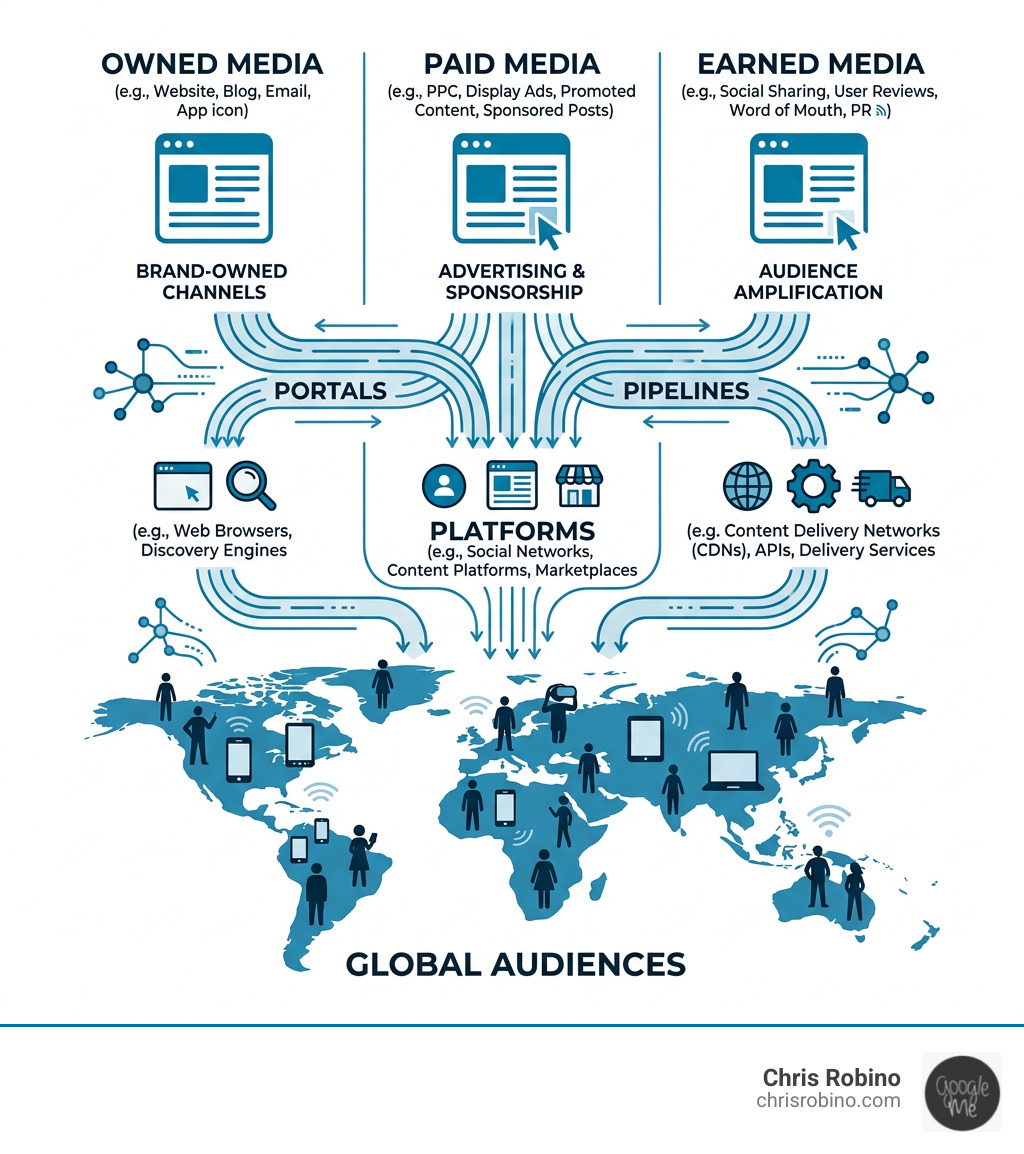
Essential Digital media distribution terms:
The Evolution and Mechanics of Digital Media Distribution
The journey from physical tapes to high-speed data streams has been a revolution. Today, media is delivered via Digital distribution protocols that prioritize speed, scalability, and high availability. For large companies, the mechanics of this shift rely on the ability to move massive amounts of data across the globe in milliseconds while maintaining search engine visibility. This requires a sophisticated infrastructure of internet protocols that allow for scientific research on digital impact to be shared instantly among millions of users.

Enterprise SEO Strategies for Large-Scale Distribution
For large organizations, SEO is not a peripheral task but a core business function. One of the most effective strategies for large companies is the optimization of “Crawl Budget.” When a website contains millions of pages or media assets, search engine bots may not crawl every URL. By optimizing internal linking structures and utilizing robots.txt files effectively, companies can direct bots to their most valuable, high-converting media assets.
Furthermore, the implementation of structured data (Schema.org) is critical. Using VideoObject and AudioObject schema tells search engines exactly what the media is about, who created it, and its duration. This often results in “Rich Results” in search engine results pages (SERPs), which significantly increases click-through rates compared to standard text links. Large companies also benefit from “International SEO” strategies, using hreflang tags to ensure that users in different countries are served the correct version of a media asset in their local language.
Core Technologies Powering Distribution and Search
Behind the scenes, the “magic” of instant video or music is powered by Content Delivery Networks (CDNs). What is a CDN? It is a network of servers distributed geographically to deliver content more quickly. For SEO, CDNs are vital because site speed is a core ranking factor (Core Web Vitals). By serving media from a node closer to the user, companies reduce latency, which improves both user experience and search rankings.
| Technology | Best For | Key SEO Benefit |
|---|---|---|
| CDN (Content Delivery Network) | Website assets, high-traffic video | Improves PageSpeed and Core Web Vitals. |
| P2P (Peer-to-Peer) | Large file sharing, software updates | Reduces server load, maintaining site uptime. |
| Streaming | Real-time consumption | Increases “Time on Page,” a positive engagement signal. |
The Role of Owned, Paid, and Earned Media
When we talk about Digital media distribution, we categorize the channels into three buckets: Owned, Paid, and Earned. For large companies, the synergy between these is managed through a Digital-First Media strategy.
- Owned Media: Your website and apps. This is where technical SEO lives. By controlling the platform, you control the metadata and the user journey.
- Paid Media: Advertising and influencer marketing. While not a direct ranking factor, paid traffic can increase brand searches, which indirectly boosts organic authority. Social platforms are powerhouses for paid ads, with a high percentage of consumers trusting recommendations from influencers.
- Earned Media: Organic mentions and social shares. This is the “holy grail” of SEO. High-quality backlinks from reputable sources act as votes of confidence, significantly boosting a domain’s authority. Research shows that a majority of consumers trust recommendations from family or friends over any ad, and this social proof is often reflected in a 77% consumer follow-through for brands that engage effectively.
Effective Digital Media Marketing requires a balance of all three. Modern distribution also relies on Cross-Platform Content strategies, ensuring that media is optimized for mobile-first indexing, as search engines now primarily use the mobile version of a site for ranking and indexing.
Navigating the Future: Challenges, Sustainability, and Strategic Growth
As we look toward the future, Digital media distribution is becoming a necessity for sustainability and global reach. Digital media is significantly “greener” than its physical predecessors, reducing the carbon footprint associated with manufacturing and logistics. For a deeper dive into where we are headed, check out our Media Industry Trends Ultimate Guide.
SEO Governance for Large Organizations
For a large company, maintaining SEO performance requires a governance framework. This involves standardizing metadata, alt-text for images, and transcriptions for video and audio across all departments. This consistency ensures that regardless of where the content is hosted, it remains optimized for search. Large organizations often establish an “SEO Center of Excellence” to ensure that every piece of distributed media adheres to the latest search guidelines. This centralized approach prevents “content cannibalization,” where different parts of the same company compete for the same keywords.
Industry Transformations and Revenue Models
No industry has been left untouched by the digital wave:
- Music: The rise of streaming has shifted power from labels to artists. Streaming now dominates revenue, requiring artists to optimize their profiles for internal platform search engines.
- Film & TV: The rise of “binge-watching” has changed how stories are told. Producers now optimize video titles and descriptions for search trends to capture viewers looking for specific genres or themes.
- Books: Audiobook sales hit 2 billion in 2024. Publishers have seen sales soar after embracing e-books and optimizing their digital catalogs for search discoverability.
These changes represent profound Digital Media Transformations in Human Communication, altering how we consume culture. Digital Content Monetization now involves a mix of subscriptions and ad-supported tiers. Effective Content Monetization Strategies are now essential for anyone looking to turn their creative work into a career, and SEO is the engine that drives the traffic necessary for these models to succeed.
Overcoming Challenges in the Digital Landscape
Despite the growth, the landscape isn’t without its hurdles. Data security and privacy are top of mind. As companies collect more data to personalize the consumer experience, they must ensure they are protecting that information. From an SEO perspective, security is also a ranking factor; sites using HTTPS are prioritized over non-secure sites.
At Chris Robino, we believe that Digital transformation for media should be an empowering process. By understanding the “ABCs” of how media moves through the digital world and applying enterprise-level SEO, you can position your brand to thrive.
Future Trends to Watch
As we move toward 2025 and beyond, keep an eye on these emerging trends:
- AI-Enhanced SEO: Using machine learning to predict search trends and automatically generate optimized metadata for millions of assets.
- Voice and Visual Search: Optimizing media for voice-activated assistants and visual search tools, which require different SEO tactics than traditional text search.
- Semantic Search Optimization: Moving beyond keywords to focus on “entities” and “intent,” ensuring that media is served to users based on the context of their queries.
- Immersive Distribution: Delivering VR and AR content directly to headsets, which will eventually require its own unique form of search optimization.
Whether you are a creator, a business owner, or a curious consumer, Digital media distribution offers more opportunity today than ever before. The pipelines are open, and the audience is waiting. If you’re ready to take the next step in your digital journey, we’re here to help you navigate the way.