

Why Digital Content Monetization Matters in 2025
Digital content monetization is the process of generating revenue from online content like articles, videos, podcasts, and digital tools. For creators and enterprises alike, implementing an effective monetization strategy is more crucial than ever.
The creator economy is projected to nearly double from $250 billion to $480 billion by 2027, signaling a massive opportunity. However, with millions of creators worldwide, standing out requires more than just producing content. Many struggle, with 46% of full-time creators making less than $1,000 per year.
The difference between struggling and thriving lies in a strategic approach that prioritizes audience value. Successful monetization isn’t about simply placing ads; it’s about building trust, delivering consistent quality, and choosing revenue models that align with your audience’s needs and your brand’s goals.
I’m Chris Robino, a Digital Strategy Leader with over two decades of experience helping creators and enterprises maximize their digital content monetization through SEO, AI automation, and audience-first strategies. Throughout my career, I’ve guided organizations from tech startups to established brands in building sustainable revenue streams from their content.
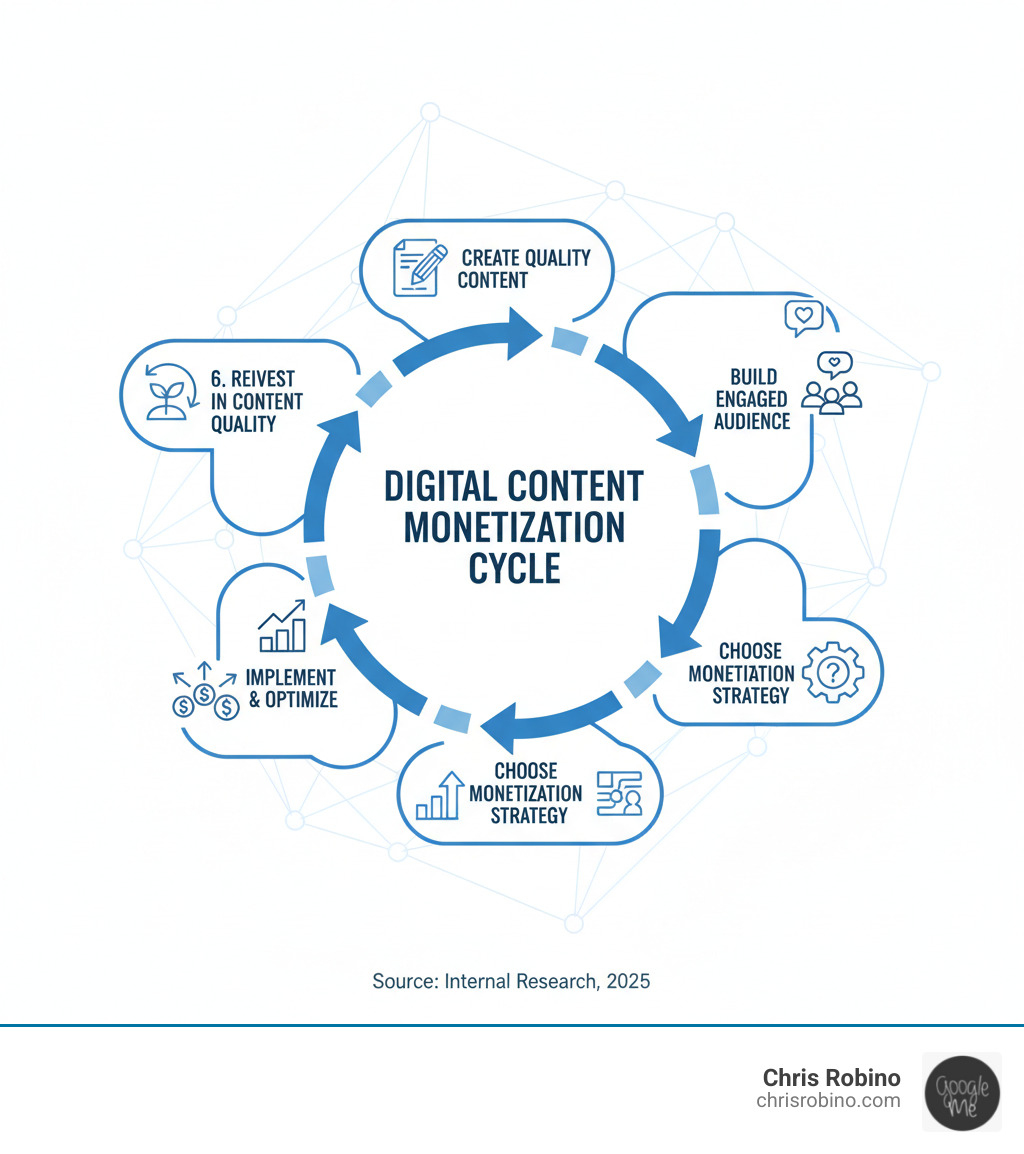
What is Digital Content Monetization?
Digital content monetization transforms your creative output—articles, videos, podcasts, or software—into a source of income. It’s how businesses and creators get paid for their expertise and value online.
The foundational elements for success are understanding your audience and consistently creating quality content. In an era where trust in traditional media is low, audiences often connect more with individual creators and niche brands. Cultivating authenticity and a direct connection drives engagement and, ultimately, revenue. Your content must provide valuable insights and experiences to build and maintain this trust.
Core Strategies for Digital Content Monetization
The best monetization strategies are resilient, often combining multiple methods. Let’s explore the most effective approaches for turning quality content into sustainable revenue.
Monetizing Through Advertising and Sponsorships
Advertising is an accessible entry point where brands pay to display messages alongside your content.
- Display & Native Ads: Display ads (banners, video spots) are easy to implement with ad networks. Native ads are less intrusive as they match the platform’s look and feel. However, with many users experiencing ad fatigue, it’s crucial to balance revenue with user experience.
- Sponsorships & Sponsored Content: This involves creating content that features a brand’s product or service, often for a flat fee or as part of a deeper brand ambassadorship. This model, central to the $21 billion influencer marketing industry, allows for more creative control and authenticity.
Transparency is essential. Always disclose sponsored content to maintain audience trust and comply with FTC guidelines for influencers. For more on this balance, see our guide on Content Marketing Strategies for Tech Companies.
Direct-to-Audience Monetization: Subscriptions and Digital Products

Selling directly to your audience builds deeper relationships and creates predictable income streams.
- Subscription Models: Offer exclusive content or perks for a recurring fee through memberships or tiered paywalls. Platforms designed for creators simplify the process. The key is consistency—subscribers expect regular value, creating a virtuous cycle of support and creation. Our Audience Engagement Strategies guide can help keep subscribers delighted.
- Digital Products: This “create once, sell repeatedly” model includes e-books, online courses, templates, and presets. With three in ten Americans now read e-books, the market is robust. Online courses are particularly powerful for sharing expertise, and various platforms provide the necessary infrastructure.
Performance-Based Monetization: Affiliate Marketing
Affiliate marketing allows you to earn commissions by recommending products you genuinely use and believe in. You integrate unique tracking links into your content, and when a reader makes a purchase through your link, you earn a percentage of the sale.
Authenticity is non-negotiable. Promoting products solely for commission erodes trust. Likewise, clear disclosure is mandatory to comply with FTC guidelines and maintain transparency with your audience. Before joining a program, review its terms on commissions, cookie durations, and promotional restrictions. Our B2B Thought Leadership Content Guide explores how to integrate commercial elements while maintaining authority.
Building a Sustainable Monetization Strategy
A successful strategy is a continuous process. Key pillars include:
- Define Your Niche: A specialized audience allows you to solve specific problems and command premium value.
- Understand the Audience Journey: Map how users find you, engage, and convert. Tailor monetization offers to their stage in the journey.
- Create High-Quality Content Consistently: Value is the foundation of monetization. Your audience’s willingness to pay is a direct result of the quality you provide. See our Audience Development Tactics for more.
- Diversify Revenue Streams: Combine advertising, subscriptions, and affiliate marketing to build resilience against market shifts and platform algorithm changes.
- Focus on Marketing and Distribution: Great content is useless if unseen. Master SEO, social distribution, and email marketing, which is known for delivering one of the highest ROIs and provides a direct line to your audience.
Advanced and Emerging Monetization Models
Keep an eye on evolving technologies that are creating new opportunities:
- Micropayments: Allow users to pay small amounts for individual pieces of content, capturing revenue from those unwilling to subscribe.
- Social Tokens & Web3: Creator coins and NFTs allow audiences to invest directly in creators, fostering a more engaged community and decentralizing monetization. Social tokens allow fans to support creators directly, representing a fundamental shift in the creator-audience relationship. Our AI-Driven Content Strategy guide explores how new tech is reshaping the landscape.
Common Pitfalls and How to Avoid Them
Steer clear of these common mistakes:
- Monetizing Too Early: Build an audience and demonstrate value before asking for payment.
- Sacrificing Authenticity for Profit: Don’t alienate your audience with excessive ads or inauthentic promotions. Trust is your most valuable asset.
- Ignoring Analytics: Use data to understand what works and optimize your strategy. Don’t guess.
- Creator Burnout: The pressure to produce is real, with 46% of full-time creators making less than $1,000/year. Prioritize well-being for long-term sustainability. Learn to pace yourself, as I discuss in Go Make Mistakes.
- Platform Dependence: Use platforms for reach, but drive your audience to owned channels like your website and email list to maintain control.
Conclusion: Future-Proofing Your Content Business
The landscape of digital content monetization is dynamic, but the core principles of success are constant. It’s not about chasing trends, but about building a sustainable relationship with your audience by genuinely understanding and serving their needs.
The most resilient content businesses are built on three pillars:
- An Audience-First Mindset: Prioritizing genuine value over quick profits builds trust, which is the foundation of long-term revenue.
- Diversification: Combining multiple revenue streams—from ads and subscriptions to digital products—provides creative freedom and protects your business from market shifts.
- Strategic Execution: Success requires a plan. Create quality content, understand your audience, build trust through transparency, and diversify your income streams intelligently.
The creator economy’s growth presents a significant opportunity, but strategy separates successful ventures from those that struggle. Start methodically, test different approaches, and protect your creative energy for the long haul.
To build a robust foundation for your content business, explore our Audience Development Media Ultimate Guide. It provides the audience development strategies that underpin every monetization effort discussed here.