

What Cross-Platform Content Really Means for Your Business
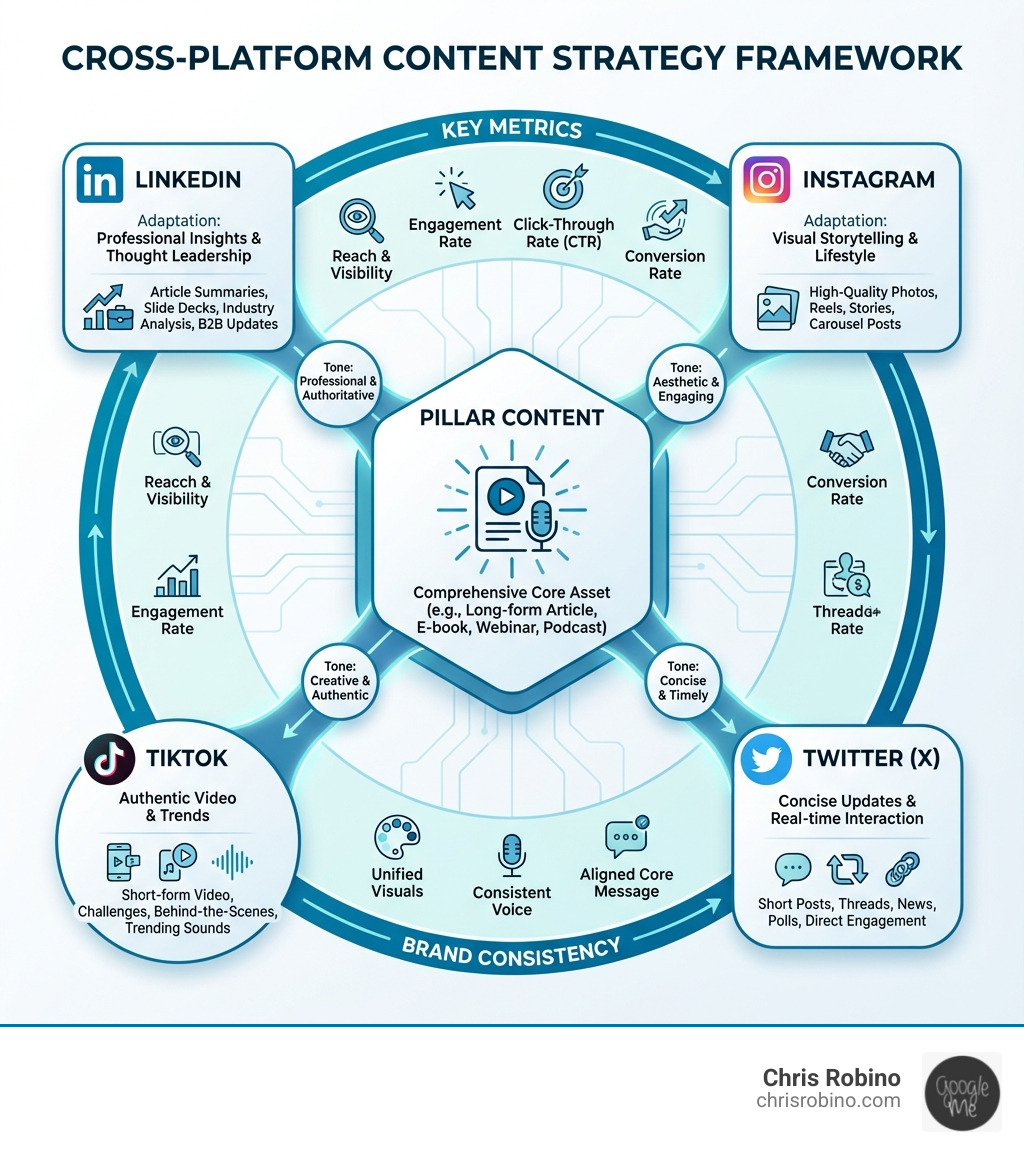
Cross platform content is more than posting the same message everywhere. It’s a strategic approach where you adapt your core message to fit the unique format and audience of each platformfrom LinkedIn and Instagram to TikTok and Twitter.
Many brands stumble by treating cross-platform as a copy-paste job, but this fails to connect. Each platform is a unique ecosystem: LinkedIn wants professional insights, Instagram craves visuals, and TikTok demands authenticity. When you adapt your content properly, you become relevant, not just visible.
The results are clear: consistent branding can boost revenue by up to 23%, and using three or more marketing channels can yield 287% higher conversion rates. Independent analyses of brand performance reinforce how cohesive messaging and multi-channel visibility correlate with stronger growth.
I’m Chris Robino, and I’ve spent over two decades helping companies drive measurable growth through strategic cross-platform content. Mastering this isn’t optional anymoreit’s essential for staying competitive.
Why Cross-Platform Content is Your Next Big Win
In today’s hyper-connected world, your audience is everywhere. Cross-platform content marketing is the strategic approach of adapting a core message to the unique format and audience of multiple digital platforms. It is not about copy-pasting; it is about making your content feel native to each environment to maximize its impact.
Why is this so important? A well-executed strategy delivers significant benefits that compound at scale, especially for large organizations that rely on search, social, and owned channels working together:
- Increased Reach and Audience Growth: By tailoring content for diverse platforms, you naturally expand your potential audience and put more eyes on your content. This supports SEO by driving branded search and repeat visits.
- More Customer Touchpoints: A robust cross-platform strategy creates more opportunities for interaction, allowing you to meet customers where they are and build a continuous conversation across search, social, and email.
- Improved Brand Credibility: Thoughtfully adapted content across reputable platforms builds trust and authority. Consistency makes your brand recognizable and credible, which also supports stronger performance in organic search.
- Boosted Engagement and Conversions: Custom content performs better. This leads to higher engagement, which drives more leads and conversions. Brands with consistent messaging see up to 3.5x better visibility.
- Revenue Growth: These benefits impact your bottom line. With consistent branding boosting revenue by up to 23% and multi-channel strategies driving higher conversion rates, the financial upside is clear.
For enterprise teams, this cross-platform approach complements core SEO strategies: well-structured content hubs become the “source of truth” for search, while adapted posts on social channels distribute that same story in channel-native ways.
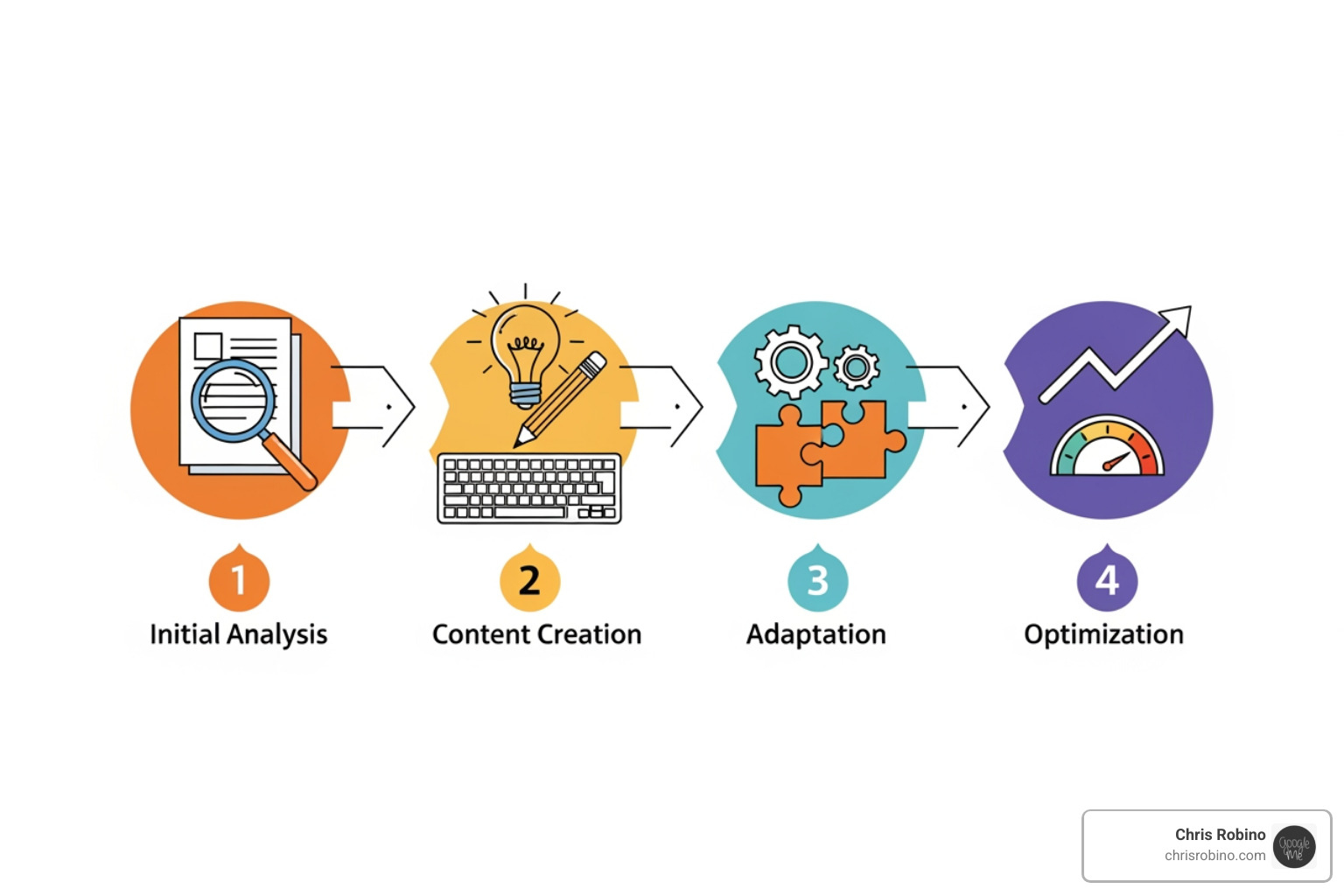
Your 4-Step Playbook for a Winning Cross-Platform Content Strategy
A successful cross-platform content strategy starts with a strong piece of “pillar content” and strategically adapts it for each platform. This ensures a consistent message while optimizing for platform-specific nuances and supporting your broader SEO goals.
Step 1: Adapt Your Core Message for Each Platform
Effective cross-platform content requires remixing, not just recycling. Understand that each platform is a unique ecosystem with different SEO and findy mechanics (search, hashtags, recommendations).
- LinkedIn: The professional network. Focus on value-driven articles, industry analysis, and company news. The tone should be informative and authoritative. Link back to your main content hubs to strengthen organic visibility. More info about Content Marketing Strategies for Tech Companies.
- Instagram: The visual storyteller. Use high-quality images, carousels, and Reels. The tone is engaging, authentic, and visually appealing. Strong visuals and clear calls-to-action can drive users back to SEO-optimized landing pages.
- TikTok: The trendsetter’s playground. Create short, entertaining videos that tap into trends and humor. The tone must be authentic, energetic, and relatable, pointing viewers to longer-form educational content when relevant.
- Twitter/X: The real-time newsfeed. Share concise updates, breaking news, and engage in conversations. The tone is witty, timely, and conversational. Short threads can amplify key insights from long-form blog posts and reports. More info about Audience Engagement Strategies.
Step 2: Maintain Ironclad Brand Consistency
While your tone adapts, your core brand identity must remain unwavering to build recognition and trust. Consistent branding can boost revenue by up to 23% and increase visibility by 3.5x. It also helps search engines and users associate your brand with specific topics and solutions.

- Create a Brand Style Guide: This is your rulebook for logos, color palettes, typography, and imagery.
- Define Your Brand Voice vs. Tone: Your voice (personality) is constant, while your tone adapts to the platform. For example, an “expert” voice can have a “formally expert” tone on LinkedIn and a “playfully expert” tone on TikTok.
- Use Consistent Visuals: Employ the same color codes, fonts, and logo versions across all platforms. Templates can ensure visual uniformity and speed up creation. More info about Thought Leadership Content Best Practices.
Step 3: Choose High-Impact Formats and Streamline Your Workflow
Select the right formats and optimize your workflow to maximize engagement without creating an operational headache. For large companies, this also means aligning formats with search demand, site structure, and analytics.
High-impact formats include:
- Video: Dominates engagement. Use short-form video (Reels, TikToks) for quick tips and long-form (YouTube-style explainers hosted on your site) for in-depth tutorials that can rank in search.
- Infographics: Highly shareable and great for presenting data visually. When embedded in articles with descriptive alt text, they reinforce topical relevance.
- Blog Posts: Serve as “pillar content” from which you can extract dozens of micro-posts. Organize them into content hubs to support enterprise SEO.
- User-Generated Content (UGC): Builds authenticity and social proof while giving you fresh assets to share across platforms.
Streamline your workflow with:
- Content Calendars: Your strategic roadmap for planning and scheduling across web, search, and social.
- Scheduling Tools: Automate distribution to keep posting consistent.
- Design Templates: Using design templates helps maintain visual consistency efficiently.
- Batching Content: Dedicate blocks of time to specific tasks (writing, editing, design) to improve efficiency. More info about AI-Driven Content Strategy.
Step 4: Measure Performance and Optimize for Growth
Distributing content is only half the battle. You must track performance and continuously optimize your strategy across all channels, including organic search.
Key metrics to track:
- Engagement Rate (likes, comments, shares)
- Reach and Impressions
- Click-Through Rate (CTR)
- Conversion Rates (sign-ups, purchases)
- Organic Traffic and Rankings for your pillar pages and content hubs
To optimize, leverage platform-native analytics, A/B test different elements like headlines and visuals, and analyze your data to find the best times to post. Independent research into social algorithms and behavior can help guide timing experiments for large teams.
The digital landscape is always changing, so review your strategy quarterly to ensure your cross-platform content remains effective. More info about AI Powered Analytics.
Real-World Wins and Your Path to Mastery
A well-executed cross-platform content strategy delivers remarkable results. Brands that succeed demonstrate creativity, strategic adaptation, and consistent effort.
Here are a few inspiring examples:
- Coca-Cola’s Holiday Campaign: By offering personal Santa greetings via Cameo, Coke created content that was visually appealing for Instagram, shareable on Facebook, timely for Twitter, and a compelling brand story for LinkedInall amplifying one unified message.
- M&S on TikTok: Instead of traditional ads, M&S created a fun alter-ego for its TikTok channel, delivering entertaining, platform-native content that resonated with a younger audience and showed the power of adapting a brand’s persona.
These examples highlight key takeaways that align closely with enterprise SEO and digital strategy:
- Strategic Adaptation is Key: Do not copy-paste. Tailor your message to each platform’s nuances while pointing back to authoritative content hubs on your site.
- Brand Consistency Builds Trust: Your core identity must remain consistent across all touchpoints, reinforcing topical authority in both human and algorithmic eyes.
- Measurement Fuels Growth: Continuously measure, analyze, and optimize to refine your approach across search, social, and owned channels.
The ability to deploy effective cross-platform content is a fundamental skill for growth. By embracing this playbook, you can connect with your audience in more meaningful ways, strengthen your large-scale SEO efforts, and accelerate your digital change.
Accelerate your digital transformation for media
SEO Strategies for Large Companies: Concise Content
For large organizations, SEO is not a set-and-forget tactic; it is a disciplined, ongoing process that must integrate with your cross-platform content strategy. The goal is to create concise, high-impact content that scales across regions, products, and business units while remaining easy for users and search engines to understand.
- Comprehensive Keyword Research: Use advanced tools and first-party data to identify high-value, intent-driven keywords across all stages of the customer journey. Map keywords to specific buyer journeys, product lines, and regions so teams avoid duplication and target clear opportunities.
- Content Hubs and Pillar Pages: Build authoritative content clusters around core topics to improve topical relevance and internal linking. Pillar pages should give executive-level overviews, with supporting articles that dive into specific use cases, industries, and questions.
- Technical SEO Excellence: Ensure fast site speed, mobile optimization, structured data, and robust site architecture for scalability. For enterprises, this includes consistent URL patterns, clean faceted navigation, and rigorous change control for deployments.
- Localized and International SEO: Optimize for local search intent and implement hreflang for global reach. Tailor messaging, examples, and CTAs to local audiences while maintaining a unified global brand narrative.
- Content Personalization: Leverage AI and analytics to deliver personalized content experiences at scale. Use behavioral signals and firmographic data to recommend relevant case studies, thought leadership, and product content while keeping pages indexable and crawl-friendly.
- Cross-Platform Consistency: Maintain unified messaging and branding across all digital touchpoints, including web, social, and email. Use your SEO-optimized pages as the canonical source of truth and adapt that message into channel-specific formats.
- Performance Measurement: Use enterprise analytics platforms to track KPIs, conduct A/B testing, and iterate based on data-driven insights. Align SEO metrics (rankings, organic traffic, indexed pages) with business outcomes (pipeline, revenue, retention).
- Reputation Management: Monitor brand mentions and proactively manage reviews and feedback. Integrate insights from social listening and support channels into your content roadmap to address concerns and highlight strengths.
- Strategic Link Building: Focus on high-authority, relevant backlinks through partnerships, PR, and thought leadership. Encourage your experts to publish research, frameworks, and commentary that naturally attract references from reputable sites.
- Continuous Optimization: Regularly audit and update content, metadata, and technical elements to stay ahead of algorithm changes. For large companies, build governance models, training, and documentation so teams across regions apply consistent SEO and content standards.
When these strategies are combined with a disciplined cross-platform content playbook, large companies can compound their results: search-optimized pillar content becomes the engine, and platform-specific adaptations turn that engine into sustained visibility, engagement, and revenue growth.