
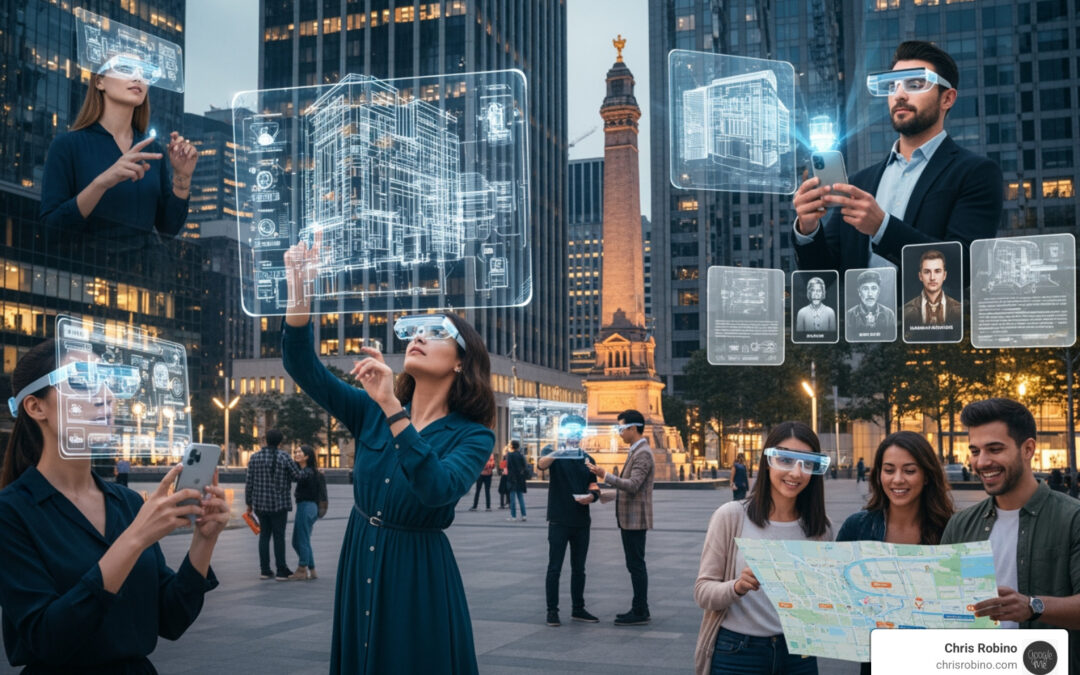
The Immersive Revolution is Here
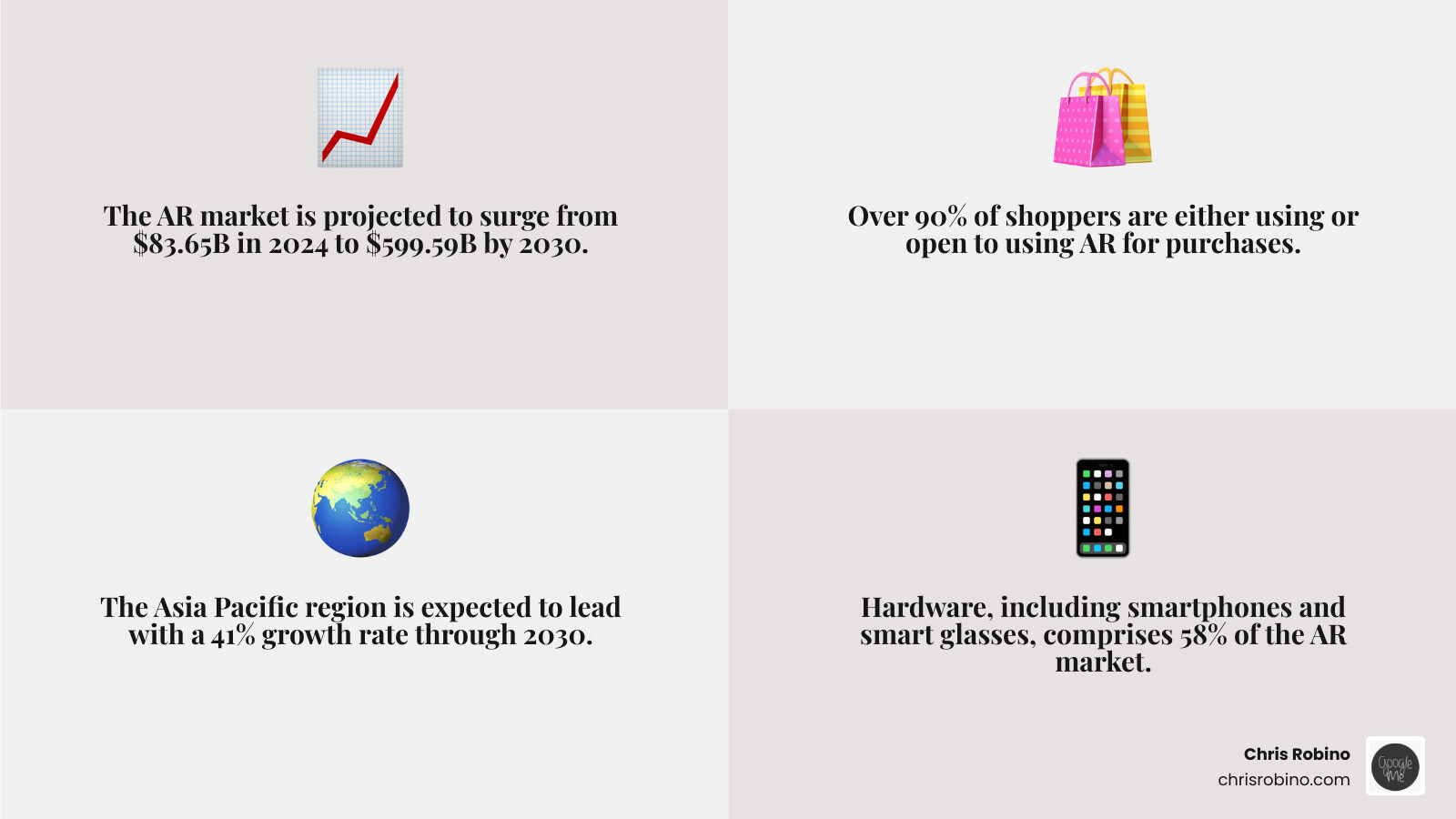
Augmented reality trends are reshaping how we work, shop, and interact. No longer a futuristic concept, AR is a rapidly growing market projected to surge from USD 83.65 billion in 2024 to USD 599.59 billion by 2030, at a compound annual growth rate of 37.9%.
Key Augmented Reality Trends to Watch:
- AI-Powered AR: AI improves AR with better scene understanding and personalization.
- Mobile AR Dominance: Smartphones are the primary gateway for AR, with over 2 billion users projected by 2025.
- Stylish Wearables: Consumer AR glasses are becoming more fashionable, a key demand for 61% of consumers.
- Industry Integration: Retail, healthcare, and manufacturing are adopting AR for virtual try-ons, surgical planning, and remote assistance.
- WebAR Accessibility: Browser-based AR removes the need for app downloads, making experiences instantly accessible.
- Spatial Computing: The paradigm is shifting from screens to interacting with digital content in physical space.
AR has moved from novelty to necessity, with nearly 60% of the U.S. population expected to be frequent users by 2025. The technology blurs the lines between digital and physical worlds by overlaying computer-generated content onto real-world environments, creating extended reality experiences.
I’m Chris Robino, a Digital Strategy Leader and AI & Search Expert. With over two decades of experience, I help organizations harness emerging technologies like augmented reality trends to drive measurable business growth by changing customer engagement and operational efficiency.
The Core Drivers: Key Augmented Reality Trends Shaping Our Future
The augmented reality market is propelled by a convergence of technological advancements and evolving consumer expectations. This growth is fueled by continuous innovation in hardware, sophisticated software, and the integration of AR into diverse industries.
The Hardware Revolution: A Foundational Element of Augmented Reality Trends
The journey of AR is intrinsically linked to hardware advancements. In 2024, the hardware segment accounted for over 58% of the market, driven by miniaturization, power efficiency, and user comfort.
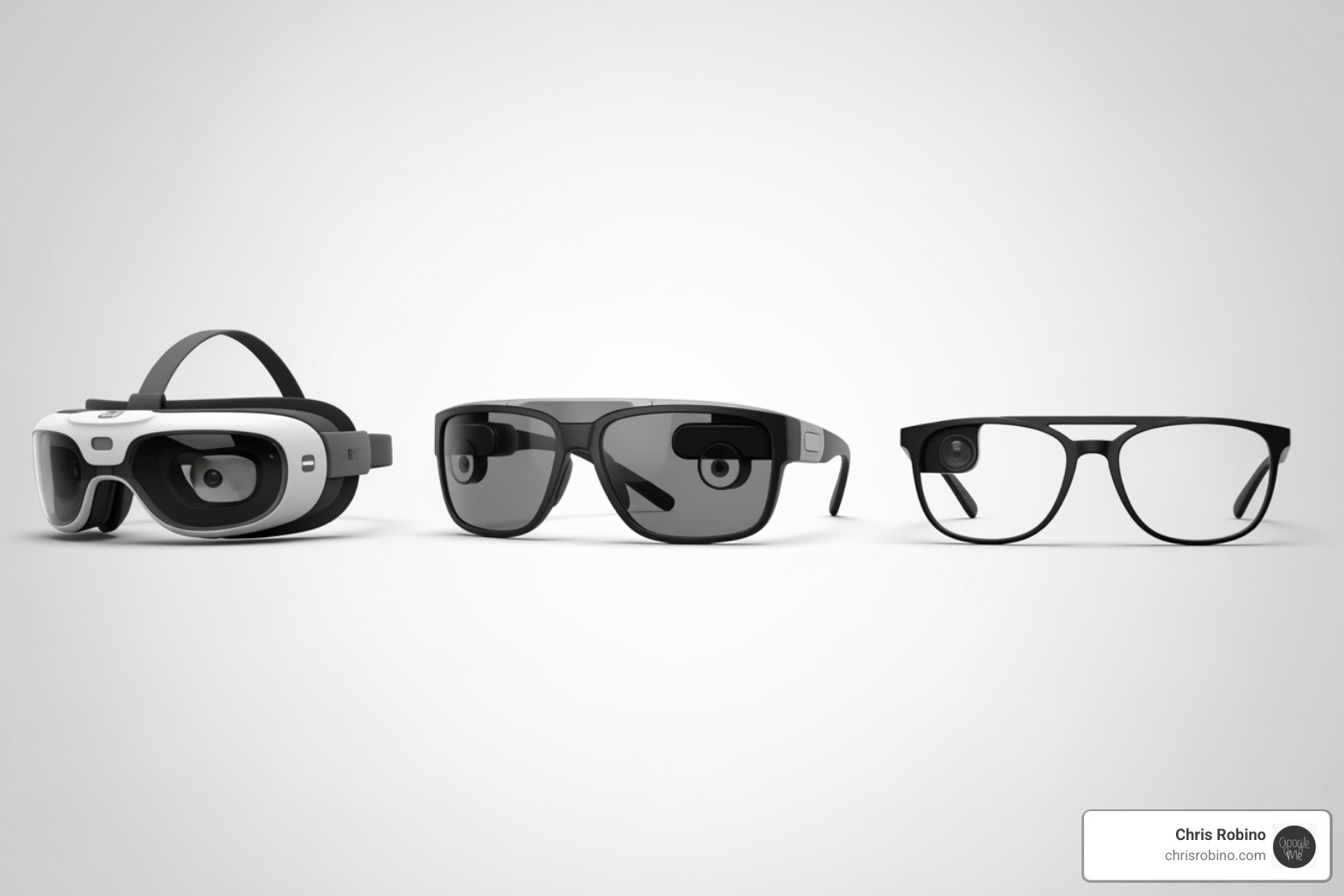
Smartphones were the initial gateway, with projections to exceed 2 billion mobile AR users by 2025. They remain a dominant platform for accessible AR features like filters and virtual try-ons. However, the focus is shifting towards dedicated AR glasses and head-mounted displays (HMDs) for more immersive, hands-free experiences. Leading technology companies are pushing the boundaries from bulky prototypes to sleek designs.
Aesthetics are critical for mass adoption; 61% of consumers state they would not wear AR devices that aren’t visually appealing. The success of recent wearables that blend style with smart features underscores this trend. Furthermore, with 75% of consumers expecting to use AR on the go, mobility is a key driver for innovation. For those keen on the cutting edge of these developments, exploring New Tech 2024 can offer deeper insights.
| Feature | Smartphone AR | AR Glasses |
|---|---|---|
| Accessibility | High (uses existing devices) | Moderate (requires dedicated purchase, still niche) |
| Immersion | Limited (viewed through a screen, often handheld) | High (direct overlay on vision, hands-free) |
| Cost | Low (leverages existing smartphone) | High (dedicated hardware, often premium pricing) |
| Key Use Cases | Virtual try-ons, social filters, basic object placement, mobile gaming | Remote assistance, navigation, hands-free information, immersive training, spatial computing, context-aware assistance |
| Growth Driver | Widespread availability, ease of use | Improved immersion, hands-free operation, specialized enterprise applications, increasing style and comfort |
The Intelligence Layer: How AI and Advanced Software are Fueling AR
While hardware provides the foundation, the software and Artificial Intelligence (AI) that power it bring AR to life. This segment is projected to grow at the fastest rate, driven by demand for sophisticated applications.

AI is pivotal for making AR experiences seamless. It enables scene understanding, allowing AR programs to recognize objects and surfaces, which is critical for apps that let users virtually place furniture. AI also powers realistic avatars and real-time translation, while Generative AI is revolutionizing 3D content creation from simple text or voice commands.
One of the most significant augmented reality trends is the rise of WebAR, which allows users to access AR experiences through a web browser via a link or QR code. This eliminates app downloads, lowering the barrier to entry for marketing demos and product visualizations. Geospatial AR is also revolutionizing location-based experiences. Developers can now anchor AR content to specific real-world locations, enabling interactive city guides and location-specific games. For deeper dives into these software-driven innovations, our Emerging Tech Insights provide valuable analysis.
Industry Change: Business-Focused Augmented Reality Trends
The transformative power of AR is being realized across nearly every sector, driving efficiency and enhancing customer engagement.
-
Retail & E-commerce: A pioneer in AR adoption, this sector uses virtual try-on solutions to let customers visualize products like clothing or furniture in their own space. The impact is significant; research shows that using 3D and AR content can lead to a 94% conversion lift and a 25% reduction in returns.
-
Healthcare: AR is revolutionizing medical training, diagnostics, and patient care. It provides hands-free solutions for surgeons by overlaying critical patient data or 3D organ models into their field of view. It also improves medical training by simulating complex procedures and aids in tasks like vein visualization.
-
Manufacturing: In industrial settings, AR improves productivity and safety. Technicians use AR for remote assistance, with digital instructions overlaid on complex machinery. It also aids in quality control by comparing assembled parts to digital models and improves safety by visualizing hazardous areas.
-
Automotive: The auto industry uses AR for both consumers and professionals. Advanced heads-up displays (HUDs) improve driver safety by highlighting navigation and on-road objects. AR also assists in sales by allowing customers to visualize virtual car models in their driveway.
-
Gaming & Entertainment: This sector continues to innovate with immersive gaming, interactive social filters, and location-based experiences like Pokémon Go. AR makes entertainment more engaging and personalized. For a deeper dive into how AR is shaping this space, exploring Emerging Trends in the Entertainment and Media Industry is highly recommended.
Navigating the Future of Immersive Technology
As we look ahead, augmented reality trends point towards an indispensable role in our daily lives. However, this future presents unique challenges and opportunities for businesses.
Challenges and Opportunities for AR Adoption
While AR’s potential is immense, widespread adoption faces problems. Hardware limitations like battery life (4-6 hours of active use in current smart glasses) and the high cost of advanced headsets remain significant. Furthermore, as 61% of consumers demand stylish designs, the weight and bulkiness of devices are ongoing engineering quests.
Privacy and security are also paramount. AR applications collect vast user data, necessitating robust data protection and ethical considerations, such as bystander privacy. The infrastructure for widespread AR—including reliable 5G connectivity and a skilled workforce—is still developing.
Despite these challenges, the opportunities are vast. AR can lead to significant conversion lifts, reduced product returns, and streamlined operations. The shift to spatial computing, where digital content interacts seamlessly with our physical environment, represents a fundamental change in how we use technology, opening doors for innovative business models.
The Evolution of AR and Wearable Technology
Geographically, North America currently leads the market with over 33% revenue share, but the Asia Pacific region is the fastest-growing, with a projected CAGR of over 41% through 2030. Major tech players are driving innovation, but the ultimate goal is the seamless overlay of digital information onto the real world.
The future of AR is in wearable technology. We are moving towards a future where AR glasses are not just accessories but primary computing platforms. The focus is on making devices sleeker, lighter, and more powerful, with deep AI integration for personalized assistance. The success of fashion-forward wearables shows that consumers are ready for AR that blends into their lifestyle. This strategic shift towards spatial computing will impact all industries, making an effective innovation strategy crucial for businesses to adapt and leverage the power of AR.
We believe that understanding and strategically implementing these augmented reality trends is key to future success. Our expertise in emerging technologies positions us to help organizations steer this exciting landscape.
Ready to transform your business with cutting-edge AR solutions? Learn how we can help you implement these strategies with our Digital Transformation for Media services.