

Why Content Marketing Tips Matter for Large Companies in 2026
Effective content marketing tips for large companies start with structure, authority, and measurement. Here is a quick snapshot of what works in 2026:
- Document your SEO strategy – Align teams, workflows, and KPIs.
- Research audience intent – Focus on what buyers actually search for.
- Optimize for E-E-A-T – Use expert-led, trustworthy content.
- Map keywords to the buyer’s journey – Support awareness through decision.
- Build authority clusters – Organize related pages to strengthen relevance.
- Refresh existing assets – Update pages with declining performance first.
- Strengthen internal linking – Support crawlability and page authority.
- Track business metrics – Measure pipeline impact, not just traffic.
- Improve technical SEO – Prioritize site speed, schema, and indexation.
- Distribute content strategically – Amplify visibility across key channels.
For large organizations, content marketing is rarely a simple publishing task. Multiple stakeholders, complex site structures, and legacy content can slow growth unless there is a clear strategy in place.
I’m Chris Robino, a digital strategy leader helping enterprises build content systems that drive growth. I’ve applied these SEO strategies across multi-channel environments where scalable visibility and qualified traffic matter most. Here are ten practical approaches that help large companies improve rankings and business results.
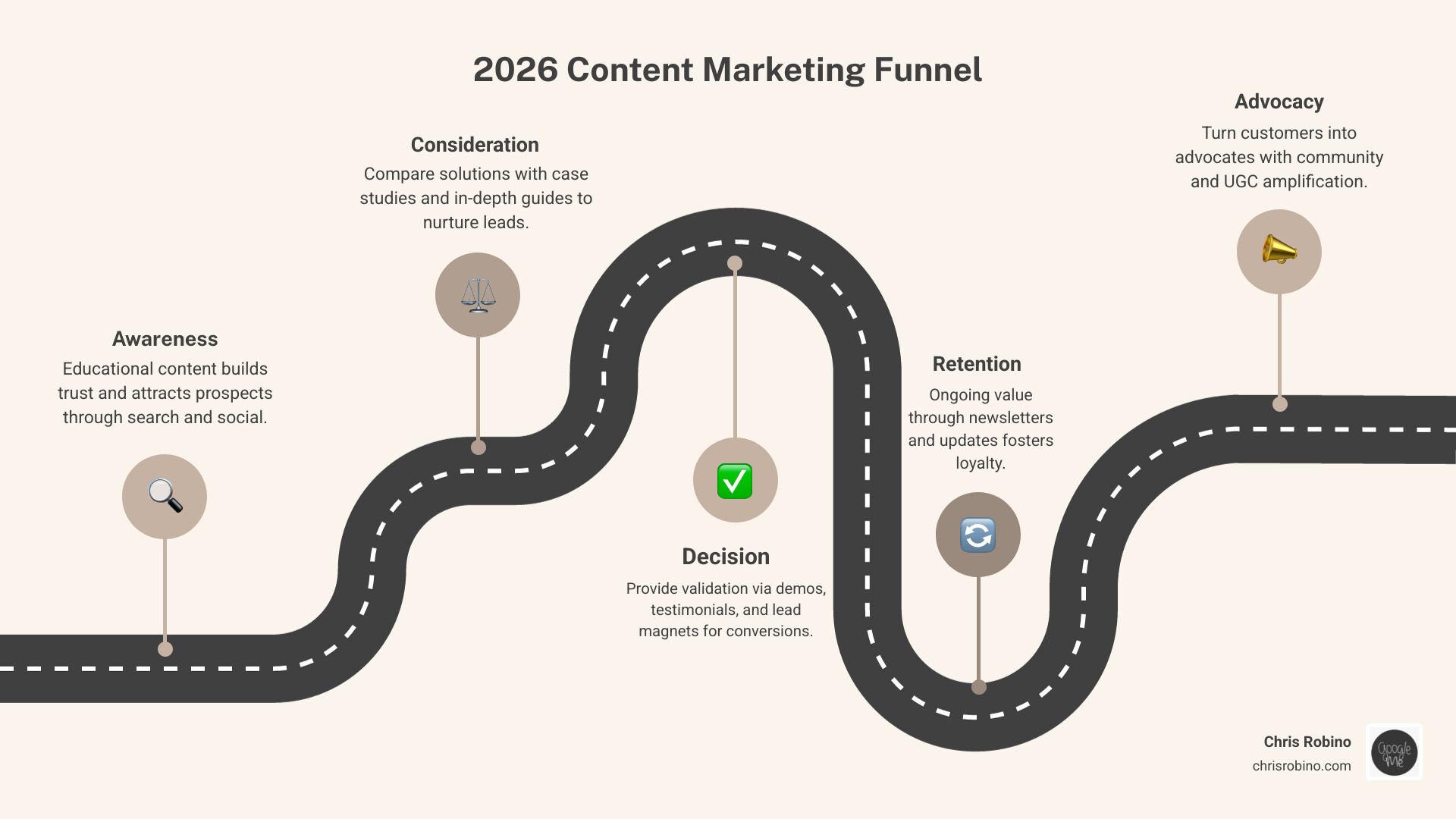
Essential Content Marketing Tips for Modern Growth
In 2026, enterprise SEO is a structured growth function designed to increase qualified visibility, build authority, and support revenue goals. Successful companies treat content marketing as a long-term system rather than a series of isolated optimizations.
A critical content marketing tip is maintaining a documented plan. For large brands, this means setting clear priorities, assigning ownership, and aligning SEO efforts with broader business objectives.
To manage this at scale, an enterprise content calendar and governance process are essential. They help teams stay consistent, reduce duplication, and close content gaps. If you are struggling to align strategy and execution, Content Strategy Consulting can help bridge that gap.
Media Comparison for Enterprise Reach
| Media Type | Description | Best Use Case |
|---|---|---|
| Owned | Channels you control | Building long-term authority |
| Earned | PR and guest mentions | Boosting credibility |
| Paid | Native ads and PPC | Rapidly scaling reach |
1. Documenting Your SEO Strategy for Scalable Success
A strategy that lives only in someone’s head is difficult to scale. For large teams, documenting your SEO roadmap improves governance, prioritization, and execution. Clear frameworks should define content ownership, technical responsibilities, approval workflows, and reporting standards.
This reduces overlap across departments and keeps teams aligned around measurable goals. By utilizing Content Strategy Consulting, organizations can establish governance frameworks that support enterprise SEO at scale.
2. Using Audience Research and Search Intent
Knowing your audience is essential, but enterprise SEO requires more than surface-level demographics. Large companies need to understand search intent, business pain points, and the language buyers use at each stage of evaluation.
What does a senior decision-maker search for compared with an operational manager? By combining search data, CRM insights, and customer research, teams can build content that addresses real questions with greater precision. This level of Digital Media Marketing helps ensure every page serves a clear purpose and aligns with user intent.
3. Optimizing for E-E-A-T and AI Search Visibility
The rise of AI search has changed SEO. Google prioritizes E-E-A-T: Experience, Expertise, Authoritativeness, and Trustworthiness. Faceless, AI-generated content without human oversight is no longer effective.
To stand out, highlight named authors with real credentials. Optimize for voice search, as executives increasingly use conversational queries. Focus on long-tail, question-based keywords and provide authoritative answers. For deeper tactics, see these SEO Tips to Improve Organic Rankings.
4. Mapping Keywords to the Buyer’s Journey
SEO content should guide users through the buyer’s journey:
- Awareness: Target educational, problem-focused queries.
- Consideration: Create comparison, evaluation, and solution-focused pages.
- Decision: Support conversion with proof points, product details, and trust signals.
Case studies can be especially valuable for high-intent searches. Learning How to Use Case Studies in SaaS Content Marketing can help improve conversion rates by providing the validation buyers need.
5. Supporting SEO with Multi-Channel Distribution
Publishing alone is not enough. Large companies benefit when SEO content is supported by broader distribution:
- LinkedIn: Extend reach for thought leadership and B2B visibility.
- Email Segmentation: Re-engage users with relevant content based on behavior.
- Native Advertising: Amplify strategic assets to targeted audiences.
Effective Digital Media Marketing helps increase visibility, attract qualified visitors, and support link earning over time.
6. Refreshing and Repurposing Existing Assets
Large organizations often have underused content with unrealized SEO value. A content audit can identify pages that once performed well but now need updated data, clearer structure, or stronger keyword alignment.
Repurposing also improves efficiency. A single in-depth asset can be adapted into:
- A series of video explainers.
- An executive podcast episode.
- A LinkedIn infographic.
Working with a Video Marketing Consultant can help streamline this transformation and expand the reach of high-value content.
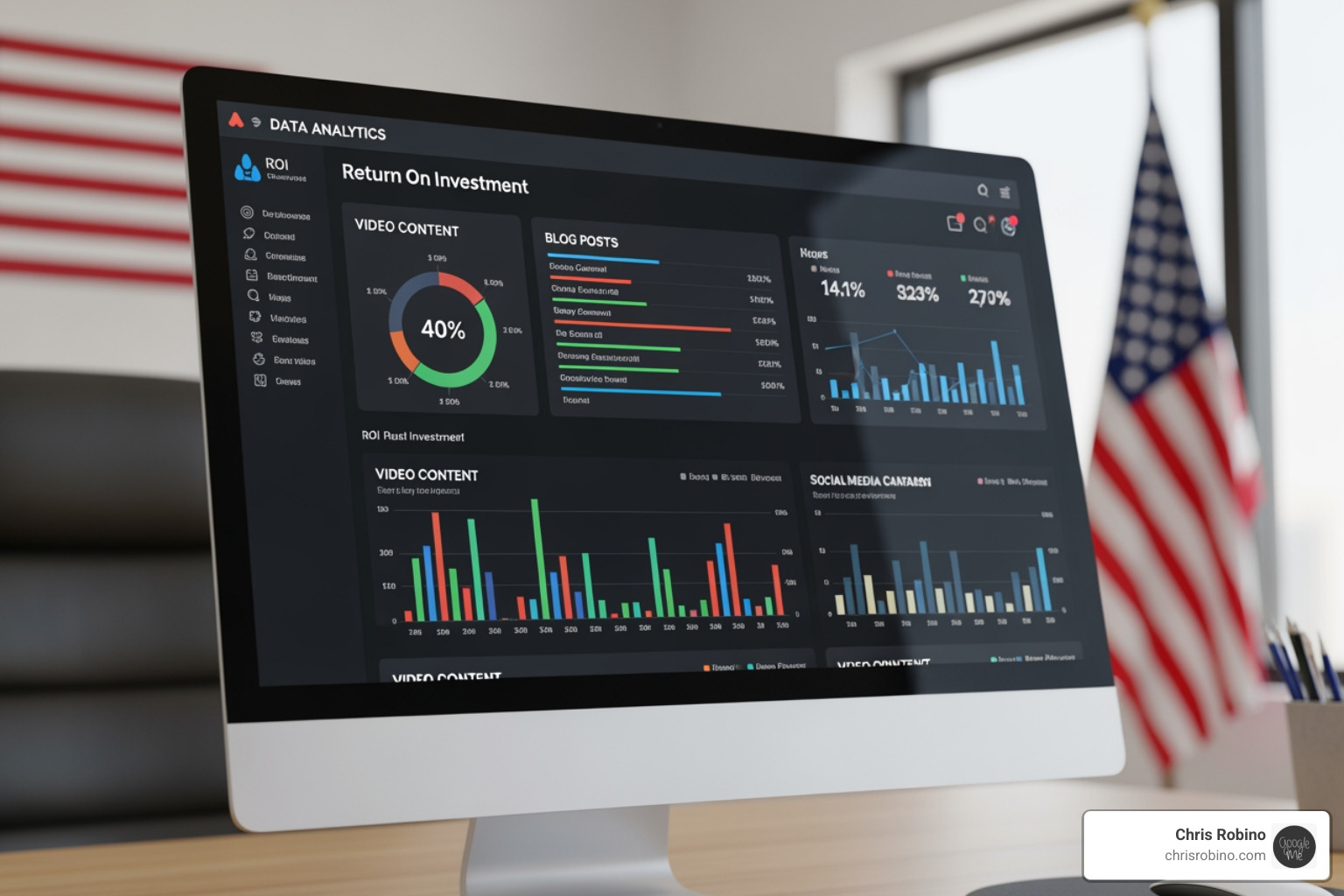
7. Measuring SEO Performance with Business Metrics
For enterprise SEO, traffic alone is not enough. Large companies should track how organic search contributes to leads, pipeline, and revenue. Which topics bring qualified visitors? Which pages assist conversions across longer sales cycles?
By using heatmaps and user behavior analysis, teams can identify where readers drop off and where pages need stronger messaging or better structure. The goal is to improve performance based on business outcomes, not vanity metrics.
8. Using Interactive Content to Improve Engagement
Interactive content can strengthen SEO by improving engagement and helping visitors self-qualify. Tools such as calculators, assessments, and interactive guides provide immediate value while revealing buyer needs.
For example, an ROI calculator can help a prospect justify a purchase internally while signaling strong commercial intent. For large companies, these assets can support both organic visibility and conversion performance.
9. Building Authority Through Community and Advocacy
Brand authority supports SEO over time. Encouraging user-generated content, expert contributions, and employee advocacy can expand reach and reinforce trust.
When employees share brand content in their own voice, it often carries more credibility than a corporate post alone. This helps large companies widen distribution, humanize the brand, and strengthen overall visibility.
10. Technical SEO Integration for Content
For large-scale organizations, technical SEO is the backbone of discoverability. Site architecture must support “authority clusters” — groups of related content linked to signal expertise.
Internal linking keeps users on-site and passes authority to high-value pages. Additionally, schema markup for rich snippets helps content stand out in SERPs. Implementing SEO Strategies for Large Companies ensures that technical debt doesn’t hinder your best content. Focus on crawl efficiency, XML sitemap management, and structured data to maintain a competitive edge in complex enterprise environments.

Conclusion
SEO in 2026 is a balance of authority, technical performance, and user intent. Large companies that prioritize strategy, site structure, and ongoing optimization are better positioned to win qualified traffic and long-term growth.
The core principles remain consistent: understand your audience, document your plan, improve technical foundations, and measure what drives business results. If you’re ready to scale, our Content Marketing for Consultants Ultimate Guide provides practical frameworks to support growth. At ChrisRobino.com, we build content engines that generate revenue. Let’s get to work.