

Why Case Studies Are Your Most Powerful SaaS Content Asset
How to use case studies in saas content marketing begins with understanding their power to convert prospects. They aren’t just another content type; they are your most persuasive asset for proving value and building trust.
Quick Answer: How to Use Case Studies in SaaS Content Marketing
- Select the right customer who matches your ideal profile and has measurable results.
- Use the Challenge-Solution-Results structure for a compelling narrative.
- Include hard metrics like percentage improvements, time saved, or revenue gained.
- Add authentic customer quotes to build credibility and emotional connection.
- Repurpose into multiple formats like PDFs, videos, and social posts.
- Distribute strategically through sales, email campaigns, and your website.
- Measure performance by tracking pipeline influence and deal velocity.
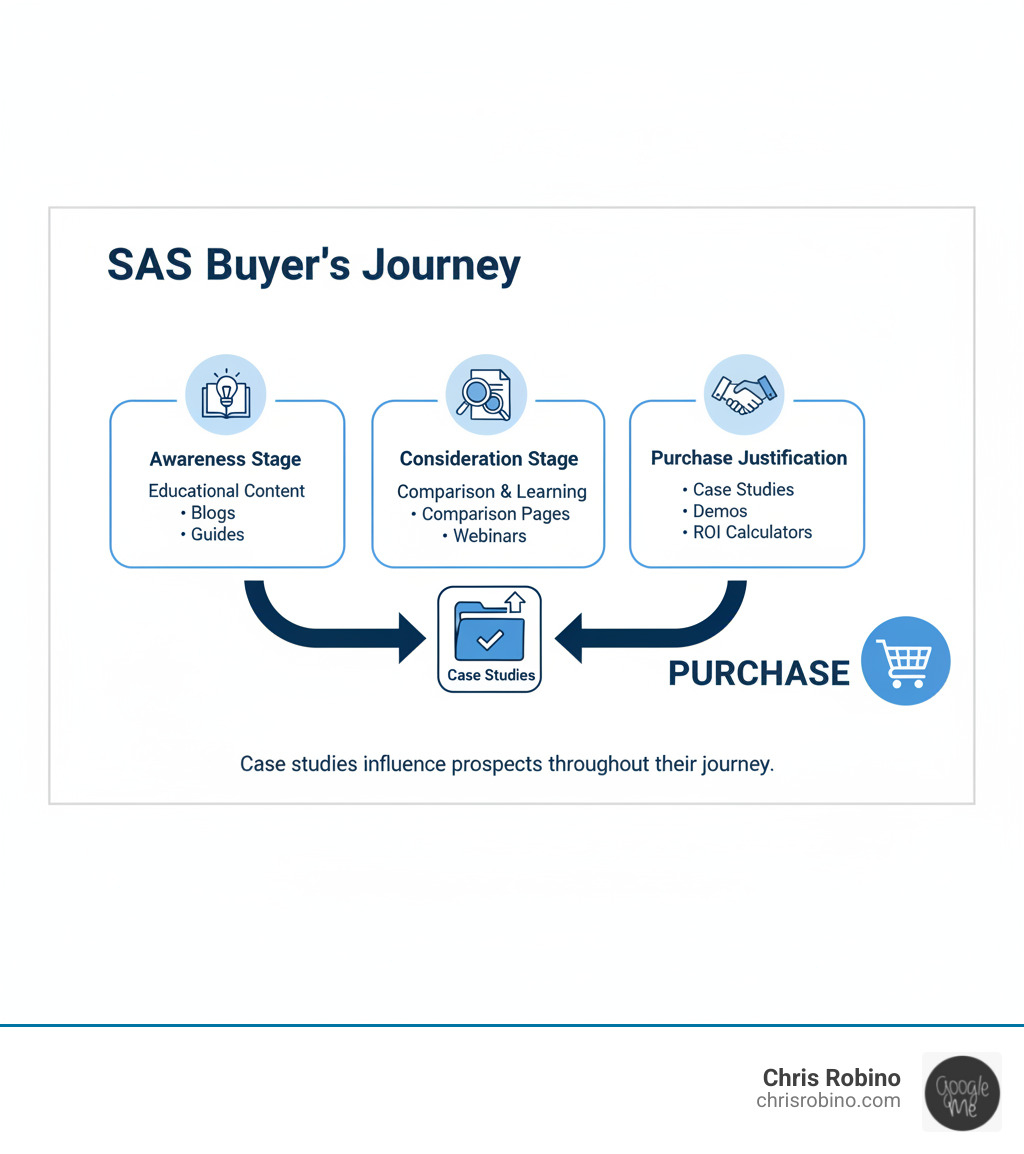
Why are they so effective? Prospects want to see how you helped someone just like them solve a real problem. Case studies provide that peer-level proof when B2B buyers are making critical decisions, often serving as the deciding factor during the purchase stage. They shorten sales cycles and amplify success stories in a way product demos can’t.
However, many SaaS companies struggle to create case studies that convert because they lack a clear process. This guide provides a framework to turn your customer wins into revenue-driving assets. I’m Chris Robino, and with over 20 years in SaaS growth, I’ve helped tech companies master how to use case studies in SaaS content marketing. Let’s begin.
A Step-by-Step Guide on How to Use Case Studies in SaaS Content Marketing
Ready to turn customer success into a conversion machine? This section provides a proven framework for creating case studies that resonate with your target audience and drive business results.

This is your playbook for mastering how to use case studies in SaaS content marketing. The goal is to build assets that work across your entire marketing ecosystem. For more on defining your audience, see our guide on audience development tactics.
Step 1: Identify the Right Customer and Craft a Persona-Driven Story
A great case study starts with the right customer: someone who represents your ideal customer profile (ICP) and has achieved measurable success.
Your sales and customer success teams are the best source for these stories. Collaborate with them to identify happy customers. When evaluating candidates, consider their industry and the specific challenges they faced. Understanding their “Jobs To Be Done” (JTBD) helps you create stories that speak directly to prospects with similar needs.
Most importantly, make the customer the hero. Your product is the tool that empowered them. Focus the narrative on their journey, pain points, and goals—not just your features.
Step 2: Master the High-Converting “Challenge-Solution-Results” Structure
The Challenge-Solution-Results framework is the backbone of an effective case study because it creates a powerful narrative arc.

- The Challenge: Paint a vivid picture of the customer’s struggles before your solution. What inefficiencies were costing them time or money?
- The Solution: Detail how your product addressed their core challenges. Focus on how it delivered value.
- The Results: Showcase the tangible, quantifiable impact. This section proves ROI and demonstrates real business value.
This structure takes readers on a logical and persuasive journey from a relatable problem to a successful outcome. For more on B2B narratives, explore our guide on creating thought leadership content.
Step 3: Quantify Impact and Weave in Authentic Social Proof
A good story becomes undeniable proof with hard data. In SaaS, prospects demand metrics, not just promises.
Focus on metrics that matter: ROI percentage, time saved, revenue increased, cost reduction, and productivity gains. Specificity is everything. “Reduced support tickets by 45% in three months” is far more powerful than “improved efficiency.”
Humanize the data with authentic customer quotes. These endorsements add credibility and an emotional connection that numbers alone can’t provide. Place quotes strategically to highlight key benefits or validate a metric. The combination of hard data and compelling quotes creates an unbeatable one-two punch.
Step 4: Design for Engagement and Repurpose Across Multiple Formats
A well-designed case study gets read and shared; a wall of text gets skipped.
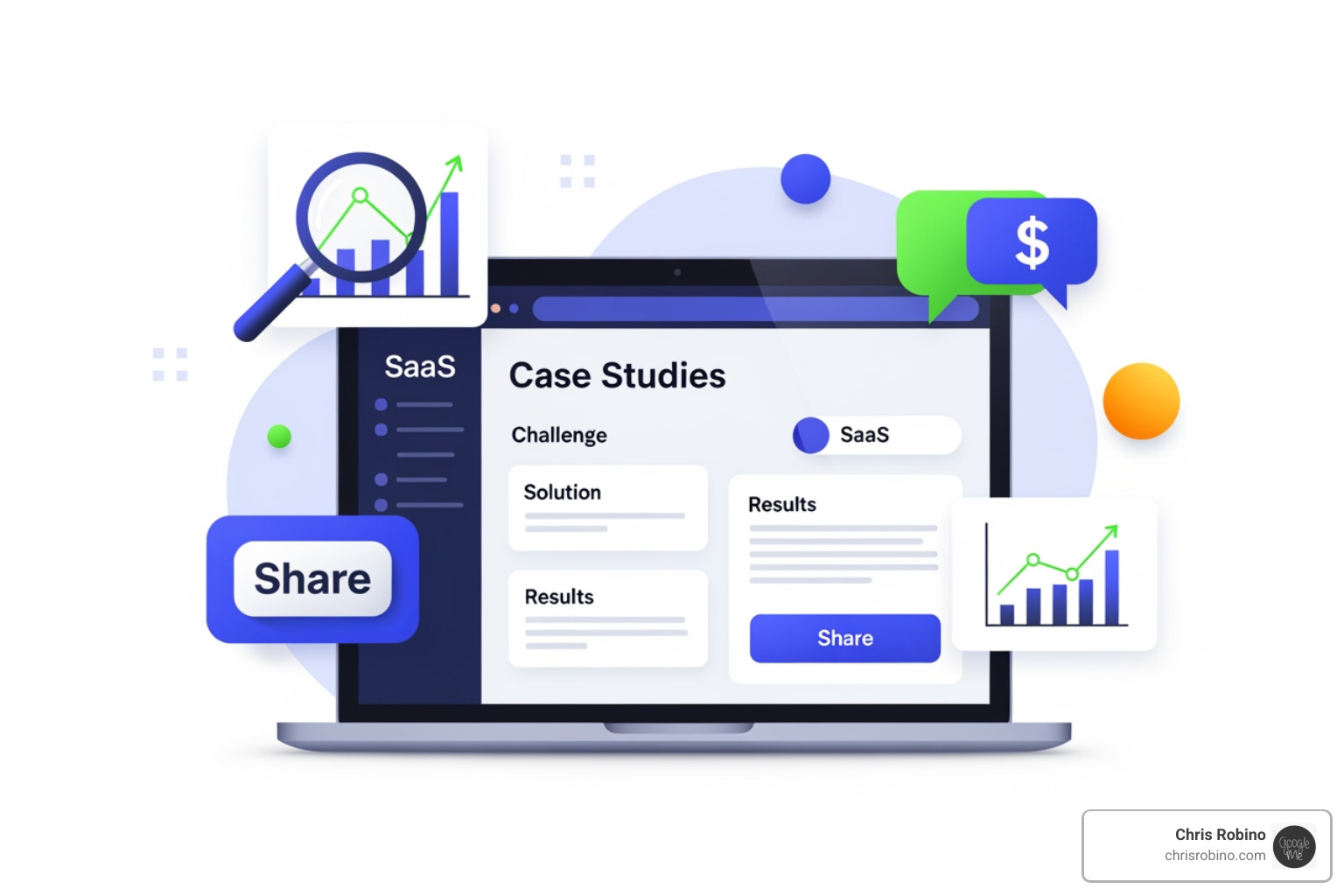
Use visuals, clear headers, and pull quotes to make the content scannable. The real magic, however, is in repurposing your case study into multiple formats to meet your audience where they are.
- Blog Post: Publish the full story on your website for SEO and easy sharing.
- Downloadable PDF: Create a polished version for sales to share with decision-makers.
- Video Case Study: Convert the story into a video for higher engagement.
- Social Media Graphics: Extract key stats and quotes for carousels and posts.
- One-Pagers: Condense the story into a concise summary for sales outreach.
Each format serves a different purpose, multiplying the value of your initial effort exponentially. To learn more about leveraging content, see our insights on content monetization strategies.
Strategic Amplification: Integrating Case Studies and Measuring Success
Creating a compelling case study is only half the battle. To maximize ROI, you must strategically distribute these stories and measure their impact on your bottom line.
Think of your case studies as versatile assets that should be woven throughout your marketing ecosystem. Here’s how to use case studies in SaaS content marketing to nurture leads, enable sales, and prove their value.
How to use case studies in SaaS content marketing for lead nurturing and sales enablement
Don’t let your customer stories sit on a forgotten webpage. Actively deploy them where they can have the most impact:
- Email Marketing: Send targeted case studies to nurture leads based on their interests and behavior.
- Sales Enablement: Create a library of case studies (one-pagers, slides, short videos) that reps can use to handle objections and close deals.
- Paid Advertising: Use data-backed headlines from your case studies to create high-performing ads that cut through the noise.
- Website Integration: Link relevant stories from your pricing and feature pages to provide context and social proof at critical decision points.
Consider leaving your case studies ungated. Removing the form reduces friction and makes it easier for prospects in the decision stage to get the validation they need. For more on optimizing your digital approach, explore our digital marketing strategy advice.
How to use case studies in SaaS content marketing to measure ROI and scale production
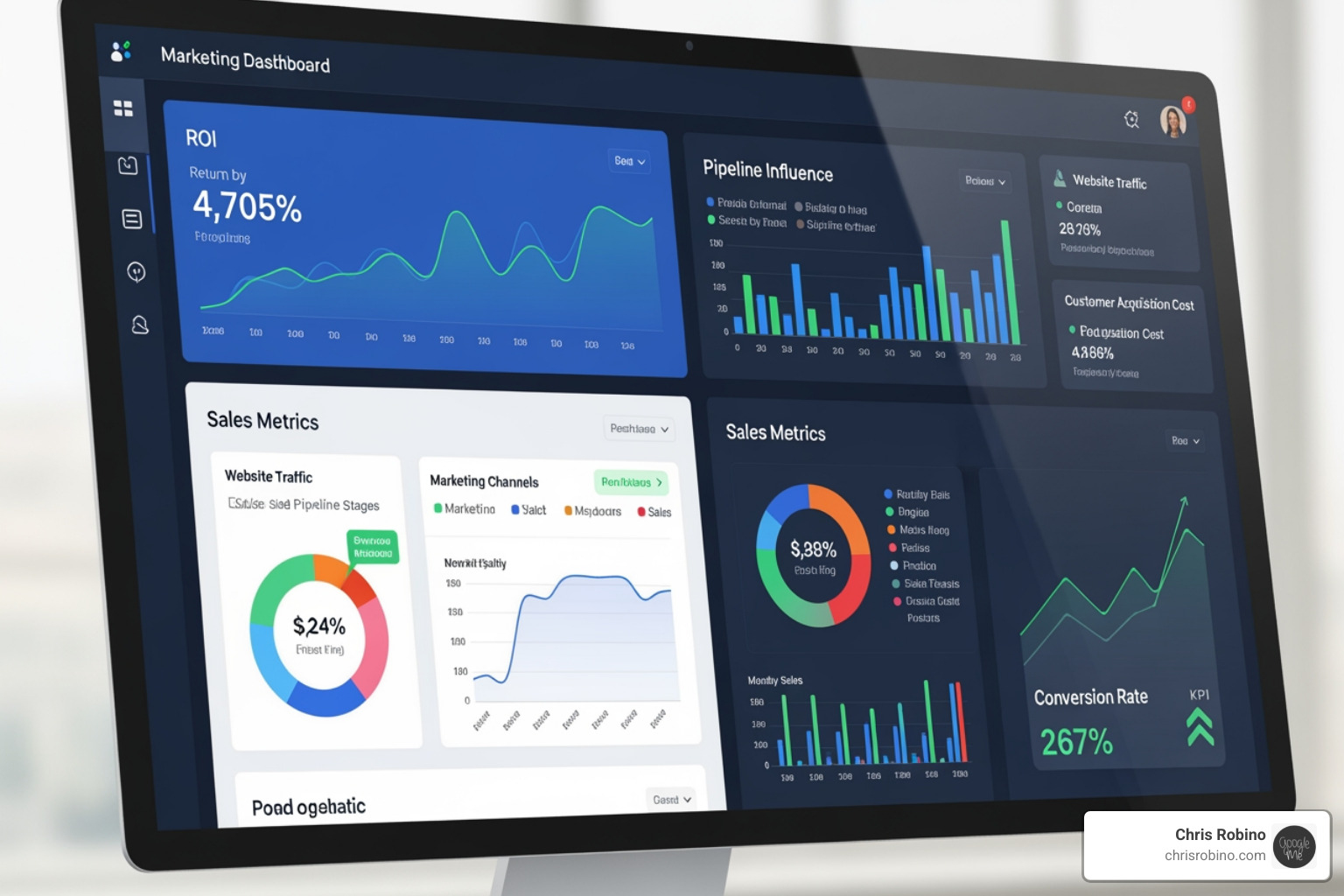
If you can’t measure it, you can’t improve it. Track the performance of your case studies to justify investment and refine your strategy.
Key Measurement Tactics:
- Track Deal Velocity: Use your CRM to see if deals that include case study touchpoints close faster or have higher win rates.
- Monitor Engagement: For web-based stories, track page views, time on page, and downloads. For videos, watch completion rates.
- Analyze Pipeline Contribution: Look for patterns where prospects engage with case studies before requesting a demo or converting.
Scaling and Best Practices:
- Standardize: Use templates and intake forms to streamline the nomination and creation process.
- Batch Production: Create 3-5 case studies at once to improve efficiency.
- Get Approval: Always secure explicit permission from customers before publishing. Engage their legal and PR teams early.
- Diversify Your Portfolio: Build a collection of stories that cover different industries, company sizes, and use cases to ensure all prospects can see themselves in your customer’s success.
By implementing these strategies, you can build a case study program that consistently fuels your sales pipeline. For expert guidance in scaling your SaaS content strategy, see how we can help as your SaaS content marketing consultant.