

How Generative AI Media Is Rewriting the Rules of Storytelling
Generative AI media is the use of artificial intelligence to create or assist in producing text, images, video, audio, and 3D content — transforming how stories are told, distributed, and experienced across film, journalism, sports, and entertainment. For large-scale enterprises, this technology represents more than just a creative tool; it is a fundamental shift in operational efficiency, digital presence, and the very architecture of brand communication. As organizations move toward automated workflows, the ability to maintain a cohesive narrative across thousands of digital touchpoints becomes both a challenge and a massive competitive advantage.
Here is a quick breakdown of what it means and why it matters for the modern enterprise:
| What | What It Means for Media |
|---|---|
| What it is | AI systems that generate original content from text prompts or data inputs |
| What it produces | Scripts, visuals, voiceovers, avatars, video, music, and more |
| Who is using it | Studios, newsrooms, sports leagues, marketing teams, and indie creators |
| Why it matters | Reduces production costs, speeds workflows, and personalizes content at scale |
| Key concern | Job displacement, deepfakes, copyright risk, and content commoditization |
The media industry has always evolved. From print to radio, from film to streaming — each wave brought new tools and new anxieties. But what is happening right now feels different because of the sheer velocity of change. Generative AI is not just speeding up production; it is reshaping who creates, how they create, and what audiences expect. A film can now begin with an AI-generated script, voiceover, and visual concept — all refined later by human professionals. Sports fans can chat with AI assistants that answer questions in real time. Newsrooms are automating routine reporting while journalists focus on investigation. This shift allows for a level of hyper-localization that was previously impossible, enabling global brands to speak to local audiences with culturally relevant nuances in real-time.
The numbers reflect this massive shift. The global generative media market surpassed $50 billion in 2024, with projections reaching $150 billion by 2027. Generative AI as a whole could contribute between $10 and $15 trillion to the global economy by 2030. For large companies, the challenge is no longer whether to adopt these tools, but how to do so while maintaining brand integrity, search visibility, and a distinct human touch that prevents content from feeling robotic or generic.
And yet, many audiences remain cautious about AI-produced content, especially in high-trust categories like news and financial reporting. The tension between possibility and disruption is real — and growing. Navigating this requires a blend of technical expertise, strategic foresight, and a commitment to transparency. Organizations must balance the drive for efficiency with the need for authenticity, ensuring that AI serves the story rather than the other way around.
I’m Chris Robino, a digital strategy and AI search expert with over two decades of experience helping organizations navigate complex technology shifts, including the rise of generative AI media across creative and enterprise industries. In the sections ahead, we will break down exactly how this technology works, where it is already being used, and the SEO strategies large companies can use to stay visible in an AI-saturated landscape.
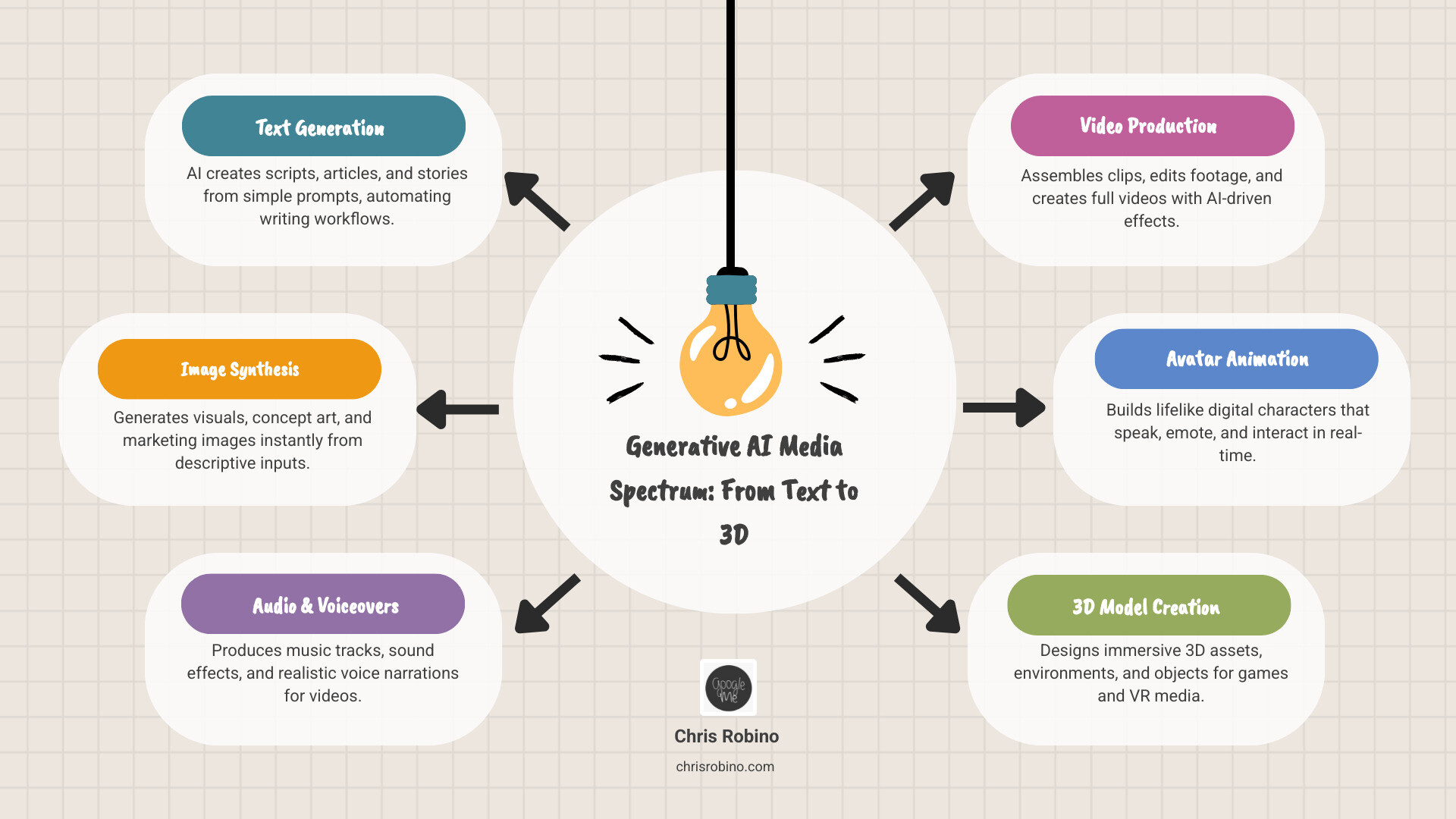
Generative AI media terms at a glance:
The Evolution of Generative AI Media in Production
As we move deeper into 2026, media production is increasingly AI-assisted. Today, AI often acts as a co-pilot across the creative lifecycle, from ideation to distribution. This integration is not merely about replacing human effort but augmenting it, allowing creators to explore more iterations in less time and push the boundaries of visual and auditory storytelling.
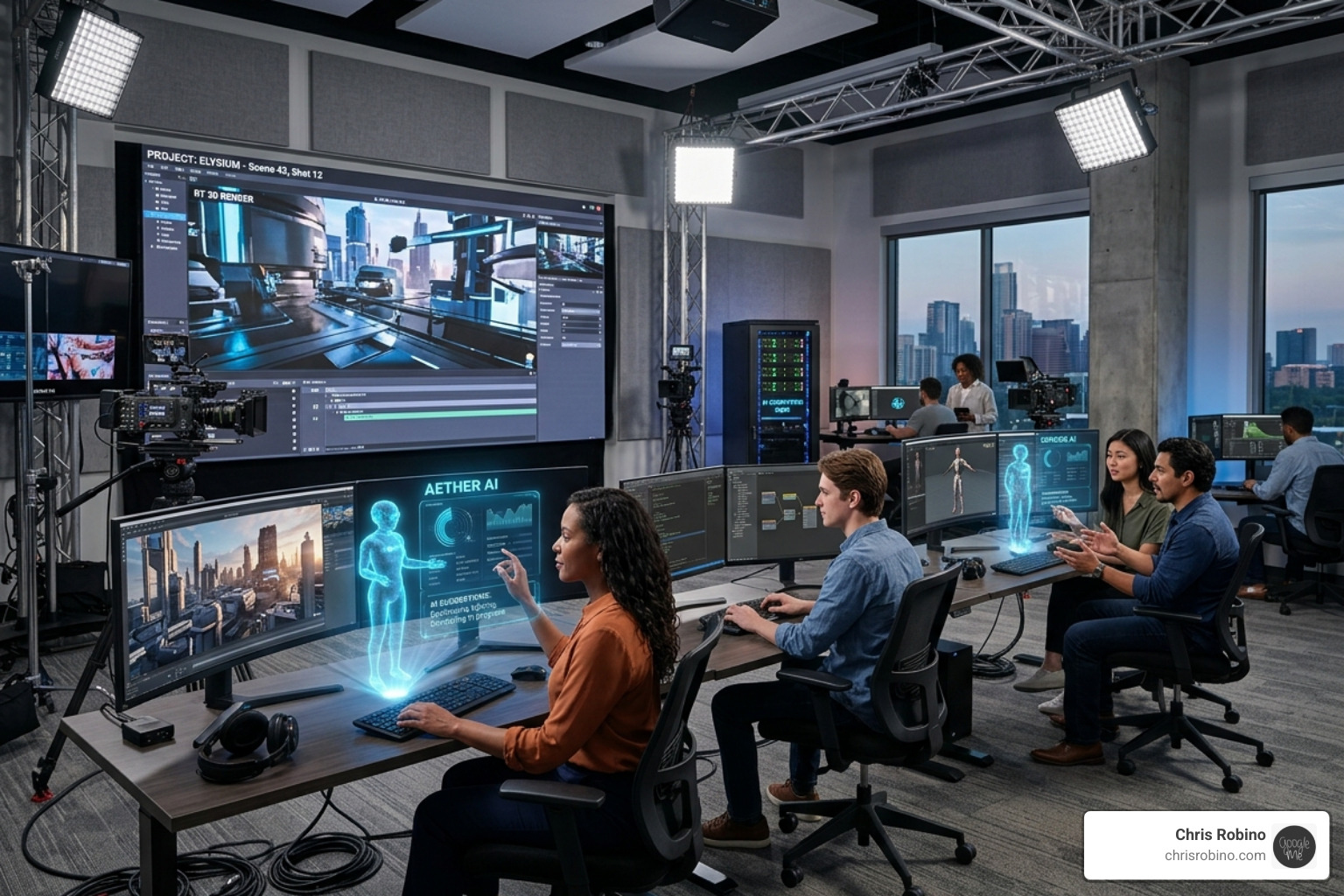
The primary drivers are efficiency and personalization. In the past, creating a high-quality video meant hiring a crew, renting a location, and spending weeks in post-production. Now, generative AI media can support tasks like synthetic frame interpolation, visual concepting, and faster compositing. This is not only about speed; it also expands what teams can produce within budget. For example, a single marketing campaign can now feature hundreds of variations tailored to specific demographics, languages, and regional preferences without a linear increase in cost.
For instance, production barriers have dropped sharply. When teams can generate a professional-grade audiobook for a fraction of traditional cost, the economics of storytelling change. This allows large companies to scale content libraries and localized assets more efficiently, reaching global markets that were previously cost-prohibitive to enter.
| Production Element | Traditional Cost (Est.) | Generative AI Cost (Est.) |
|---|---|---|
| Product Photography | $500 – $2,000 per image | $0.50 – $5.00 per image |
| Video Production | $1,000 – $5,000 per minute | $1.00 – $10.00 per minute |
| Audiobook Production | $5,000 – $15,000 per title | Under $50 per title |
| Script & Storyboarding | Weeks of human labor | Minutes via AI Agents |
Core Technologies and Enterprise Infrastructure
To understand how this works at scale, we have to look at the infrastructure behind it. Large-scale media companies are using cloud environments to support security, scalability, and speed. These environments allow for the deployment of foundation models that can be fine-tuned on proprietary data, ensuring that the AI-generated output remains consistent with the brand’s unique voice and visual identity.
Advanced AI platforms help teams build and scale generative AI applications using these foundation models. For teams that need more control, specialized machine learning workbenches can support model calibration and deployment for use cases like personalized avatars or branded visual systems. This level of customization is critical for enterprises that cannot afford the generic output often associated with consumer-grade AI tools.
The hardware matters too. High-performance AI chips and specialized processing units provide compute options for training and inference. This infrastructure enables multiple specialized AI agents—for scripting, voice, and visuals—to work together in one environment. For a large company, this can compress campaign timelines from months to days, allowing for rapid response to market trends and consumer behavior.
Real-World Applications in Sports and Cinema
Major organizations are already applying these tools to create more immersive experiences.
- Sports media: AI assistants trained on historical data and real-time statistics can provide fans with instant answers, increasing engagement and time-on-site. This technology also allows for the automated creation of highlight reels tailored to individual player preferences.
- Content libraries: AI tagging and segmentation can help organizations organize and monetize large archives faster. By automatically identifying scenes, actors, and themes, companies can repurpose legacy content for new platforms and audiences.
- AI-driven animation: Filmmakers can automate parts of animation, lighting, and compositing to reduce production time. This allows for more complex visual storytelling without the traditional overhead of massive animation teams.
By using advanced models through APIs, teams can access high-end production capabilities and produce video and 3D assets more efficiently. For enterprise media teams, that changes how budgets, staffing, and timelines are planned, shifting the focus from manual execution to strategic creative direction.
Navigating the Future: SEO Strategies, Ethics, and Personalization
While the efficiency gains of generative AI media are clear, the strategic challenge for large-scale organizations is maintaining visibility. As AI-generated content increases the volume of information online, enterprise SEO must shift from simple keyword targeting to a sophisticated model built on authority, technical precision, and brand governance. The goal is to ensure that as the web becomes more crowded, your organization remains a trusted source that both search engines and AI models prioritize.

Enterprise SEO Strategies for the AI Era
For large companies, SEO is no longer a siloed marketing task but a core component of digital infrastructure. The following strategies are designed to perform at scale in an AI-saturated landscape:
1. Establish Entity-Driven Authority
Modern search engines and AI models categorize information by “entities” rather than just strings of text. Large companies should organize content into robust topic clusters that connect core services to specific use cases and proprietary research. By establishing your brand as a definitive entity with clear relationships to high-value subjects, you build E-E-A-T (Experience, Expertise, Authoritativeness, and Trustworthiness) that is difficult for generic AI content to replicate.
2. Automate Technical SEO Governance
Consistency is the primary challenge for enterprise sites with thousands of pages. Organizations must automate technical hygiene, including the deployment of structured data from Schema.org. Automated schema management ensures that AI crawlers can instantly identify the context of your content, increasing the likelihood of appearing in rich snippets and AI-generated summaries. This also includes automated monitoring for crawl errors and internal linking logic to maintain site health at scale.
3. Prioritize Citation-Worthy Proprietary Data
To remain visible in AI-driven search results, companies must publish content that AI models want to cite. This means moving beyond generic summaries and focusing on original insights, proprietary data sets, and direct answers to complex industry questions. When your content is the most authoritative and easily extractable source, it becomes the primary reference for AI assistants and search engines alike.
4. Implement Content Lifecycle Management
Enterprise sites often suffer from “content debt”—outdated pages that dilute overall domain authority. Large companies should use AI-assisted workflows to audit legacy content, identifying pages that need to be refreshed, consolidated, or pruned. Updating facts, improving internal link structures, and ensuring all legacy assets meet modern quality standards preserves the site’s competitive edge and ensures that search equity is concentrated on high-performing pages.
5. Optimize for Multi-modal and Agentic Search
Generative AI media has expanded search beyond the text box. Large organizations must optimize all media assets—including video, audio, and 3D models—with descriptive metadata, transcripts, and high-quality visual cues. As users increasingly interact with voice-activated AI agents and visual search tools, having a multi-modal SEO strategy ensures your brand is discoverable across all digital touchpoints.
6. Rigorous Editorial and Ethical Oversight
While AI can accelerate content production, enterprise-grade SEO requires human-in-the-loop governance. Establish strict workflows for fact-checking, legal compliance, and brand alignment. Quality control is paramount; a single hallucination or factual error can damage brand trust and search rankings. Transparency regarding AI usage in content creation is also essential for maintaining long-term audience loyalty.
Journalism and the Fight Against Deepfakes
In the realm of journalism and corporate communications, the rise of generative AI media necessitates a focus on verification. Newsrooms and media departments need robust systems to detect deepfakes and prevent the spread of misinformation. For large enterprises, this means being transparent about content provenance and using digital watermarking or blockchain-based verification where necessary. Protecting the integrity of the narrative is as important as the speed of its delivery.
Conclusion: The Road Ahead for Media Professionals
The future of media is defined by human-AI collaboration. For the modern enterprise, the opportunity lies in using AI to handle the mundane aspects of production and technical SEO, freeing human talent to focus on high-level strategy and creative innovation. By adopting these tools thoughtfully and ethically, organizations can build a digital presence that is both scalable and profoundly human.
At ChrisRobino.com, we specialize in helping media organizations navigate this digital transformation for media. Whether it is integrating agentic workflows or refining search performance for large-scale sites, the goal is to keep the human in the driver’s seat, ensuring technology serves the brand’s long-term vision.
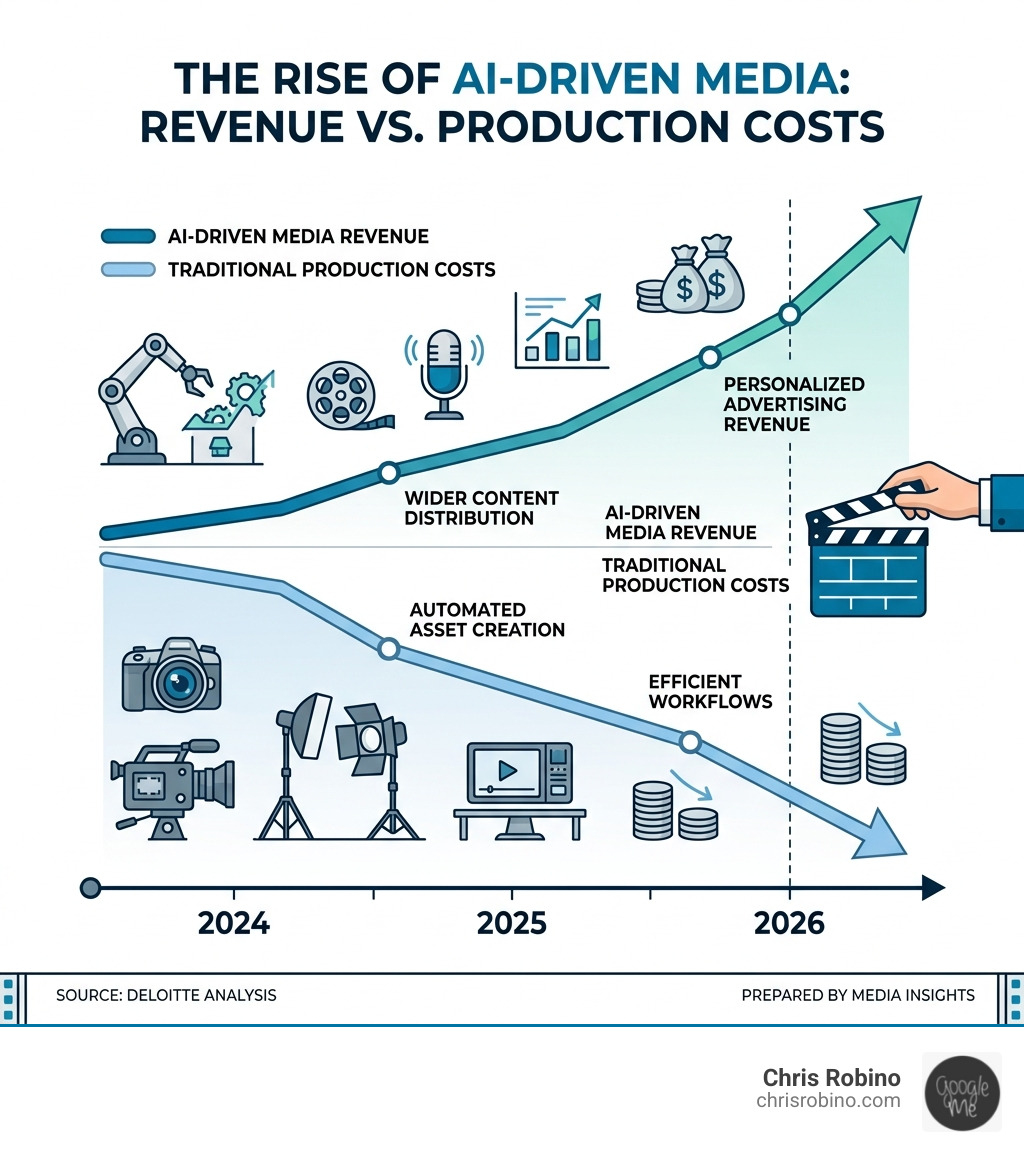
The script for the future is being rewritten in real time. By adopting these enterprise SEO and production strategies, organizations can stay innovative without losing trust, building a digital footprint that is resilient, authoritative, and ready for the next wave of media evolution.