

Why a Centralized Communication Platform Is the Fix for Workplace Tool Chaos
A centralized communication platform brings all your business conversations, files, and workflows into one place — so nothing gets lost, duplicated, or ignored.
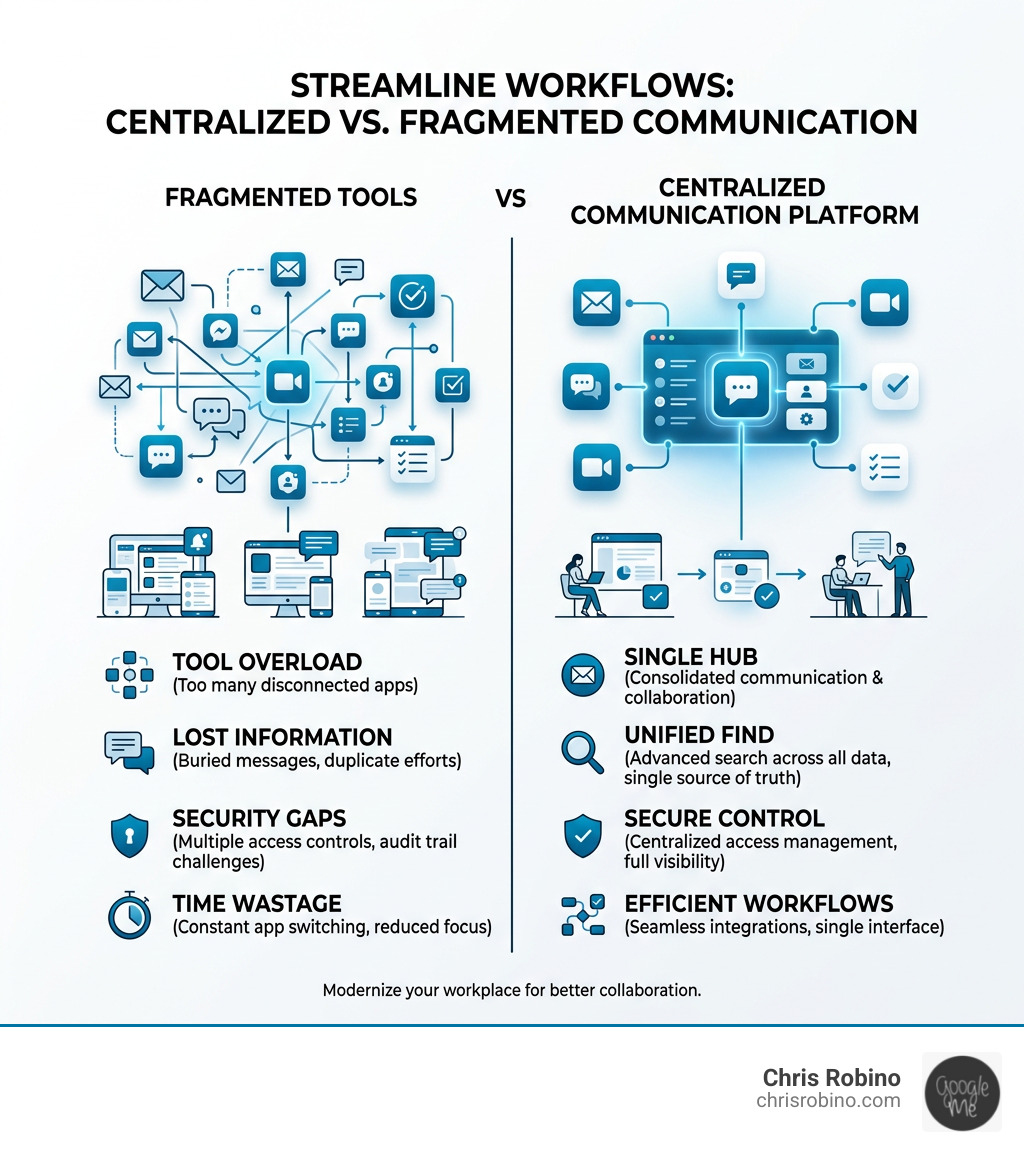
Here’s a quick breakdown of what it does and why it matters:
| What It Solves | How It Helps |
|---|---|
| Too many disconnected tools | One hub for email, chat, video, and tasks |
| Lost or buried messages | Unified inbox with advanced search |
| Inconsistent team messaging | Single source of truth for all updates |
| Security gaps across apps | Centralized access controls and audit trails |
| Wasted time switching apps | Integrated workflows in one interface |
The modern workplace is drowning in tools. Employees now juggle an average of nine different collaboration apps every week — yet only 32% feel their organization’s communication is actually consistent across those tools. Meanwhile, roughly 80% of work time goes toward activities that require some form of collaboration.
That’s a lot of effort poured into systems that aren’t talking to each other.
The result? Emails fall through the cracks. Important updates get buried in chat threads. Teams duplicate work because no one had the full picture. It’s not a people problem — it’s a platform problem.
I’m Chris Robino, a Digital Strategy Leader with over two decades of experience helping businesses streamline their digital workflows — including finding the right centralized communication platform to eliminate tool sprawl and drive real ROI. In this roundup, I’ll walk you through the best options available so you can make a confident, informed choice.
Terms related to centralized communication platform:
The Strategic Value of a Centralized Communication Platform
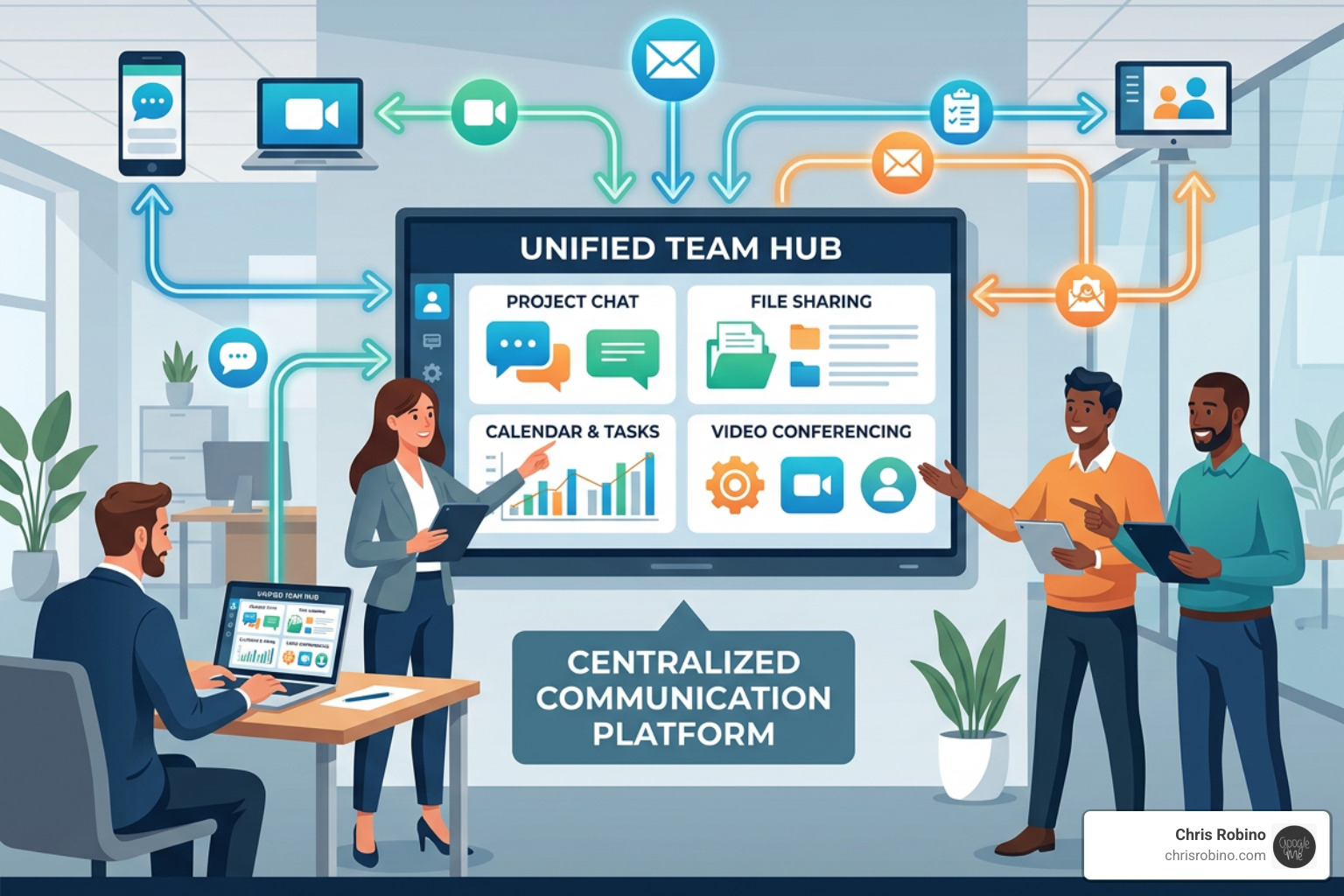
When we talk about digital transformation, we often focus on big data or cloud computing. However, the most immediate impact often comes from workflow optimization. A centralized communication platform acts as the “collective brain” of an organization. It is more than just a place to chat; it is a unified digital dashboard where people, knowledge, and processes meet.
According to industry research, the sheer volume of communications is making it harder for employees to focus. We are seeing a rise in “information silos” where critical data is trapped in one department’s specific app, invisible to the rest of the company. Centralization breaks these silos by ensuring that whether a message starts as an email, a chat, or a project comment, it is accessible to those who need it. This alignment is the foundation of high-level employee engagement and real-time collaboration.
Why Your Business Needs a Centralized Communication Platform
The “fragmented tool” approach is a productivity killer. We see it every day: a team member checks a chat app, then jumps to email, then logs into a project management tool, only to realize the file they need was sent via a private messaging app. This “tab roulette” causes significant notification fatigue.
A Harvard Business Review study highlights that employees spend about 80% of their time on collaborative activities. If that time is spent navigating 9 different tools per week, the “collaborative overload” becomes unsustainable.
Common communication challenges include:
- Scattered Information: Documents and decisions are spread across multiple platforms, making them nearly impossible to find later.
- Duplicated Efforts: Without a central view, two teams might unknowingly work on the same task.
- Inconsistent Messaging: When updates are sent through five different channels, versions get mixed up, leading to employee confusion.
- Wasted Resources: Paying for multiple overlapping subscriptions increases overhead without adding value.
By moving to a centralized communication platform, we eliminate the “void” where emails go to die and replace it with a transparent, searchable history of work.
Essential Features of a Modern Centralized Communication Platform
Choosing the right platform depends on your industry and team size, but several features are non-negotiable for a modern business.
- AI-Powered Messaging: Modern hubs now use AI to draft messages, summarize long chat threads, and even translate conversations in real-time. This reduces the time we spend on “busy work.”
- Unified Inbox: The ability to funnel emails, texts, and social media messages into one place is a game-changer for customer-facing teams.
- Omnichannel Integration: A platform shouldn’t just replace your tools; it should play nice with them. Look for systems that integrate with your existing CRM, HRIS, and cloud storage.
- Advanced Search: You should be able to search once and find results across all conversations and files.
- Task Management: Centralization works best when communication is tied directly to action. Being able to turn a chat message into a trackable task ensures accountability.
- Mobile Compatibility: For frontline or hybrid teams, a robust mobile app is essential to keep everyone in the loop.
For a deeper dive into the specific tools available, check out our guide on centralized-communication-tools.
Enhancing Security and Brand Consistency
Security is often the “hidden” benefit of centralization. When employees use a dozen different disconnected apps, each one is a potential entry point for a data breach. A centralized communication platform allows us to enforce unified security controls.
Key security features to look for include:
- SOC 2 Compliance: Ensures the provider follows strict data privacy and security protocols.
- End-to-End Encryption (E2EE): Keeps sensitive conversations private from everyone except the participants.
- Audit Trails: Detailed logs of who accessed what and when, which is vital for regulated industries.
- Data Sovereignty: The ability to choose where your data is stored (on-prem, private cloud, or air-gapped) to meet legal requirements.
Beyond security, centralization protects your “brand equity.” When internal communication is consistent, the external brand remains strong. A “single source of truth” for brand assets ensures that every team member, from marketing to sales, is using the latest approved messaging and logos.
Driving ROI Through Unified Workflows
Is centralization worth the investment? The data says yes. Research shows that consolidating tools can lead to over 20% cost savings on communication software alone. But the real ROI comes from reclaimed time.
| Feature | Fragmented Tools | Centralized Platform |
|---|---|---|
| Search Time | High (checking multiple apps) | Low (single unified search) |
| App Switching | Constant (decreases focus) | Minimal (integrated workflow) |
| Admin Overhead | High (managing 9+ licenses) | Low (one vendor, one bill) |
| Onboarding | Slow (learning multiple UIs) | Fast (one interface to master) |
When employees spend 80% of their time collaborating, even a 10% increase in efficiency through better tools translates to massive productivity gains. Centralization also enables data-driven decisions. With all your comms in one place, we can use analytics to see which messages get the most engagement and where workflows are getting stuck.
Implementing a Seamless Transition Strategy
Moving to a centralized communication platform is a significant change, and “change management” is the secret to success. You can’t just flip a switch and expect everyone to be on board.
Steps for a successful transition:
- Integration Mapping: Identify which existing tools (like email or chat apps) need to be brought into the new hub.
- Stakeholder Alignment: Get buy-in from leadership and department heads early.
- Pilot Programs: Start with one department to test the platform and gather feedback.
- Staff Training: Provide clear resources and “office hours” to help people get comfortable.
- Feedback Loops: Regularly ask employees what’s working and what isn’t.
A common pitfall is “over-centralizing” too fast without training. If people don’t know how to use the new system, they will revert to using private texts and emails, creating “shadow IT” that is even harder to manage.
Measuring Success with Data Analytics and SEO Insights
Once the platform is live, we need to measure its impact. Modern centralized tools provide deep analytics that were impossible to get with fragmented emails.
- Engagement Metrics: We can track open rates and click-through rates on internal announcements to see if the message is actually landing.
- Sentiment Analysis: Some AI-powered tools can even gauge the “vibe” of team communications to spot burnout or conflict before it scales.
- Internal Comms Dashboards: These provide a high-level view of how information flows through the company.
From an Enterprise SEO perspective, centralization also helps with content governance. By keeping all “knowledge base” articles and SOPs in one searchable hub, we ensure that the most relevant, up-to-date information is always at the top of the internal search results.
Conclusion
The “void” where emails and productivity go to die is a symptom of a fragmented workplace. By adopting a centralized communication platform, we don’t just reduce the number of tabs open on our browsers; we create a more engaged, secure, and efficient organization.
At ChrisRobino.com, we specialize in centralizing the work and insights of the emerging tech and media industry. Our mission is to provide a single portal for streamlined communication and access to the expertise you need to grow your business. If you are ready to stop the tool sprawl and start scaling, we are here to help.