

Why Enterprise SEO Without Strategy Wastes Most of Your Budget
Enterprise SEO isn’t about chasing keywords or publishing more pages. It’s a structured operating system for organic growth across complex websites, brands, and markets. A strong enterprise SEO strategy defines how a large company earns search visibility at scale—by aligning technical architecture, content, authority, and analytics to clear business outcomes.
- Definition: A commitment to a common SEO mission with structured activities that drive measurable growth.
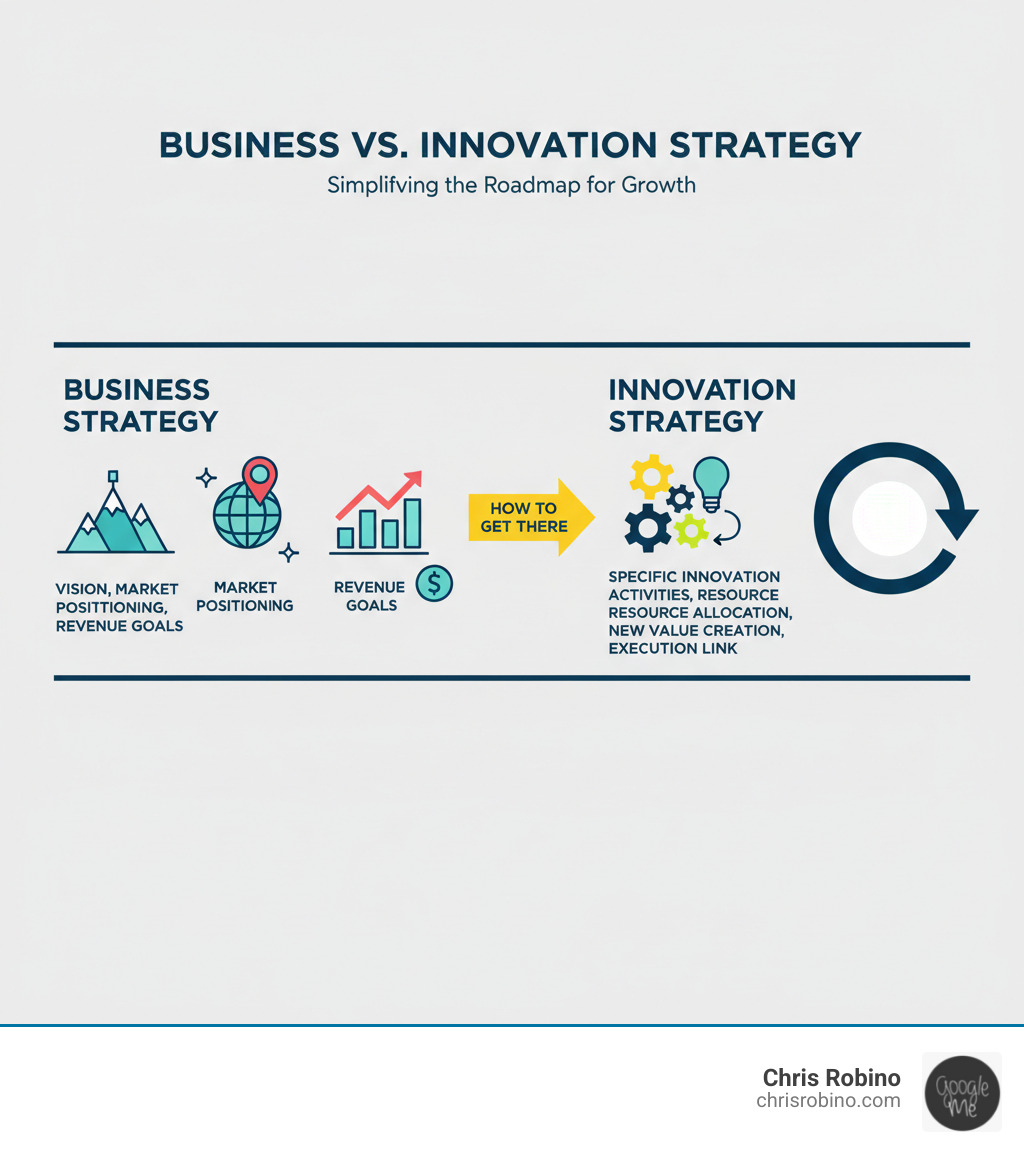
- Key Difference: Business strategy sets where you’re going; SEO strategy defines how organic search will get you there efficiently and predictably.
- Strategic Alignment: When SEO is tied directly to business goals, companies see faster decision cycles, better resource allocation, and consistent gains in non-brand traffic, lead quality, and revenue influence.
What drains enterprise budgets isn’t a lack of effort—it’s a lack of strategic clarity. Without a unified SEO roadmap, large organizations often:
- Duplicate content across business units and regions, causing cannibalization and diluted rankings.
- Ship site changes that break indexation, performance, or tracking.
- Produce content that doesn’t match search intent or the sales process.
- Miss opportunities in international and local search due to weak governance.
- Invest in tools without the workflows, data hygiene, or team enablement to realize value.
Search is now a primary findy layer for buyers and a persistent force multiplier on paid and brand investments. Research on innovation readiness shows that only 3% of companies are truly ready to capitalize on strategic opportunities—a pattern that extends to SEO where most enterprises operate without clear strategic frameworks. A scalable SEO strategy ensures your content is findable, technically sound, and authoritative across every buyer journey—while protecting site health and maximizing return on platform and content investments.
I’m Chris Robino, and I’ve spent two decades helping large organizations transform growth through disciplined strategy and execution. The difference between laggards and leaders isn’t luck; it’s systems. Treat SEO as a system—built on governance, prioritization, and continuous optimization—and your organic channel compounds year over year.
The Core Components of a Winning Enterprise SEO Strategy
Aligning SEO with Business Goals for Sustained Growth
Brilliant content no one finds is an expensive experiment. A winning enterprise SEO strategy is built on explicit alignment with revenue targets, market expansion, product launches, and brand priorities. Your business strategy sets outcomes (share of voice, pipeline, new markets); your SEO strategy operationalizes how organic search will achieve and measure those outcomes.

Effective alignment clarifies:
- Where organic can lower CAC and improve LTV by capturing intent earlier in the journey.
- Which product lines, geographies, and audiences merit prioritization.
- How to integrate SEO with product marketing, demand gen, PR, and sales enablement.
- What to measure (beyond rank checks) to validate business impact.
At Business and Technology Consulting, we’ve seen tight alignment turn scattered SEO activities into a coordinated growth engine.
The Four Pillars of Enterprise SEO
SEO isn’t one-size-fits-all. Large organizations need a balanced, scalable portfolio across four pillars:
- Technical Foundation: Crawl budget stewardship, site architecture, Core Web Vitals, JavaScript rendering, canonicalization, hreflang, structured data, sitemaps, and parameter governance. This protects discoverability and scalability.
- Content and Intent: Topic mapping to stages of the funnel, programmatic and template-driven content for catalogs, editorial playbooks for authority, and entity-based optimization to build topical depth.
- Authority and Reputation: Internal linking systems, brand-driven digital PR, thought leadership, partner mentions, and reputation management to strengthen signals of expertise and trust.
- Analytics and Experimentation: Clean data, robust attribution, ranking distributions (not vanity terms), share of voice, test-and-learn frameworks, and alerting to catch regressions early.
Effective enterprise SEO strategy development blends these pillars to meet business outcomes and adapts as your markets, products, and tech stack evolve.
Balancing Your SEO Roadmap with the Three Horizons Model
A practical way to allocate resources is to manage near-term wins alongside medium-term expansion and long-term bets.

- Horizon 1 (Core): Fix critical technical debt, improve CWV, optimize on-page and internal linking, clean indexation, and refresh top-performing content. These stabilize and grow existing demand.
- Horizon 2 (Adjacent): Build new content clusters, expand formats (video, tools), add structured data at scale, roll out local landing pages, and extend to new but related intent profiles.
- Horizon 3 (New): Launch net-new sections, programmatic pages from feeds, experimental SERP features, and international expansions that open new demand pools.
The 70-20-10 rule is a solid starting point for investment across Horizons 1, 2, and 3. Calibrate based on competitive intensity, product velocity, and market timing.
| Horizon | Focus | Risk Level | Typical Investment |
|---|---|---|---|
| 1 (Core) | Technical health, indexation, CWV, on-page, internal linking | Low to Moderate | ~70% |
| 2 (Adjacent) | New content clusters, structured data, local expansion | Moderate | ~20% |
| 3 (New) | Programmatic SEO, new sections, international growth | High | ~10% |
Balancing across horizons transforms SEO from reactive tasks into a managed, compounding investment.
From Blueprint to Reality: Implementing and Measuring Enterprise SEO
A Step-by-Step Framework for Enterprise Execution
Use this sequence to turn strategy into reliable, repeatable outcomes.
- Define Ambition and KPIs: Align on business goals (e.g., non-brand traffic growth, share of voice in core categories, pipeline influenced, revenue from organic). Set intent-based targets by segment and region.
- Audit Technical and Content Foundations: Run comprehensive crawl and render analysis, log-file reviews for crawl budget, CWV and performance profiling, index coverage, structured data health, and duplication/cannibalization checks. Inventory content against search intent and buyer stages.
- Architect for Scale: Establish a scalable information architecture (hub-and-spoke), canonical and parameter policies, pagination and faceted navigation rules, and hreflang strategy. Standardize templates, components, and metadata patterns in the CMS.
- Opportunity Sizing and Prioritization: Quantify traffic potential by topic and intent, model conversion and revenue impact, and score initiatives with effort/impact (e.g., RICE/ICE). Produce CFO-ready business cases for roadmap commitments.
- Execute in Workstreams: Technical backlog (indexation, rendering, CWV), content production (clusters, programmatic pages, refreshes), authority (internal linking, brand PR), and local/international (location pages, language/region rollouts). Integrate SEO into release trains and change control.
- QA and Change Management: Pre-production checks, staging crawls, redirect maps, schema validation, accessibility, and performance budgets. Maintain rollback plans, versioned sitemaps, robots rules by environment, and real-time monitoring after deploys.
- Automate and Template: Use feeds and design systems to scale category/PDP templates, “related content” modules, and internal link blocks. Automate alerts for traffic/rank anomalies, indexation drops, CWV regressions, and canonicals.
- Governance and Enablement: Stand up an SEO Center of Excellence, embed champions in product, content, and engineering teams, publish playbooks and checklists, and review quarterly to refresh priorities.
Our Accelerate Digital Transformation services help align platforms, data, and workflows so SEO can scale without bottlenecks.
Measuring What Matters: KPIs and ROI at Scale
Track a balanced scorecard that connects SEO work to business value.
- Demand and Visibility: Non-brand sessions, share of voice by category, ranking distributions (top 3/top 10), SERP feature presence, and impressions by intent.
- Quality and Conversion: Assisted and direct revenue from organic, pipeline influenced, lead-to-opportunity rate, and content-assisted deal velocity.
- Site Health and Efficiency: Index coverage accuracy, crawl-to-index ratio, CWV pass rates, structured data validity, and duplication/cannibalization reductions.
- Content Throughput and Impact: Publish velocity by template and cluster, refresh cadence, time-to-value for new pages, and percentage of pages generating traffic.
- International and Local: Hreflang coverage, language-region mapping accuracy, local pack visibility, and performance by market.
AI-Powered Analytics can unify rankings, logs, content, and revenue data to surface hidden opportunities and quantify ROI.
Building a Culture That Sustains SEO
Enterprise SEO thrives when it’s a team sport. Leaders should sponsor an experimentation mindset and invest in enablement, not just tools. Key cultural enablers include:
- Cross-Functional Collaboration: SEO embedded in product, engineering, content, brand, PR, legal, and analytics workflows. Clear RACI for changes that affect indexation and performance.
- Psychological Safety and Learning: Reward test-and-learn behaviors and publish postmortems for regressions and wins. Use controlled experiments and holdouts where possible.
- AI with Guardrails: Use AI to accelerate briefs, outlines, and localization, but require fact-checking, sourcing, and editorial review. Protect brand voice and E-E-A-T with strong governance.
- Living Strategy: Refresh quarterly based on competitive shifts, product launches, and platform changes. Rebalance horizon investments as markets evolve.
Your organization can turn organic search into a durable growth engine by pairing a clear strategy with disciplined execution. If you’re ready to operationalize enterprise SEO—across architecture, content, authority, and analytics—let’s partner with a technology innovation consulting firm that understands both the strategic framework and the operating model required to scale.