

Why Next-Gen Technologies Matter for Enterprise SEO Strategy
Next gen technologies are changing how large organizations approach SEO, digital visibility, and customer acquisition at scale. For big brands, SEO is no longer just about ranking for a few keywords; it’s about building a scalable, measurable system across markets, languages, and digital experiences.
Enterprise SEO now operates in an environment shaped by AI-driven search behavior, rapidly evolving algorithms, and tighter competition for high-intent queries. Advances in automation, analytics, and cloud infrastructure are also changing how teams execute and measure SEO programs. According to the World Economic Forum’s Global Risks Report, rapid technological change is among the top forces reshaping business strategy worldwide.
For large companies, the stakes are high:
- Organic search often represents a major share of enterprise traffic and revenue.
- Brand reputation is increasingly influenced by what appears in search results.
- Fragmented data and inconsistent execution across regions can erode ROI.
To win, large organizations must align next gen technologies with proven SEO fundamentals – creating repeatable processes that improve visibility, conversion, and long-term authority.
Enterprise SEO Challenges in a Next-Gen Environment
Large companies face SEO obstacles that smaller organizations rarely encounter:
- Complex Site Architectures: Thousands (or millions) of URLs, multiple subdomains, and legacy systems.
- Global Footprints: Multi-language, multi-region sites requiring consistent technical and content localization.
- Governance and Compliance: Regulated industries with stringent approval workflows.
- Siloed Teams and Tools: Marketing, product, IT, and analytics operating on disconnected platforms.
Next gen technologies – including AI-driven analysis, cloud-based platforms, and advanced automation – help solve these challenges only when they are integrated into a clear, enterprise-grade SEO strategy.
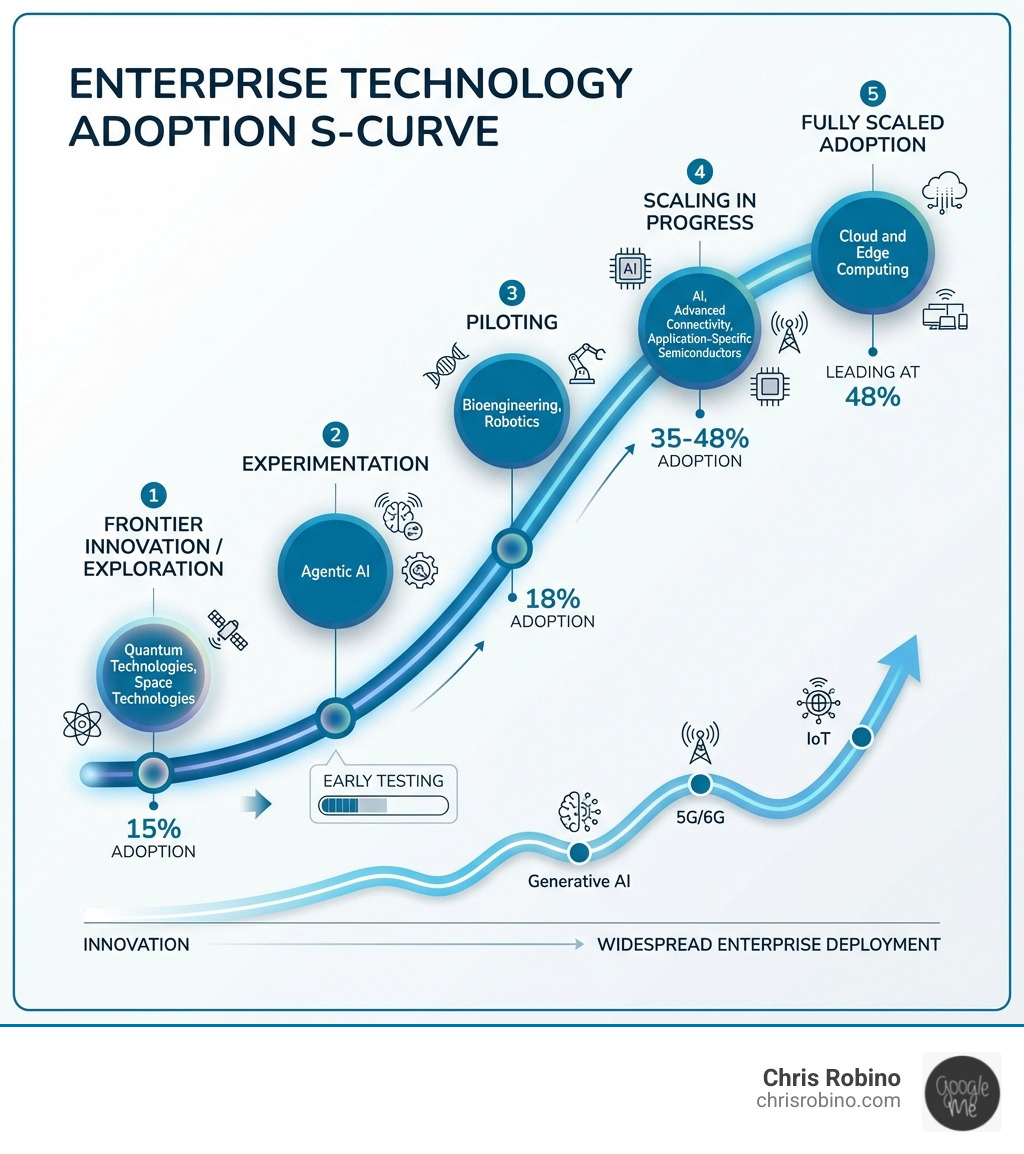
In this context, next gen technologies are not optional add-ons – they are enablers of scalable SEO programs that can adapt quickly to new search behaviors, market shifts, and algorithm updates.
Core Enterprise SEO Strategies Enabled by Next Gen Technologies

The best-performing enterprise SEO programs combine strong fundamentals with next gen technologies to improve speed, consistency, and decision-making across large sites.
AI-Driven Keyword and Intent Research
Advanced analytics help enterprises move beyond keyword lists and toward intent-based planning. At scale, this means:
- Clustering queries into topics and subtopics that map to customer journeys.
- Detecting emerging demand and content gaps across regions and languages.
- Prioritizing opportunities using a blend of search demand, conversion potential, and competitive difficulty.
The goal is a living roadmap that ties SEO to product priorities, customer needs, and revenue outcomes.
Scalable Content Operations with Guardrails
Generative AI can accelerate production, but enterprise content needs governance to protect quality, accuracy, and brand voice.
High-performing teams use AI to:
- Draft outlines, FAQs, and metadata that editors refine.
- Create localized variants while enforcing terminology and compliance rules.
- Standardize on-page recommendations (headings, internal links, schema prompts) across templates.
To keep quality high, define editorial checks (fact verification, brand review, legal/compliance where needed) and track performance by content type and intent.
Technical SEO for Complex Architectures
For large sites, technical SEO is a continuous program supported by automation and monitoring.
Key focus areas include:
- Crawl Budget and Indexation: Use crawl diagnostics and log-file analysis to identify wasted crawl paths, duplicate patterns, parameter issues, and orphaned pages.
- Site Performance and Core Web Vitals: Monitor speed regressions across templates, devices, and regions; fix bottlenecks in rendering, images, scripts, and caching.
- Structured Data at Scale: Deploy schema through templates and governance so markup remains consistent across thousands of pages.
- Internal Linking Systems: Create rules-based linking (navigation, related content, hubs) so authority flows to priority pages without manual effort.
The outcome is better discoverability, stronger rankings for competitive queries, and fewer surprises during releases.
International and Multilingual SEO
Global enterprises need a repeatable approach to localization to avoid cannibalization and duplicate content problems.
Next gen workflows support:
- Consistent implementation of hreflang, canonicalization, and localized metadata.
- Market-specific content that reflects local intent, not just translation.
- Quality controls for template changes so technical elements remain correct across regions.
Search Experience Optimization (SXO)
Enterprise SEO wins when it improves outcomes, not just rankings.
Use analytics and experimentation to:
- Measure engagement and conversion from organic landing pages.
- Test layout, messaging, and content depth by intent (informational vs. transactional).
- Identify friction (slow pages, unclear CTAs, weak trust signals) that reduces lead quality or revenue.
This shift toward experience and outcome metrics helps large companies prioritize changes that compound performance over time.
Governance, Measurement, and Strategic Value of Enterprise SEO
Enterprise SEO is an operating model: standardized execution, clear ownership, and measurement that connects work to business impact.
Governance and Operating Models for Large Companies
To succeed at scale, establish governance that reduces inconsistency across teams:
- Defined Roles and Responsibilities: Clarify ownership for technical SEO, content strategy, analytics, and regional execution.
- Standardized Frameworks: Set global rules for URL structures, metadata, internal linking, structured data, and content quality.
- Release and Change Management: Add SEO checks to product roadmaps, design reviews, migrations, and deployment cycles.
Workflow tools and shared documentation help teams move faster while keeping accountability and auditability.
Measuring SEO Performance: Beyond Traffic

Enterprise measurement should connect SEO activity to outcomes, not isolated vanity metrics.
Track performance across:
- Revenue and Pipeline Impact: Attribute organic traffic to sales, subscriptions, or lead quality where possible.
- Content Efficiency: Evaluate how content performs relative to production cost and lifecycle stage (new vs. existing pages).
- Technical Health: Monitor index coverage, crawl efficiency, structured data validity, and site speed at the template level.
Centralizing SEO data in shared reporting reduces debate and improves prioritization.
Total Cost of Ownership (TCO) of Enterprise SEO
SEO investment includes more than tools and content creation. Account for:
- Platform and infrastructure costs for crawling, analytics, and reporting.
- Internal resources for implementation, training, and cross-functional coordination.
- Ongoing maintenance for technical improvements, redesigns, and migrations.
Clear TCO makes it easier to forecast ROI and defend long-term initiatives.
Strategic Benefits: From Visibility to Durable Advantage
When paired with disciplined execution, enterprise SEO creates compounding benefits:
- Stronger Brand Authority: Consistent visibility for high-intent topics reinforces trust.
- Resilience: A strong organic baseline helps reduce dependence on volatile paid performance.
- Always-On Market Insight: Search data informs product messaging, content priorities, and regional demand.
A Future-Ready Enterprise SEO Roadmap
A practical roadmap for large companies typically includes:
- Technical foundations: crawlability, indexation control, performance, and structured data.
- Scalable content systems: topic planning, templates, internal linking, and quality controls.
- Governance: clear ownership, standards, and SEO baked into releases.
- Measurement: reporting that ties SEO to conversions, revenue, and customer outcomes.
In a world shaped by next gen technologies, large organizations that run SEO as a standardized, technology-enabled program – not a set of one-off tasks – are best positioned to grow sustainable organic performance. For more insights on how emerging tech intersects with digital strategy, visit Chris Robino’s portal.