

Why AR Content Creation Matters Now More Than Ever
AR content creation is the process of building digital elements—3D models, animations, and videos—that can be overlaid onto the real world using devices like smartphones. It is increasingly important in modern marketing and customer experience strategies, with studies showing a 94% higher conversion rate and 90% higher engagement compared to traditional media.
For large companies focused on scalable SEO and digital growth, AR content now complements search strategies: interactive product views and immersive explainers keep users on-site longer, improve behavioral signals, and create highly linkable assets. AR experiences embedded on key landing pages can support long-tail keyword strategies (for example, “virtual try-on for [product type]” or “3D view of [product name]”) and strengthen topical authority.
With billions of smartphone users globally, AR offers a massive audience without needing special hardware. Better yet, creating AR content is more accessible than ever. Existing assets like videos and presentations can be repurposed, and user-friendly tools allow non-technical creators to build professional experiences that can be surfaced through organic search.
This guide provides a complete roadmap for creating impactful AR content, from strategy to deployment, with a particular eye on SEO-aligned content planning and measurement. I’m Chris Robino, a Digital Strategy Leader and AI & Search Expert. I’ve spent over two decades helping businesses use innovative technology like AR to achieve measurable results and build sustainable organic visibility.
For a concise overview of how augmented reality works at a technical level, you can review Augmented reality on Wikipedia.
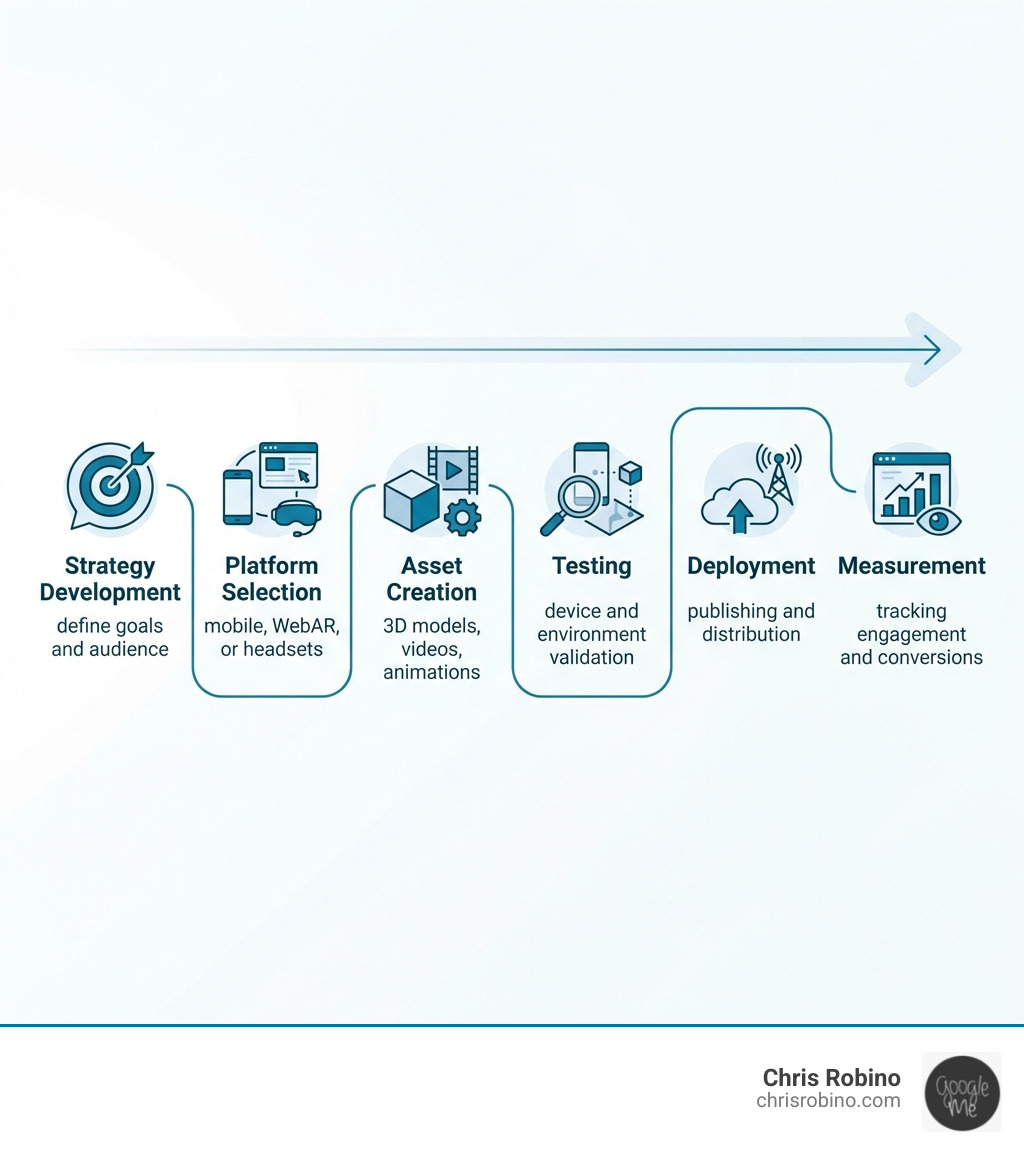
Your Step-by-Step Guide to AR Content Creation
Creating AR content can seem complex, but a clear roadmap makes it manageable. This guide breaks the process into five steps, from strategy to deployment, ensuring your AR experiences deliver real value and support your broader SEO and content goals. A systematic approach is key to turning technological novelty into strategic success, especially for large organizations coordinating multiple channels and regions. For more on how strategic planning drives innovation, explore our insights on Business Innovation Strategies.
From a search perspective, each stage of AR development also offers opportunities to strengthen organic performance:
- Strategy informs which high-intent keywords and topics your AR content should support.
- Platform selection affects how crawlers access, render, and index your experiences.
- Asset creation provides rich media that can earn backlinks and improve engagement metrics.
- Testing and deployment ensure performance and accessibility, which are core technical SEO concerns.
Step 1: Laying the Strategic Foundation
Before creating any content, a robust strategy is essential. First, define your goals. Are you trying to boost sales, improve training, increase brand engagement, or support a specific organic search campaign? Setting clear Key Performance Indicators (KPIs)—like conversion rates, interaction time, organic traffic to AR-improved pages, and assisted conversions—will help measure success.
Next, identify your target audience. Their technical savvy and device access will influence your choice of AR type and platform, and also the search terms they are likely to use. For large enterprises, segment audiences by region, language, and buyer stage so AR experiences can be localized and mapped to relevant keyword clusters.
Finally, consider your budget. AR projects can range from low-cost experiences using existing assets to significant investments in custom development. You can build a team in-house, outsource to an agency for specialized support, hire freelancers for specific tasks, or use accessible AR creation platforms. For SEO at scale, factor in:
- Content operations costs for updating AR assets in step with product releases.
- Translation and localization of AR overlays, captions, and on-page copy.
- Analytics implementation so AR engagement data can be joined with search and conversion data.
A well-defined strategy ensures your efforts are focused and effective. For deeper insights, check out our guide on Content Strategy Consulting.
Step 2: Choosing Your AR Type and Platform
With a strategy in place, select the right AR technology and delivery platform. The choice depends on your use case and audience, as well as how you intend to surface and support the content through organic search.
| AR Type | How it Works | Best For |
|---|---|---|
| Marker-based AR | Triggers content by scanning a specific image (a “marker”). | Linking physical items like product packaging or print media to digital content, and creating trackable campaigns that bridge offline and online journeys. |
| Markerless AR | Places virtual objects on any real-world surface. | Product visualization (e.g., virtual furniture) and interactive exhibits that can be embedded on SEO-optimized product or category pages. |
| Location-based AR | Overlays content at specific GPS coordinates. | Tourist guides, historical tours, and location-specific games that can rank for local and “near me” queries. |
| Face Tracking AR | Maps digital elements onto a user’s face. | Social media filters and virtual try-ons for cosmetics or accessories that drive branded search and referral traffic. |
| Projection-based AR | Projects interactive imagery onto physical surfaces. | Guided assembly instructions and hands-on training simulations, often linked from help centers and support content. |
Modern AR technologies allow for dynamic experiences where objects can adjust to lighting, fit into a space, and even interact with people.
Next, choose your delivery platform:
- Mobile Apps: The most common channel, reaching billions of smartphone users. Dedicated apps offer the most robust features and performance. For SEO, ensure key AR experiences are mirrored on crawlable web pages with descriptive content, schema markup, and internal links.
- WebAR: Allows users to access AR through a web browser with no app download required, reducing friction and increasing accessibility. WebAR is particularly powerful for SEO since these experiences can live directly on indexable URLs.
- AR Headsets: These devices offer the most immersive experiences, ideal for enterprise, professional, and gaming applications. While headset content is less directly tied to web search, supporting documentation, demos, and landing pages can still be optimized.
Your platform choice will affect asset requirements and deployment. Learn more about managing content across channels in our guide to Cross-Platform Content.
Step 3: The Core of AR Content Creation: Sourcing and Building Assets
This is where your AR vision comes to life. The great news is you don’t always have to start from scratch.
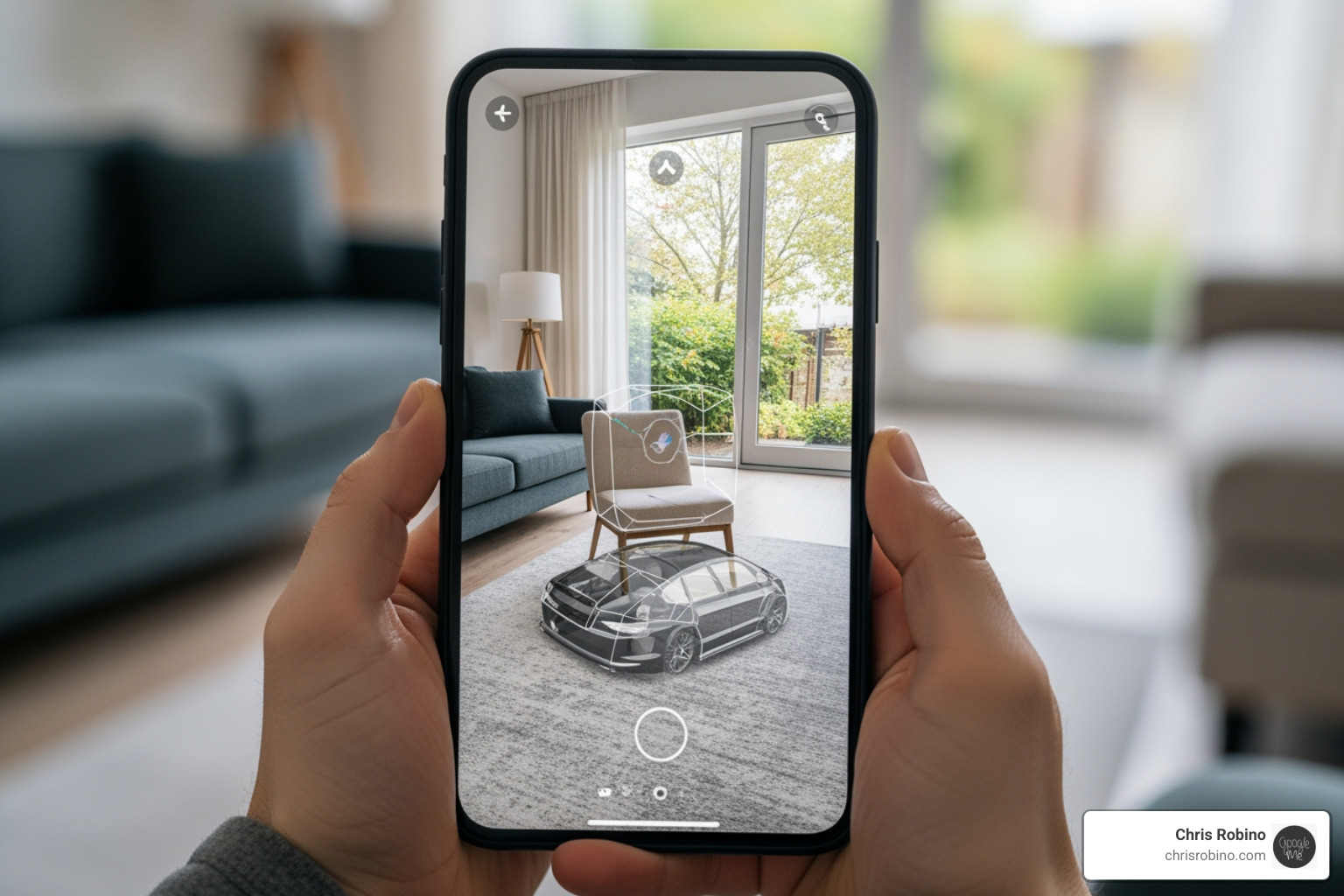
From an SEO standpoint, treat AR assets as part of your content library. Each model or scene should have:
- A descriptive file name and internal identifier.
- Supporting on-page copy that uses natural language and relevant keywords.
- Alt text and captions for any screenshots or demo videos.
Key asset approaches include:
- Repurpose Existing Content: Existing videos (MP4s) and presentation slides (saved as JPGs) can be easily integrated into AR experiences. A product brochure could trigger an AR gallery of presentation slides or a video demonstration. Embedding these AR-improved media elements on optimized landing pages can improve dwell time and engagement.
- Source 3D Models: 3D models are central to many AR experiences. You can create them using beginner-friendly or professional-grade 3D software. Alternatively, online asset stores offer vast libraries of free and affordable 3D models ready for AR. When publishing, add structured data (such as Product and VideoObject where applicable) so search engines understand the context of AR views.
- Explore Volumetric Video: This technology captures real people and objects in 3D, allowing them to be viewed from any angle in AR. Modern platforms are making it possible to create this content with just a smartphone. Short volumetric clips can then be repurposed into standard video formats that support video SEO.
- Hire Talent: For custom, on-brand assets, freelance platforms connect you with skilled 3D artists and AR developers who can bring your specific vision to life.
The mix of 3D models, videos, images, and animations you use will define the richness of your AR experience. For more strategies on leveraging digital content, explore our insights on Digital Media Marketing.
Step 4: Testing, Deployment, and Overcoming Challenges
Before launch, rigorous testing is critical to ensure a smooth user experience. For large organizations, this stage also safeguards technical SEO and performance at scale. Here are common challenges and how to address them:
- Technical Skill Gaps: For complex projects, you may need specialized skills. Overcome this by using no-code AR platforms, repurposing existing content, or hiring freelancers for specific tasks. Document implementation patterns centrally so teams across markets can reuse proven approaches.
- Asset Optimization: Large, high-quality assets can slow down performance. Optimize 3D models by reducing polygon counts and compressing textures. Faster load times improve both user satisfaction and Core Web Vitals metrics that affect SEO.
- User Experience (UX): AR must be intuitive. Focus on clear instructions, natural interactions, and obvious calls to action that tie back to your business and search goals (such as “View more details” links to related internal pages). Test with users early and often to refine the experience.
- Real-world Variability: AR performance can be affected by lighting, surfaces, and clutter. Test in diverse, real-world environments to ensure reliability, and provide troubleshooting tips in your on-page copy and FAQs.
Deployment Best Practices:
Test your AR content across a range of devices (smartphones, tablets, headsets) to ensure compatibility. Once validated, deploy based on your chosen platform: via app stores for mobile apps, a URL for WebAR, or specific software packages for AR headsets. For enterprise deployments across many devices, an XR Mobile Device Management (MDM) solution can streamline content updates.
For SEO, ensure that:
- Each AR experience has an accompanying HTML page with crawlable text content.
- Canonical URLs are correctly set to avoid duplication across localized variants.
- XML sitemaps include key AR pages, and internal links connect them to relevant sections of your site.
This phase is a key part of the broader journey of Digital Transformation for Media.
Step 5: Business Applications and Future Trends in AR Content Creation
The power of AR content creation lies in its practical applications and future potential.
Business Applications:
- Marketing and Sales: AR transforms static packaging and ads into interactive experiences. This drives a 94% higher conversion rate and 90% higher engagement. It also allows customers to visualize products in their own space, increasing purchase confidence. From an SEO viewpoint, these experiences can be promoted through optimized campaign pages and content hubs that target mid- and bottom-funnel queries.
- Training and Education: AR makes learning more effective and engaging. It can turn textbooks into interactive 3D models or provide safe, hands-on training for complex machinery. Studies show a 70% improved learning experience with AR. Documentation, manuals, and knowledge base articles that link to AR modules can be optimized to capture how-to and troubleshooting searches.
- Remote Support: Experts can remotely guide field technicians by annotating their real-world view through an AR overlay, reducing downtime and travel costs. Support centers can then create SEO-friendly guides and case studies that describe these AR workflows, capturing search demand around “remote diagnostics” and similar topics.
Future Trends:
The future of AR is evolving rapidly with the integration of AI for generating assets and personalizing experiences. The rise of accessible volumetric video will allow for more realistic 3D captures of people and objects. As AR headsets become more common and the concept of a “real-world Metaverse” grows, the demand for high-quality, immersive AR content will increase sharply.
For large companies, winning in search will increasingly depend on offering richer, more interactive experiences that answer user intent better than static pages alone. AR will play a central role in:
- Creating differentiated, experiential content around key commercial topics.
- Generating data signals (like interaction depth and repeat visits) that correlate with strong organic performance.
- Building assets that earn organic coverage and links from press, industry publications, and creators.
Staying ahead of these trends is crucial for businesses looking to innovate. To learn more, explore our insights on Augmented Reality Trends.
Conclusion: The Future is Augmented
We have seen that AR content creation is an accessible and powerful tool for any business, not just tech giants. When aligned with a clear SEO strategy, AR can transform high-value pages into immersive destinations that attract, engage, and convert searchers.
By following a clear process—from strategy and platform selection to asset creation, testing, and deployment—you can create experiences that drive engagement, boost conversions, and revolutionize training, while also supporting long-term organic visibility. Mapping each AR initiative to keyword themes, search intent, and measurable KPIs keeps projects accountable and scalable.
The challenges are manageable with modern tools and the smart repurposing of existing content. Augmented reality is already woven into our daily lives through smartphones and is rapidly expanding into more immersive devices. For large organizations, integrating AR into your content and SEO roadmap now will make it easier to adapt as search experiences become more visual and interactive.
For those ready to harness this transformative technology, expert guidance can make all the difference—from prioritizing the right AR use cases and defining measurement frameworks to aligning technical implementation with enterprise SEO standards. As a Technology Innovation Consulting Firm, we can help you steer the complexities of AR, integrate it into your digital strategy, and ensure your investments pay off across channels, including organic search.