
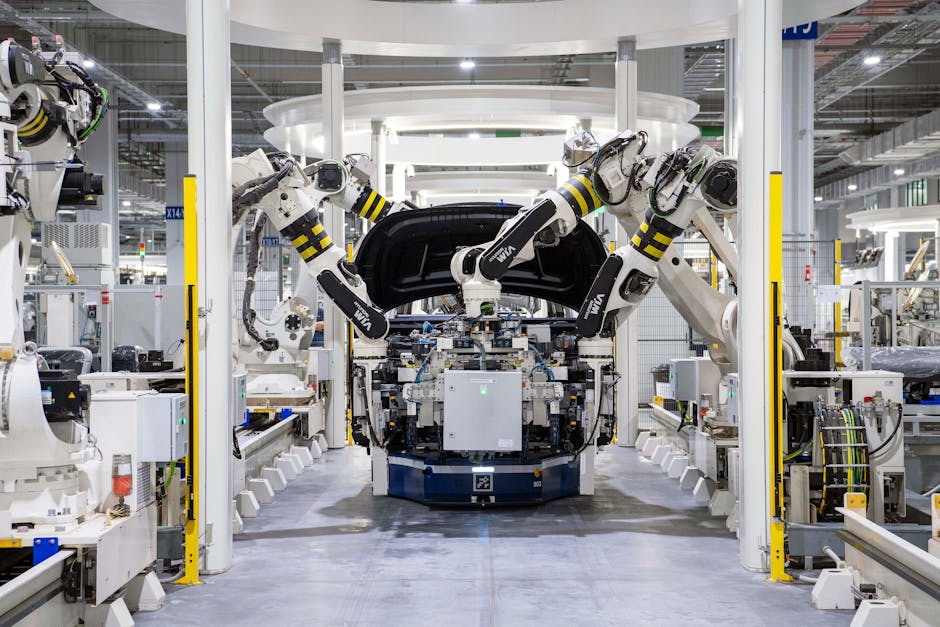
Why Enterprise SEO Strategies for Large Companies Are Reshaping Modern Manufacturing Visibility
In the high-stakes world of industrial manufacturing, being visible online is no longer just about having a website; it is about dominating the search landscape for high-value terms like automation robots for industry. For large companies, SEO is not a series of small tweaks but a massive, coordinated operation that requires the same precision as a robotic assembly line. Enterprise SEO strategies are the programmable frameworks that allow global organizations to perform digital marketing tasks—like keyword mapping, technical auditing, and content scaling—faster and more effectively than smaller competitors.
Here’s a quick snapshot of the enterprise SEO landscape for 2024:
| Factor | Key Facts |
|---|---|
| Average Page Count | 10,000 to 1,000,000+ pages per domain |
| Primary Focus | Scalability, automation, and cross-departmental alignment |
| Technical Priority | Crawl budget optimization and site architecture |
| Content Strategy | Topic clusters and E-E-A-T (Experience, Expertise, Authoritativeness, Trustworthiness) |
| Growth Forecast | 25% increase in AI-driven search integration by 2025 |
| Key Strategy Types | Programmatic SEO + High-authority brand building |
| Top Challenges | Legacy CMS limitations, internal silos, and global localization |
The data surrounding digital visibility for industrial sectors tells a clear story. Large companies are no longer competing just on product quality; they are competing on the ability to be found. As the market for industrial technology expands, the complexity of the search results page (SERP) grows with it. Labor shortages in digital marketing departments and the push for automated reporting are forcing CMOs to rethink how organic growth is achieved.
In 2024, the most successful large-scale organizations are those that treat their SEO strategy as a core business asset. This isn’t a temporary trend; it is a fundamental shift in how global brands maintain market share. Whether you are managing a site with thousands of product SKUs or navigating the complexities of international subdomains, this guide breaks down the strategies that actually move the needle for enterprise-level organizations.
I’m Chris Robino, a digital strategy and AI automation expert who has spent over two decades helping organizations cut through complexity and make smarter technology decisions. Let’s dig into how large companies can leverage advanced SEO to dominate the market for automation robots for industry and beyond.

The Global Surge of Data-Driven SEO for Large Organizations
The landscape of search is shifting beneath our feet, much like the manufacturing floors of the world’s largest factories. We are no longer talking about simple keyword stuffing; we are talking about the massive uptick in data-driven SEO strategies that perform well for large companies. This movement is driven by a perfect storm of technological maturity and the economic necessity to capture high-intent traffic at scale.
Current Trends in Enterprise Search Strategy
As of 2024, the sheer volume of data that large companies must process to maintain their search rankings is staggering. For a company operating in the automation robots for industry sector, managing a global digital footprint requires more than just a few blog posts. It requires a sophisticated understanding of how search engines interpret massive datasets. The world has seen a doubling of digital content production over the last decade, making the competition for the first page of search results more intense than ever.
Asia remains a heavyweight champion in digital adoption, but Western enterprises are catching up by focusing on high-density technical SEO. In 2024, companies that prioritized technical health saw a significant increase in their organic visibility. China, for instance, has hit a historic milestone in its digital infrastructure, and domestic manufacturers there are using highly localized SEO strategies to command market share. For a deeper dive into how global demand shifts impact digital strategy, you can view the Scientific research on global robot demand, which serves as a prime example of the high-authority content that search engines prioritize.
Key Drivers and Future Outlook Through 2028
Why the rush to adopt enterprise-level SEO? Several factors are at play. First, there is the “nearshoring” of digital talent—companies are bringing their SEO strategy in-house to ensure it aligns perfectly with their core business goals. Second, the aging infrastructure of many corporate websites has created a massive technical gap that only modern, automated SEO solutions can fill. Looking ahead, the momentum isn’t slowing down. Experts predict that the integration of AI into search workflows will grow by another 6% in 2025. By 2028, we expect to see a complete transformation in how large companies handle content, moving toward ai-powered-automation where search strategies aren’t just following a script—they are adapting to user intent in real-time.
Implementing SEO Solutions: Benefits and Applications for Large Companies
Choosing the right SEO strategy for a large company is a bit like selecting the right machinery for a factory floor. You need to know the strengths of each approach, the limits of your current infrastructure, and how different departments will interact with the new systems. In the realm of high-level digital growth, the two main “candidates” are traditional SEO tactics and enterprise-scale programmatic strategies.
Comparing Enterprise SEO vs. Traditional SEO Strategies
Traditional SEO tactics are the “heavy lifters” for smaller sites, focusing on manual link building and individual page optimization. However, for a large company dealing with automation robots for industry, these manual processes are often too slow. Enterprise SEO, on the other hand, is designed to work at scale. It features built-in automation for meta-tag generation, internal linking, and schema markup, meaning it can optimize thousands of pages simultaneously.
| Feature | Traditional SEO Tactics | Enterprise SEO Strategies |
|---|---|---|
| Scale | Small to medium (1-500 pages) | Massive (10,000+ pages) |
| Implementation | Manual updates and individual edits | Programmatic and automated systems |
| Technical Focus | Basic site speed and mobile-friendliness | Crawl budget, edge SEO, and log file analysis |
| Content Approach | One-off blog posts and landing pages | Topic clusters and automated content hubs |
| Reporting | Simple traffic and ranking reports | Multi-touch attribution and data lake integration |

High-Impact SEO Applications Across Large Sectors
Modern SEO strategies for large companies are incredibly versatile. Here are the areas where we see them making the biggest impact today:
- Programmatic Content: Large companies use data to generate thousands of high-quality landing pages for specific locations or product variants, ensuring they capture long-tail search volume.
- Internal Linking Optimization: Using algorithms to ensure that high-authority pages pass their “link juice” to newer or underperforming sections of the site, much like how a central controller manages a fleet of robots.
- Global Localization: Large organizations must manage hreflang tags and localized content across dozens of countries to ensure the right user sees the right version of the site.
- E-E-A-T Development: Building authority through white papers and technical documentation. For example, providing comprehensive technical documentation and industry-standard training modules is an excellent way to demonstrate expertise and build massive organic authority.
- Technical Health Monitoring: Automated systems that alert SEO teams the moment a critical page is blocked by robots.txt or a 404 error occurs, preventing massive traffic losses.
Enhancing Performance with Integrated Digital Platforms
An SEO strategy is only as good as the data controlling it. Leading companies are now moving toward “The Connected Enterprise,” where search data is fully integrated into the company’s digital nervous system. Platforms that allow for unified data control enable marketing teams to see how organic search impacts the bottom line in real-time. This integration can lead to staggering results, such as organic conversion rates increasing by over 20% through better user intent matching. Digital twin software also allows us to simulate how a site architecture change might impact crawlability before we even push the code to production. To understand how this fits into the broader digital landscape, check out our guide on robotics-process-automation.
Overcoming Challenges in Enterprise SEO Implementation
While the benefits are clear, bringing advanced SEO strategies into a large organization isn’t always easy. There are three main hurdles we help companies clear:
- ROI Calculations: It isn’t just about traffic; it’s about revenue. You have to factor in the lifetime value of a customer acquired through organic search versus paid ads.
- Cross-Departmental Buy-in: SEO requires cooperation from IT, legal, and product teams. The most successful companies are those that treat SEO as a shared KPI across the organization.
- Legacy Systems: Integrating modern SEO requirements with a 10-year-old CMS takes expertise. This is where ai-powered-automation comes in, using middleware to inject SEO improvements without needing a full site rebuild.
At ChrisRobino.com, we specialize in helping large businesses navigate these technical transitions. Whether you are looking for outsized performance from a niche product line or planning a massive global site migration, the key is to start with a clear, scalable strategy.
Conclusion: Securing Your Digital Future Through Scalable SEO
The surge in advanced SEO strategies for large companies isn’t just a response to a changing algorithm; it is a fundamental upgrade to how global brands communicate with their customers. From the record-breaking digital transformations of 2024 to the promise of AI-integrated search by 2028, the data is undeniable. Companies that fail to scale their search efforts will find themselves invisible in an increasingly crowded market.
By choosing the right mix of technical excellence and content authority, and by leaning into integrated digital platforms, you aren’t just optimizing a website—you’re securing your company’s future. If you’re ready to explore how these technologies can work for you, we invite you to explore our resources on ai-powered-automation and see how we can help you streamline your journey into the next era of digital growth.