

Beyond the Hype, a New Internet Is Taking Shape
The Future of Web3 is evolving from speculative promise into tangible infrastructure. While public narratives focused on crypto volatility, developers have been quietly building the next iteration of the internet. Here’s what’s really happening:
- Building through the bear market: Developers continue shipping code, major blockchain networks have launched significant upgrades, and Layer 2 solutions are expanding.
- Real-world adoption is emerging: Financial institutions are increasingly relying on blockchain for verification, and Web3 lending is projected to grow significantly.
- Integration with AI and the metaverse is creating powerful new applications, from AI-driven smart contracts to decentralized identity solutions.
- The shift is from hype to utility: The focus is moving toward user-friendly experiences, security, and solving real problems beyond speculation.
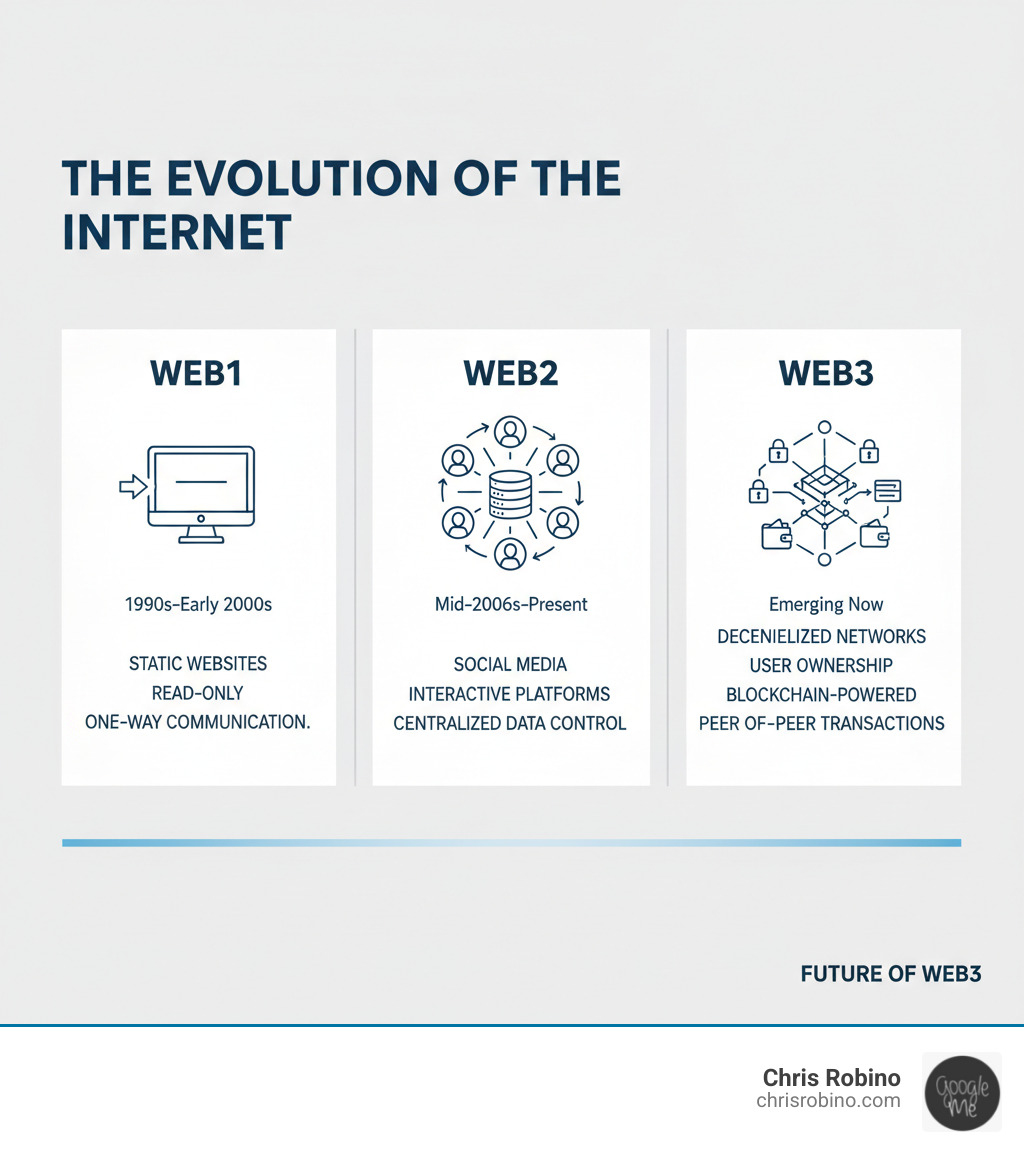
Web3 represents the evolution from Web1’s static pages and Web2’s centralized platforms to a decentralized, user-owned internet. Powered by blockchain technology, it aims to give you ownership of your digital assets, data, and online identity. This isn’t just a theory; decentralized finance platforms already process billions in transactions, and companies are using Web3 for supply chain transparency and secure identity verification.
However, challenges remain. High transaction fees, complex user experiences, security vulnerabilities, and an uncertain regulatory environment are significant problems that the industry is actively working to solve.
I’m Chris Robino, and in my two decades leading digital change, I’ve seen many technologies follow this pattern from speculation to practical application. My work helping organizations integrate AI and steer complex tech shifts shows me that transformative change comes from persistent, practical building, not fanfare. The Future of Web3 is no different.
The Current State of Web3: Building Through the Bear Market
The internet’s journey from the “read-only” Web1 to the interactive, centralized Web2 was transformative, but it concentrated power and data in the hands of a few tech giants. Now, Web3 proposes a fundamental shift to a “read-write-own” era, aiming to return control to users. Despite market downturns, builders have continued shipping code, strengthening the foundations of this new internet.
This evolution is powered by a suite of core technologies. Blockchain acts as a distributed, immutable public ledger, ensuring transparency and trust without a central authority. For more on this, see our guide on Blockchain Technology Implementation. On top of this, Smart contracts automate agreements, and Decentralized Applications (dApps) run on peer-to-peer networks, resisting censorship and single points of failure. Finally, Tokenization converts assets into digital tokens, enabling true ownership and new economic models. You can learn more about the broader vision in this overview of Web3 as a concept.

In the real world, the impact is already visible. Decentralized Finance (DeFi) has created a parallel financial system, with Web3-based lending projected to hit $400 billion by 2026. Blockchain gaming is pioneering play-to-earn models with true ownership of in-game assets, and supply chains are using the technology for improved transparency and accountability. However, mainstream adoption is hindered by significant problems. Scalability challenges lead to high fees and slow speeds, while complex user experiences involving wallets and gas fees intimidate non-technical users. Furthermore, security risks and scams have damaged public trust, with billions lost to hacks and fraud, and regulatory uncertainty creates a difficult environment for businesses.
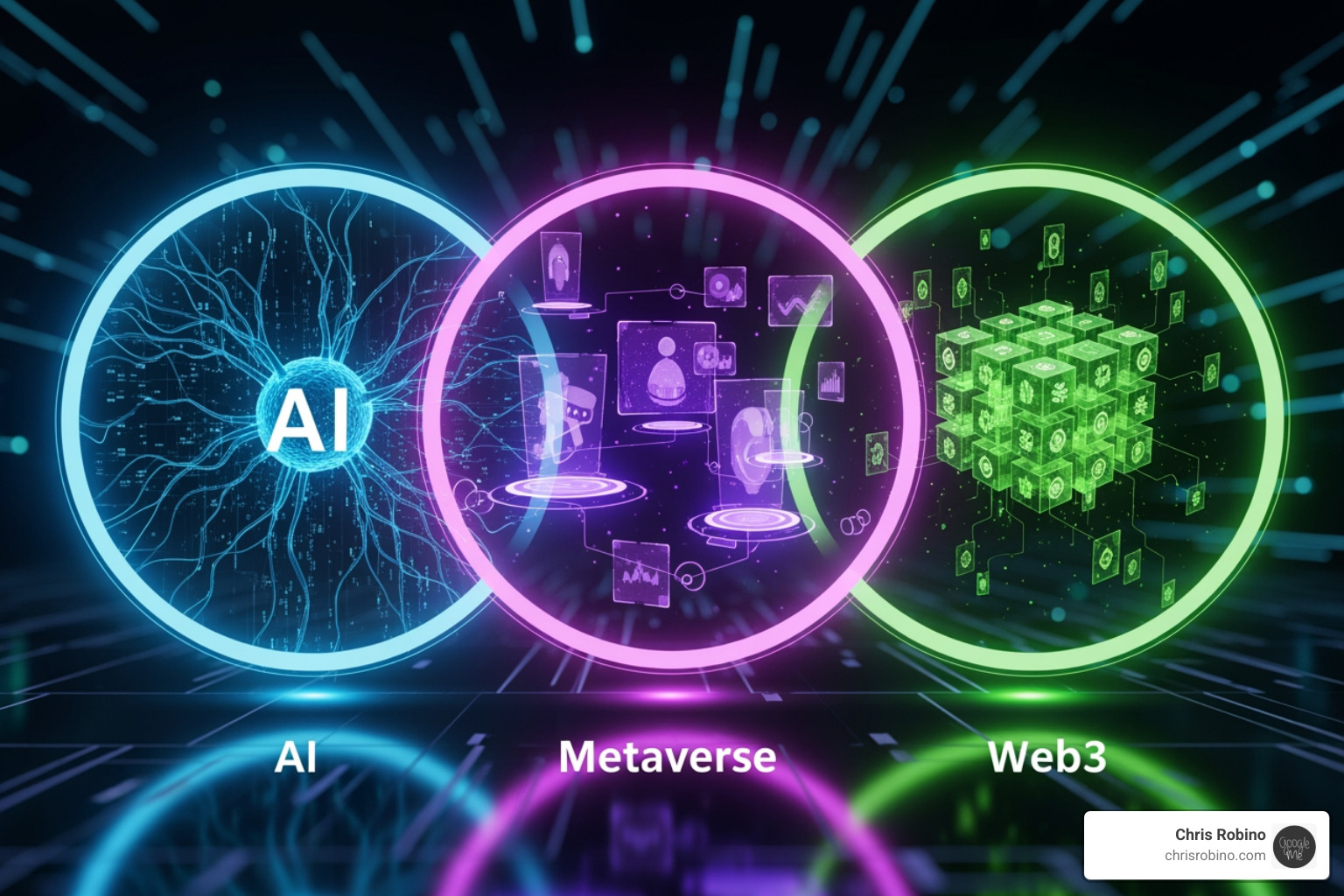
The Future of Web3 is also being shaped by its convergence with AI and the metaverse. This synergy promises to create intelligent, immersive, and user-owned digital experiences. Imagine AI-driven smart contracts that adapt to new data, or using blockchain to verify the origin of AI-generated content—a critical need in an era of deepfakes. For the metaverse, Web3 provides the foundation for interoperable virtual worlds and true ownership of digital assets, creating vibrant virtual economies. This powerful combination is explored further in our piece on The metaverse and Web3: The next internet platform, and ensuring its responsible creation requires a focus on Ethical AI Development. For more on navigating such landscapes, see our Emerging Tech Insights.
The Future of Web3: Scenarios and Strategies
The Future of Web3 is not a single destination but a series of potential paths unfolding now. As the initial hype subsides, we’re seeing practical, evolutionary trajectories emerge that will gradually reshape our digital interactions.
Key trends are already pointing the way forward. Hybrid “Web2.5” models are gaining traction, blending the user-friendly interfaces of Web2 with the ownership and transparency of Web3 to ease mainstream adoption. The tokenization of real-world assets is another powerful shift, converting items like real estate, art, and securities into tradable digital tokens on a blockchain. This promises to democratize access to investments previously reserved for institutions. Furthermore, decentralized identity is moving from concept to reality. Using technologies like non-transferable tokens, countries and companies are exploring systems that give users full control over their personal data, independent of tech giants.
The regulatory landscape remains a critical and fragmented factor shaping this future. The European Union’s MiCA framework is providing welcome legal clarity, potentially fostering innovation. In contrast, the “regulation by enforcement” approach in the United States creates uncertainty that can stifle growth. A clear, consistent global framework is needed to balance investor protection with support for innovation. For businesses navigating this complexity, our Information Technology Consulting Services can help ensure compliance while seizing opportunities.
Preparing for this evolving landscape requires a proactive strategy, not a wait-and-see approach.
For businesses:
- Explore and Experiment: Don’t wait for perfection. Start small with decentralized tools, pilot an NFT-based loyalty program, or explore blockchain platforms relevant to your industry to build organizational knowledge.
- Focus on Real-World Utility: Move beyond the hype and ask how Web3 can solve an actual problem for your business or customers, whether it’s improving supply chain transparency, enhancing data security, or creating novel engagement models.
- Upskill Your Team: The talent gap in Web3 is real. Invest in training your existing workforce on blockchain fundamentals and smart contract architecture to build internal expertise.
For individuals:
- Accept Lifelong Learning: Educate yourself on the basics of blockchain, cryptocurrencies, NFTs, and decentralized identity. Abundant free resources exist for beginners.
- Experiment Safely: The best teacher is experience. Try setting up a Web3 wallet, exploring a DeFi platform with a small amount of capital you can afford to lose, or engaging with a play-to-earn game.
- Develop New Skills: As adoption grows, skills in blockchain development, smart contract auditing, Web3 UX/UI design, and community management will become increasingly valuable.
At ChrisRobino.com, we specialize in crafting strategies that leverage emerging technologies like Web3 and AI. Our Business and Technology Consulting can help your organization steer this shift and gain a competitive advantage. To stay informed, explore the latest Technology Trends for Business. The future is being built now—the question is whether you’ll help shape it.
SEO Strategies for Large Companies
For large companies, making your voice heard in the vast digital landscape, especially as the Future of Web3 unfolds, requires a thoughtful and robust SEO strategy. It’s not just about getting found; it’s about building trust, demonstrating expertise, and genuinely connecting with your audience.
One of the cornerstones of this approach is developing Comprehensive Content Hubs. Think of these as your go-to libraries, packed with authoritative, in-depth information around your core topics. This not only answers user questions but also positions your brand as a true Thought Leader, sharing original research and trend analyses to attract valuable attention and links. But content isn’t a ‘set it and forget it’ game; regularly performing Content Refresh & Optimization ensures your insights stay relevant and continue to rank for evolving search queries.
Beneath the surface, Technical SEO Excellence is paramount. This means ensuring your site is lightning-fast, mobile-friendly, has clean URL structures, and boasts robust internal linking – all crucial for search engines to crawl efficiently and for users to have a smooth experience. You’ll also want to implement Structured Data & Rich Snippets to make your search results pop and increase those all-important click-through rates. And speaking of a smooth experience, a strong User Experience (UX) Focus is non-negotiable. Prioritizing intuitive navigation, clear calls-to-action, and accessible design keeps visitors engaged and reduces bounce rates.
To truly expand your global footprint, don’t forget Localization & International SEO. This involves optimizing for local search intent and multilingual audiences, ensuring your message resonates no matter where your customers are.
Building strong Brand Authority & E-A-T (Expertise, Authoritativeness, Trustworthiness) is key. This comes from transparent company information, expert authorship, and high-quality backlinks from reputable sources. Every step of this journey should be guided by Data-Driven Decisions, leveraging analytics and A/B testing to refine strategies and maximize your return on investment. And remember, SEO doesn’t live in a vacuum; it needs to be part of an Integrated Digital Marketing effort, aligning seamlessly with your paid media, social, and PR strategies for a truly cohesive and powerful omnichannel presence.
To stay ahead of the curve, explore the latest Technology Trends for Business.