

The Two Faces of “Digital-First”
The term “digital first media” causes confusion because it refers to two very different things:
- A Strategy: A forward-thinking approach where organizations prioritize digital platforms for content creation and distribution over traditional channels. The goal is to build a sustainable digital business model before legacy ones fade.
- A Company: The controversial newspaper chain Digital First Media (also known as MNG Enterprises), controlled by the hedge fund Alden Global Capital.
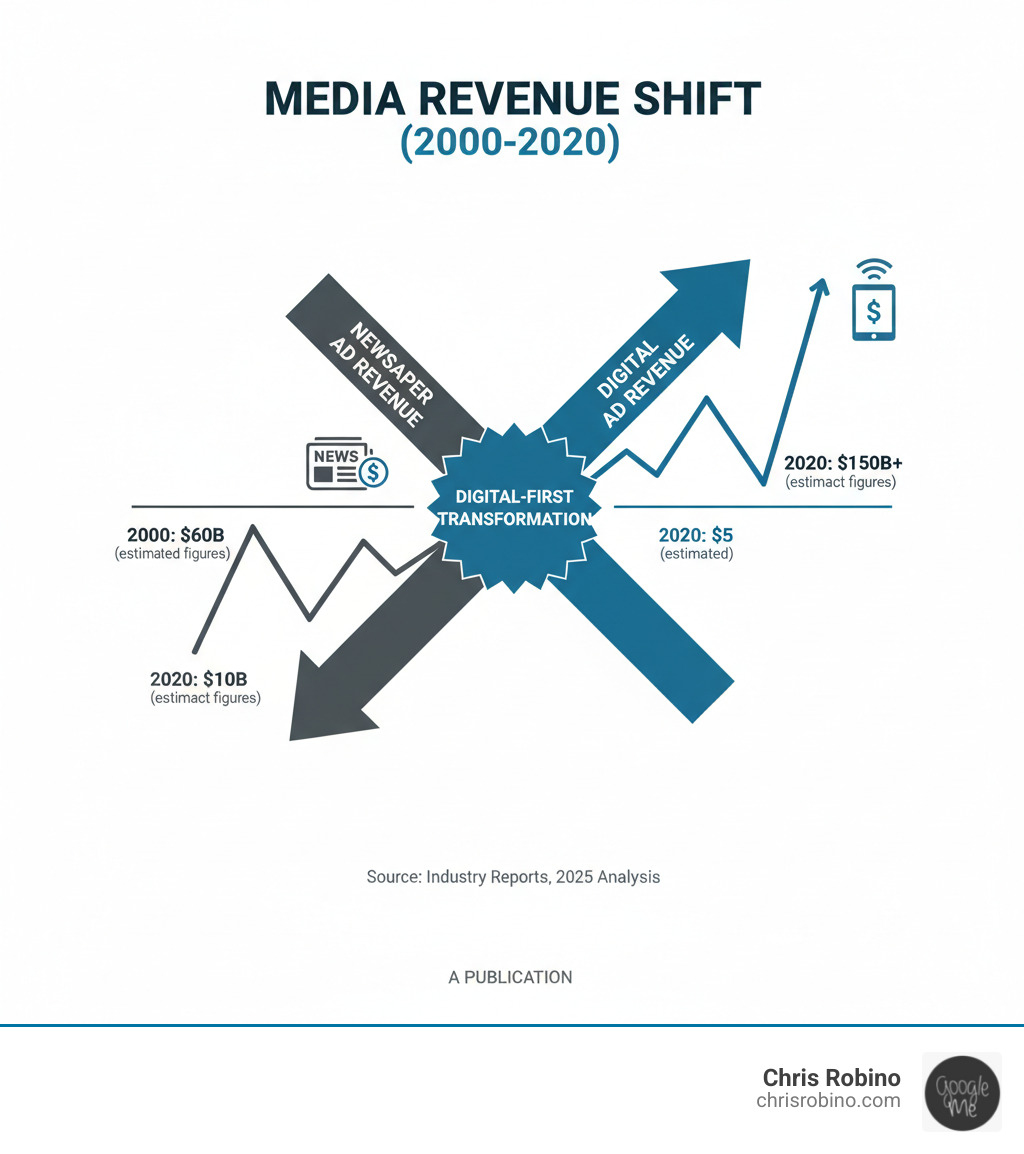
One is a vision for the future of media; the other is a case study in financial extraction that offers critical lessons. The shift to a digital-first strategy is a necessary response to plunging print revenues and the mass migration of audiences online. It forces companies to rethink everything from content creation to monetization.
I’m Chris Robino, and with over two decades in digital strategy, I’ve guided companies through these complex transitions. Let’s unpack both meanings of digital first media to understand the challenges and opportunities in today’s media landscape.
The Case of Digital First Media: A Deep Dive into Alden Global Capital’s Playbook
When we discuss Digital First Media the company, we’re looking at a cautionary tale of high-stakes finance and its impact on local communities. Also known as MNG Enterprises, this newspaper giant is controlled by Alden Global Capital, a private hedge fund that has become the second-largest newspaper owner in the U.S., with Tribune Publishing in its portfolio.

Alden’s playbook, however, raises fundamental questions about the purpose of a media company. As our work in Innovation in Media Companies shows, true digital change requires investment in people and technology. Alden’s model often moves in the opposite direction.
The “Vulture Capitalist” Model: Profit Over Press?
Critics label Alden Global Capital “vulture capitalists,” arguing their business model prioritizes extracting maximum profit over journalism’s public service mission. The pattern is consistent: acquire a local newspaper, then implement deep cost-cutting measures, primarily targeting newsroom staff. While executives speak of “synergies,” journalists see their publications being stripping them of their parts.
The financial results are stark. In 2017, Digital First Media achieved operating margins as high as 17%—far exceeding the industry average. But this profitability came at a steep price. Between 2012 and 2017, staffing at just twelve of its papers plummeted by 52%. That’s more than half the workforce responsible for local reporting gone in five years. The controversy deepened with allegations that Alden invested newspaper pension funds into its own investment vehicles, raising serious ethical questions.
This strategy of maximizing short-term returns stands in contrast to building a sustainable business. While we use AI Powered Analytics to identify growth opportunities, Alden’s approach focuses on harvesting assets, not cultivating them.
Impact and Community Reaction
The consequences of these cuts are profound. Newsrooms that once held dozens of reporters now operate with skeleton crews, diminishing their ability to conduct in-depth investigations. This trend contributes to the rise of “news deserts”—over 200 U.S. counties now have no local news outlet, leaving local governments unchecked.

But communities and journalists have fought back. In an extraordinary act of defiance, The Denver Post‘s editorial board published a front-page rebuke of its own owners. Journalists from other Digital First Media papers staged protests, demanding investment or a sale to new owners. This widespread criticism for slashing newsrooms highlights the deep value communities place on local journalism. These events underscore the need for strong Audience Engagement Strategies that build trust, not break it.
The Modern Portfolio: A Contradictory Strategy
Today, MediaNews Group (operating as Digital First Media) remains a massive force, reaching over 47 million readers through publications like the Chicago Tribune, The Baltimore Sun, and The Denver Post. A key part of their modern strategy is their in-house digital marketing agency, which provides sophisticated digital advertising services, from SEM to social media campaigns.
This creates a fundamental contradiction: the company runs a digital advertising business that relies on audience reach, while simultaneously gutting the journalistic content that generates that audience. It’s a business model that leverages the brand equity of historic newspapers while hollowing out the very thing that created the brand. This approach to Content Monetization Strategies is risky, as it can erode the core asset—audience trust—over time.
The Future of Local News in a Digital-First World
The story of Digital First Media and Alden Global Capital is a powerful lesson in what not to do. It shows how a focus on short-term financial engineering over long-term value creation can hollow out a business. But the good news is that the other meaning of digital first media—the strategy—offers a viable path forward for sustainable journalism.

This approach isn’t about slashing costs; it’s about fundamentally rethinking how organizations serve their audience in a digital world. We’re seeing exciting experiments emerge, from community-funded news to non-profit models and innovative membership programs. The key is building systems that serve audiences first, not just shareholders. As our Media Production Trends: Complete Guide explores, forward-thinking organizations are making this transition work by investing in both technology and people.
Navigating the Path Forward in a Digital-First Landscape
The challenges are real. Legacy media’s business model was shattered when print advertising revenue collapsed. Many publishers made the mistake of simply dumping their print content online, failing to understand that the internet operates on abundance, not scarcity. The rise of ad blockers, now used by over 42% of internet users, further complicated traditional digital ad models.
However, true innovation is possible. The key is to create content that is inherently valuable to a digital audience. Consider these statistics:
- 68% of online experiences begin with a search engine.
- Organic search drives over 53% of all website traffic.
This means that a strong SEO strategy isn’t just a marketing tactic; it’s a core business principle. Creating high-quality, authoritative content is the foundation for being finded online and building a loyal audience. This is where a true digital-first mindset shines. Instead of adapting print for the web, teams design content for multiple platforms from the start, learning from how creators succeed on popular video and social media platforms.
Video is set to account for over 82% of all web traffic, and podcasts now reach hundreds of millions of listeners worldwide. These aren’t just trends; they are massive opportunities to connect with audiences in the formats they prefer.
The ultimate goal is to rebuild trust. Audiences recognize when journalism is being hollowed out for profit. Sustainable models put quality reporting and community service back at the center.
As a media and tech expert, I advise that adapting to new business models is crucial for survival and growth. The transition isn’t easy, but it’s necessary. For organizations ready to make this shift, our New Tech Media Strategies Guide offers practical frameworks. For expert guidance on navigating this change, explore our insights on Digital Transformation for Media.
The media landscape is complex, but with a strategy that values both journalism and innovation, a future where quality news thrives is within reach.