
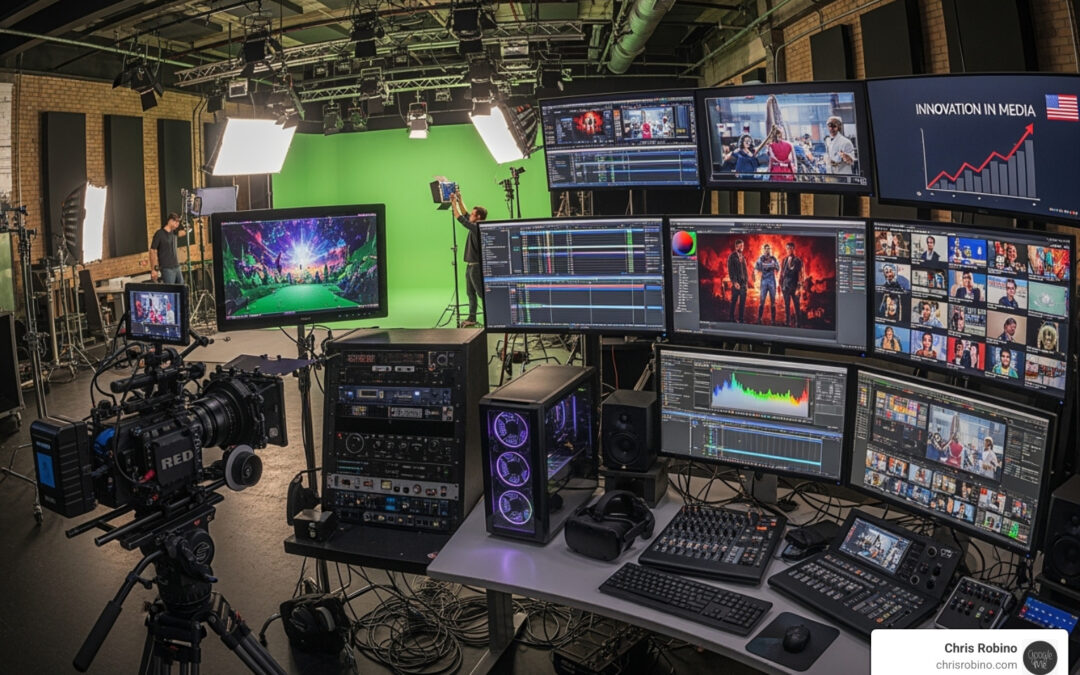
What Are Creative Media Industries — and Why Do They Matter?
Creative media industries sit at the intersection of storytelling, technology, and commerce — and they’re growing fast.
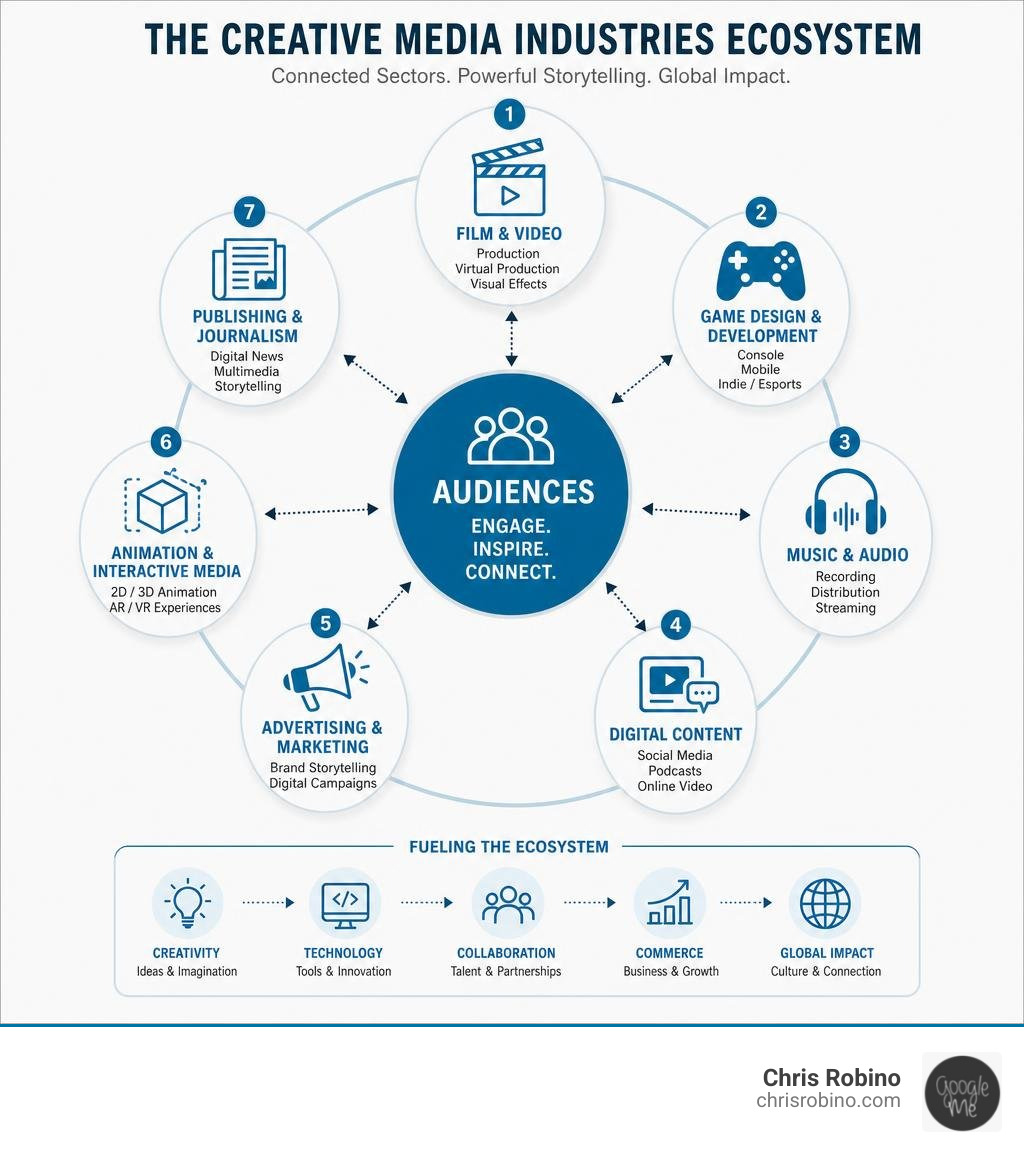
Here’s a quick breakdown of what falls under the creative media umbrella:
| Sector | Examples |
|---|---|
| Film & Video | Production, virtual production, visual effects |
| Game Design & Development | Console, mobile, indie, esports |
| Music & Audio | Recording, distribution, streaming |
| Digital Content | Social media, podcasts, online video |
| Advertising & Marketing | Brand storytelling, digital campaigns |
| Animation & Interactive Media | 2D/3D animation, AR/VR experiences |
| Publishing & Journalism | Digital news, multimedia storytelling |
These sectors share one thing in common: they blend creative skill with media technology to produce content that reaches audiences at scale.
The digital sector is one of the fastest-growing industries worldwide. Creative and digital industries have real potential to generate jobs and drive economic growth — not just in major media hubs, but across entire regions.
Yet for many professionals, the landscape feels scattered. Programs, career paths, tools, and trends are spread across dozens of sources with no clear map.
This guide brings it all together.
I’m Chris Robino — a digital strategy leader with over two decades of experience helping organizations navigate the intersection of technology, search, and creative media industries. I’ve worked with everyone from emerging startups to established enterprises, and I’ll help you cut through the noise.
Discover more about creative media industries:
The Evolution and Economic Impact of Creative Media Industries
The global media landscape is undergoing a massive shift. Historically, traditional media sectors operated in silos. Television, print, and radio relied on one-way communication models with rigid distribution networks. Today, digital disruption has broken down these walls, giving rise to highly integrated and interactive creative media industries.
This evolution is a primary engine for economic growth and job creation worldwide. For instance, the digital sector is worth billions to the UK economy, serving as a powerful tool for regional regeneration. By merging artistic expression with commercial business models, these industries create new markets and employment opportunities that did not exist a decade ago.
To understand how far we have come, we can look at how traditional media models compare to modern creative media ecosystems:
| Feature | Traditional Media | Creative Media Industries |
|---|---|---|
| Audience Engagement | Passive consumption (one-way) | Active participation, co-creation, and community building |
| Primary Platforms | Print, television broadcast, physical theaters | Streaming, VR/AR, mobile apps, social ecosystems |
| Business Model | Advertising space and physical sales | Subscriptions, microtransactions, digital licensing, crowdfunding |
| Production Style | Linear, highly specialized pipelines | Agile, cross-functional, and tech-driven |
As we look at these structural differences, it becomes clear that navigating this space requires a fresh perspective on strategy. For a deeper dive into how these global forces shape our markets, check out our Global Media Industry Analysis.

Educational Pathways in Creative Media Industries
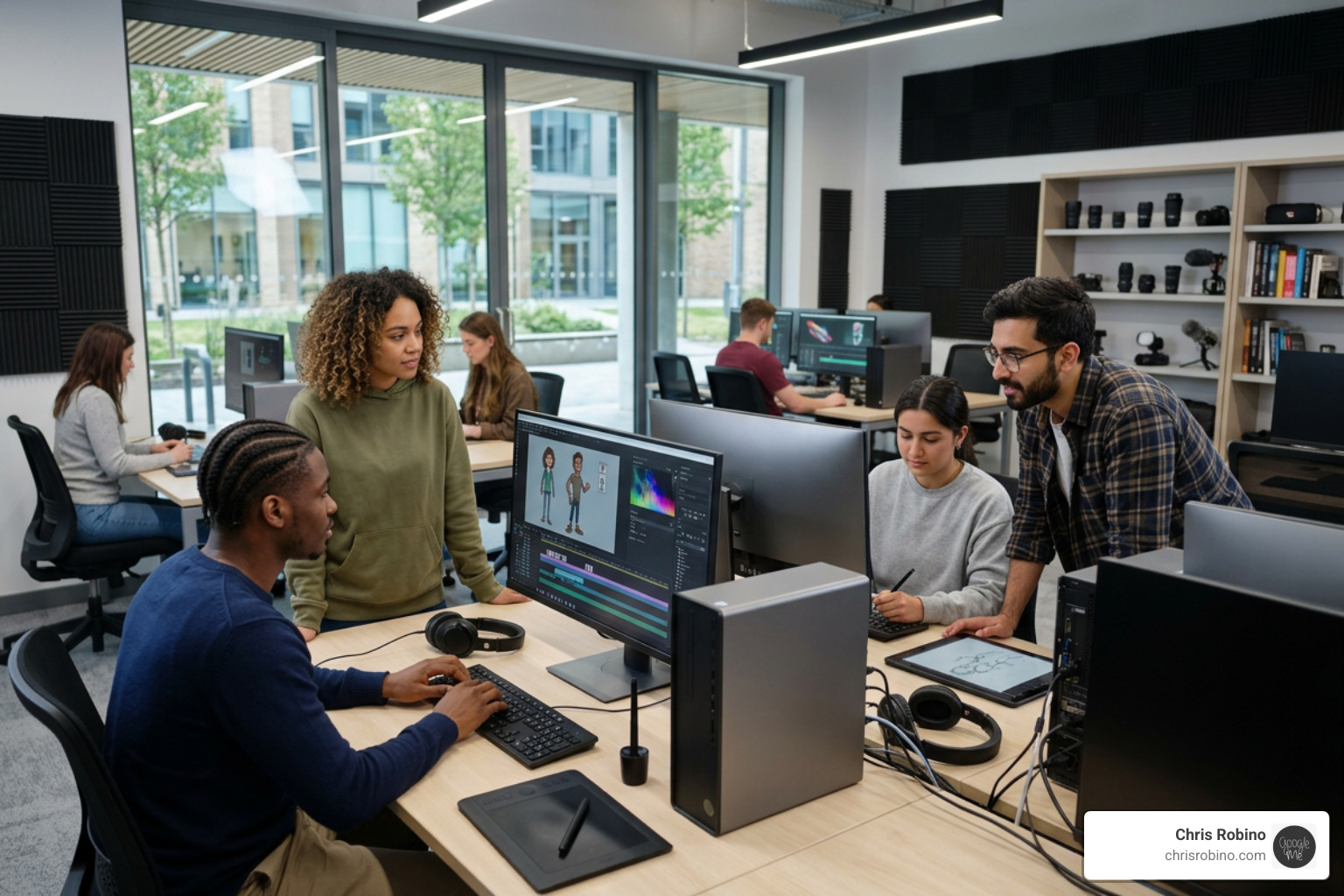
Because this sector moves so quickly, academic institutions have had to completely reinvent their curricula. Modern degree programs no longer just teach students how to write a script or operate a camera; they train them to be media entrepreneurs, game developers, and virtual production specialists.
Several world-class institutions lead the charge in preparing the next generation of talent:
- The Creative Media Industries Institute (CMII) at Georgia State: Since opening its doors in 2017 with an inaugural class of just 12 media entrepreneurship students and four game design students, CMII has experienced explosive growth. By July 2026, the institute boasts 845 enrolled students (including 340 Media Entrepreneurship majors, 367 Game Design majors, and 138 minors). Their faculty and artists-in-residence are highly decorated, having collectively secured three Pulitzer Prizes, eight GRAMMY awards, 11 BET Awards, and four NAACP Image Awards. Learn more directly from The Creative Media Industries Institute at Georgia State.
- The University of Manchester: Ranked in the top-50 globally across all of Arts and Humanities by Times Higher Education 2026, they offer the BA Cultural, Creative and Media Industries (2026 entry) | The University of Manchester. This program blends rigorous academic theory with practical, hands-on placements in Manchester’s thriving creative scene.
- King’s College London: Their Department of Culture, Media & Creative Industries is ranked Top 3 in the UK for Media & Communication Studies (QS World University Rankings by Subject 2025). Their flexible Culture, Media & Creative Industries BA | King’s College London allows students to specialize in areas like the music business, global film, and cultural entrepreneurship.
- Lingnan University: In Hong Kong and the Greater Bay Area, the BA (Honours) in Creative Media Industries – for 2025-26 intake onward | Department of Digital Arts and Creative Industries provides robust visual arts and digital production training tailored to booming regional art and media markets.
- Toronto Metropolitan University (TMU): The Creative Industries – BA – Programs – Toronto Metropolitan University (TMU) focuses heavily on the business side of the arts, preparing graduates for leadership and management roles through a mandatory 420-hour industry internship.
Emerging Technologies Transforming Creative Media Industries
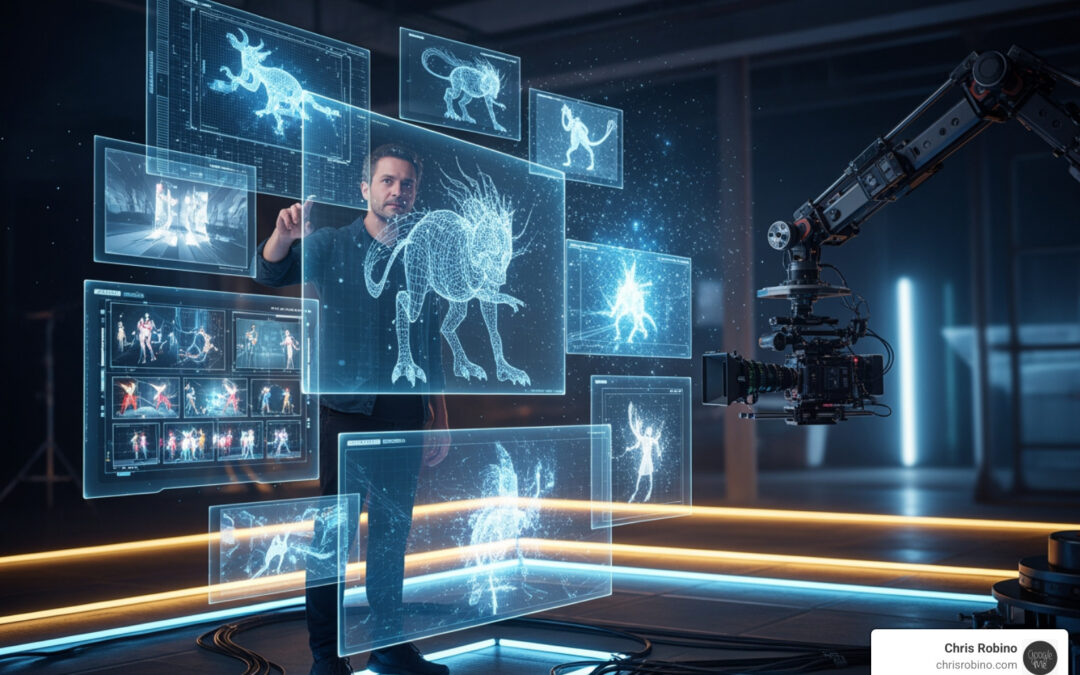
Technology is the heartbeat of modern creative media. The rapid adoption of artificial intelligence (AI), virtual reality (VR), augmented reality (AR), and virtual production is fundamentally changing how stories are told and experienced.
AI, for instance, is no longer a futuristic concept—it is actively optimizing rendering pipelines, automating video editing, and personalizing user experiences in real-time. In game design and filmmaking, virtual production environments allow creators to shoot photorealistic digital backdrops in real-time, eliminating the need for expensive on-location shoots.
To stay ahead of these developments, we closely monitor how these tools integrate into production workflows. You can read our detailed thoughts on AI in Filmmaking and explore our resources on Advanced Tech Solutions for Media Projects.
Career Paths and Essential Skills for Graduates
A degree in this field opens up a diverse array of professional opportunities. Employers in the creative media industries highly value candidates who possess a hybrid skillset: a balance of technical mastery (such as Unity, Unreal Engine, or Adobe Creative Suite) and sharp business acumen.
Recent graduates of top-tier creative media programs have secured competitive roles across the entertainment and technology sectors, including:
- Associate Producer (managing creative assets and production schedules)
- Platform Services Specialist (optimizing live-ops and player experiences for major gaming companies)
- Artistic Director (curating content and driving the creative vision for film festivals and media agencies)
- Media Entrepreneur (launching independent agencies, production houses, and digital platforms)
- Video Editor and Multimedia Producer (crafting high-impact visual content for broadcast and digital streaming)
For a broader look at where these career paths are heading over the next few years, check out our Media Industry Trends Ultimate Guide.
Overcoming Modern Challenges through Industry Collaboration
Despite the incredible growth, the creative media sector faces pressing challenges, including digital disruption, calls for greater diversity, and the need for environmental sustainability in physical production.
The most effective way to address these challenges is through cross-sector collaboration. By partnering with technology firms, environmental organizations, and academic institutions, media companies can build more resilient business models.
Hands-on experience, internships, and university-industry partnerships are critical to this effort. Programs that require real-world internships, like TMU’s 420-hour requirement or the Somerset House student-run festival at King’s College London, ensure that graduates enter the workforce with practical problem-solving skills. Discover how these collaborations drive progress in our article on From Hubs to Hype: Navigating the Landscape of Media Innovation.
Charting Your Path in the Creative Media Industries
Whether you are an aspiring game designer, a filmmaker looking to adopt virtual production, or an enterprise seeking to optimize your digital content strategy, the future of the creative media industries belongs to those who can successfully marry artistic vision with technological execution.
Enterprise SEO Strategies for Creative Media
For large-scale media companies, visibility is the ultimate currency. Implementing robust enterprise SEO strategies is critical to ensuring that high-volume digital content reaches its target audience. Large organizations must focus on scalable technical SEO, structured data for rich media, and programmatic content hubs that align with search intent. By optimizing site architecture and leveraging authoritative, high-quality content, enterprise media brands can dominate search engine results pages (SERPs) and drive sustainable organic growth.
At ChrisRobino.com, we specialize in helping organizations design, scale, and navigate these complex digital transformations. We bring decades of hands-on experience to help you build strategies that resonate with modern audiences and perform exceptionally well in search and digital spaces.
Ready to elevate your media projects and stay ahead of the digital curve? Let’s build something incredible together. Explore our Media Production Consulting services to get started today.