

What Was the Hello Social Network — and Why Does It Still Matter?
The hello social network was a passion project from the founder of Orkut, built to solve a problem that still frustrates millions of users today: social feeds full of noise instead of things you actually care about.
Here’s a quick snapshot:
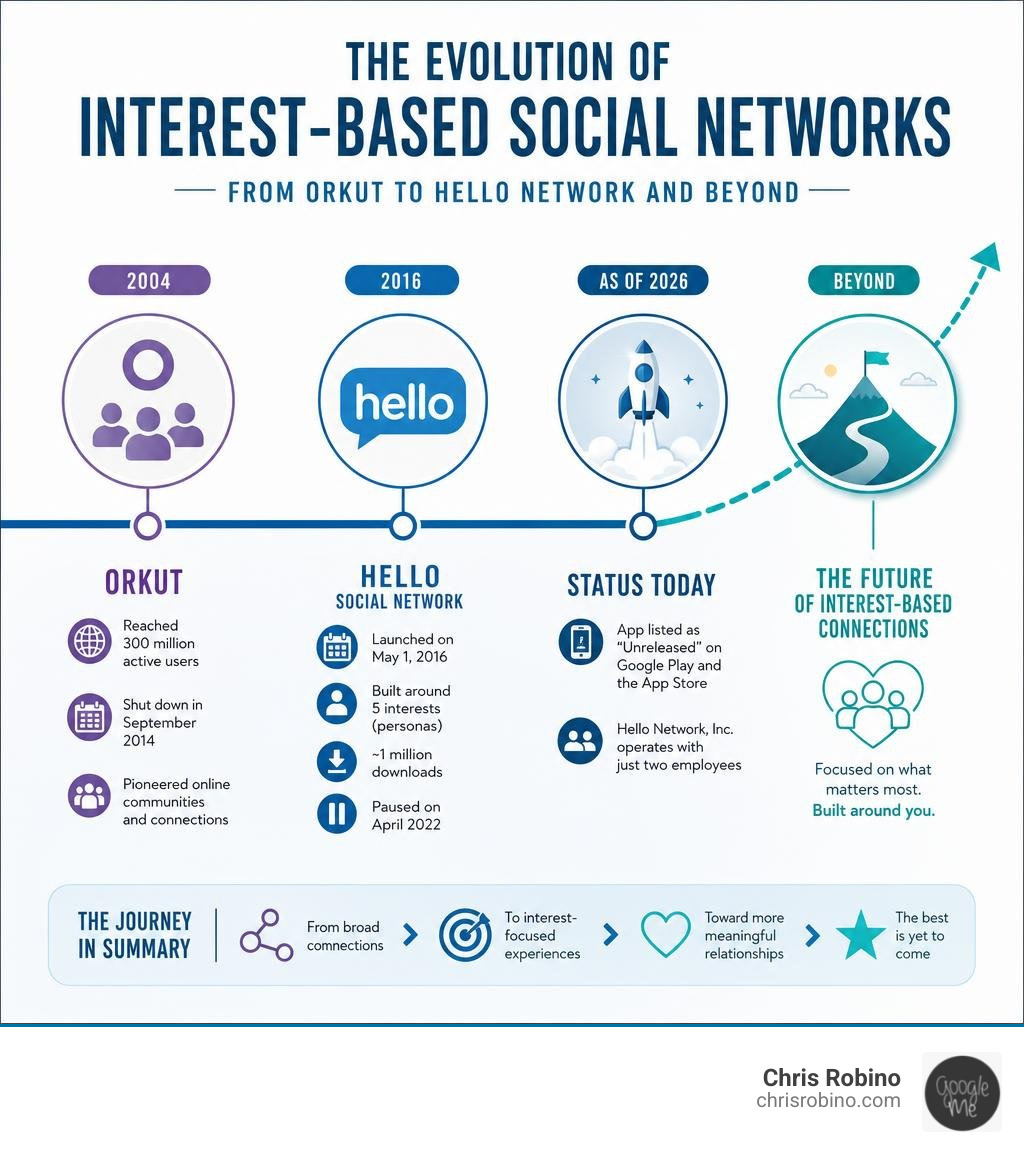
- Founded by: Orkut Büyükkökten, also the creator of Orkut.com
- Launched: May 1, 2016
- Shut down: April 2022
- Core idea: Interest-based social networking using “personas” instead of a broad friend feed
- Downloads: Approximately 1 million (compared to Orkut’s 300 million active users)
- Status: Paused, with a teased relaunch — “It’s not goodbye. It’s see you again soon.”
- Available on: Google Play and the App Store (currently listed as “Unreleased”)
Orkut Büyükkökten built something massive once. His original social network, Orkut.com, reached 300 million active users before Google shut it down in September 2014. Then he tried again — this time with a sharper focus, smaller team, and a different philosophy. The result was Hello.
Hello wasn’t trying to be everything to everyone. It asked users to pick exactly five interests — called personas — and built their entire experience around those. No endless scrolling through random content. Just the topics you told it you cared about.
It was a bold idea. But it never found its audience at scale.
By April 2022, Hello.com went quiet. The message on the site was hopeful but vague — a promise of something better coming, with no firm timeline. As of mid-2026, the app still sits in an “Unreleased” state on both major app stores, and Hello Network, Inc. operates with just two employees.
That gap between vision and adoption raises real questions — about community design, platform timing, and what users actually want from a social network.
I’m Chris Robino, a digital strategy and AI search expert with over two decades helping brands build visibility and sustainable online communities. I’ve tracked the rise and fall of platforms like the Hello social network closely, and this guide breaks down what happened, what it means, and what comes next.
Essential hello social network terms:
The Rise and Fall of the Hello Social Network
When we look back at the history of the hello social network, we see a fascinating experiment in digital intimacy. Launched with the promise of bringing back the genuine human connections of the early web, the platform attempted to swim against the tide of algorithmic optimization.
From Orkut to Hello: A Vision for Interest-Based Connection
To understand why the hello social network was built, we have to look back at Orkut.com. In the mid-2000s, Orkut was a global phenomenon, particularly dominating the social landscape in Brazil and India. It was a place where communities flourished around highly specific topics. When Google made the business decision to shut down Orkut in September 2014, it left a massive void for millions of users who missed that authentic community feel.
Orkut Büyükkökten, alongside a small team of ex-Google engineers, wanted to recapture that magic. On May 1, 2016, they introduced the world to Hello. The goal was to pivot away from the standard model of following friends and family, which often leads to political debates or humblebragging holiday photos. Instead, they wanted to connect strangers who shared deep, mutual passions.
While Orkut had peaked at 300 million active users, Hello took a much slower trajectory, ultimately accumulating around 1 million downloads. To understand how this fits into the broader timeline of digital spaces, you can explore our analysis of The Stars Stripes and Swipes of American Social Media.
Inside the Hello Social Network App: Personas, Karma, and Achievements
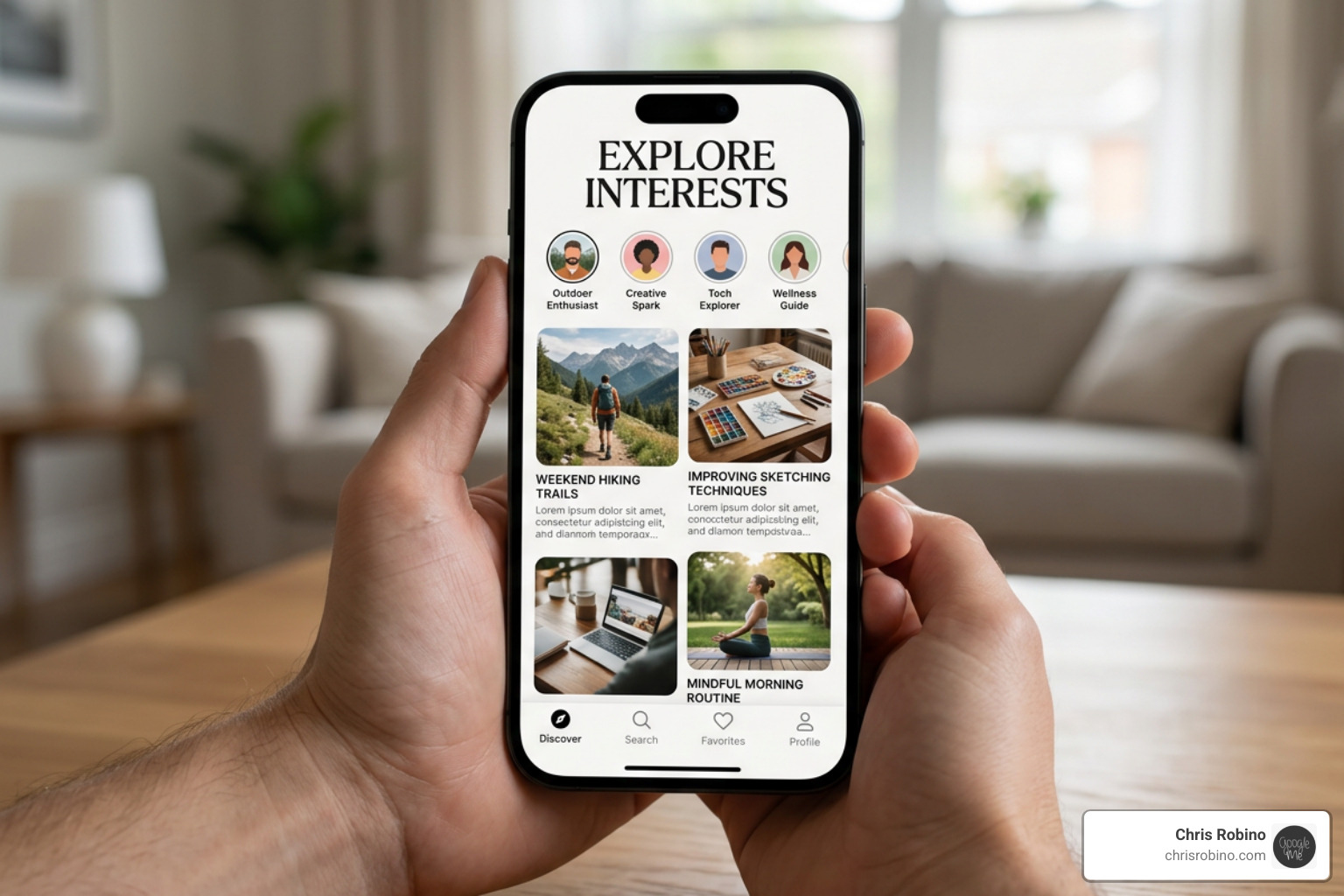
The user experience of Hello was highly structured. Unlike modern platforms where you follow individual accounts, Hello organized its entire ecosystem around “personas.” During onboarding, we were required to select exactly five personas from a diverse list—ranging from “Anime Fan” and “Chef” to “Artist” and “Car Buff.”
This limitation was intentional. By forcing us to choose only five, the platform ensured that our feeds, known as the “folio,” remained highly relevant. Here is how the core features worked:
- The Folio Feed: This was a personalized stream of content (called “jots”) posted by other users who shared your active personas.
- Jots: These were the posts themselves, which could include photos, text, and eventually video. To keep things organized, every jot had to be tagged with one of your five active personas.
- Karma Points: Hello gamified social interaction. By posting quality jots, commenting, and receiving positive reactions, you earned karma points.
- Achievements: Earning karma unlocked milestones, rewards, and special community tools, encouraging positive contributions over toxic engagement.
We could also use the platform’s official updates page on Hello Official to keep track of community milestones, stickers, and point redemptions. This gamified, interest-first design stood out in an era dominated by outrage-driven algorithms. To see how these features stack up against other platforms, check out our guide on Which Biggest Social Media Sites Are Actually Worth Your Time.
Why the Hello Social Network Paused in 2022
Despite its passionate core user base, Hello struggled with user adoption. In April 2022, the Hello.com website was officially taken down, replaced by a simple landing page. The platform announced it was “pausing hello while we get ready to launch something even better.”
This pause was driven by several factors. Operating with a tiny team of just two employees under Hello Network, Inc., the company faced uphill battles in content moderation, server costs, and competing against multi-billion-dollar tech giants. The limited user adoption made it difficult to sustain the network effects required for a thriving social platform.
For those who still want to keep an eye on the landing page or sign up for future updates, you can visit Hello! – Meet. Chat. Connect. › Sign Up . As we look to the future, this pause reflects a broader trend of consolidation and reinvention in the social space, which we discuss in detail in Beyond the Scroll: What’s Next for the Social Media Industry.
Lessons in Community Building and Modern Alternatives
The story of Hello offers invaluable lessons for creators, developers, and brands trying to build digital spaces. It also highlights how crowded the “Hello” brand space has become as various companies try to claim a piece of friendly, human-centric marketing.
Navigating the “Hello” Brand: Agencies, Retro Spaces, and Clones
Because “Hello” is such a welcoming word, several other digital platforms and agencies use similar branding. If you are searching for the hello social network, it is easy to get lost in the search results. Here is how to tell them apart:
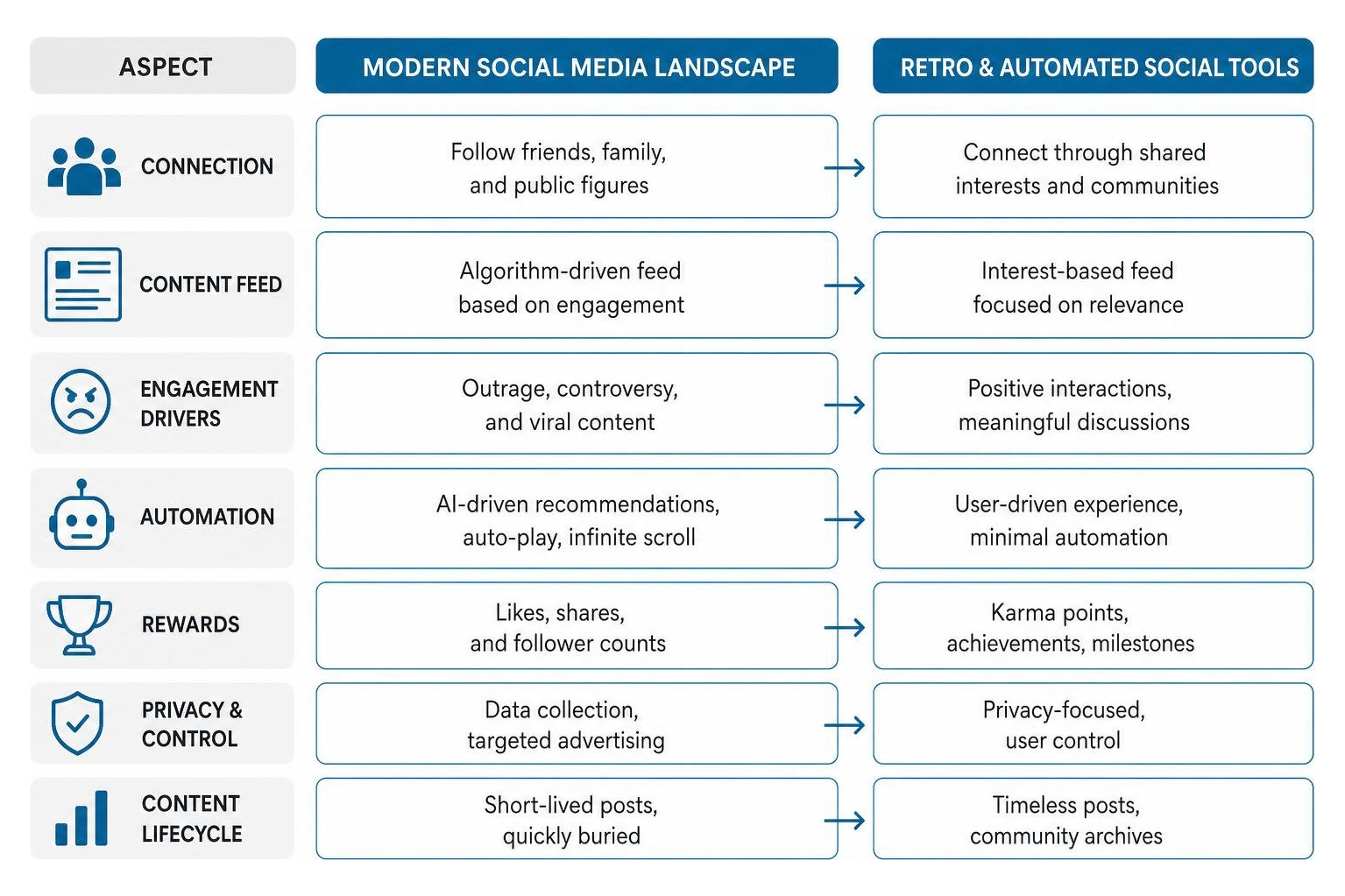
- HelloSpace: If you miss the old-school days of customizable profiles, bulletins, and forums, HelloSpace – A Space to Be You | Retro Social Network is a modern, privacy-friendly alternative. It is funded by donations, powered by renewable energy, and allows users to use custom HTML and CSS without tracking or creepy ads.
- HelloSocial.network: This is an entirely different beast. It is an AI-powered social marketing platform designed to help brands automate their outreach, content creation, and analytics. You can learn more about their services at HelloSocial.network — AI-Powered Social Marketing .
- HelloSocials: Another automation tool, HelloSocials — Automate your social networks | HelloSocials helps independent creators and agencies schedule posts across multiple platforms like LinkedIn, Instagram, and Threads from a single dashboard.
- HelloSocial App: For those looking for a highly secure, invite-only social network designed to keep out bots and spam, Welcome to HelloSocial offers a tight-knit community where new members must have their first five posts manually approved.
Technical Architecture and Business Footprint of Hello Network, Inc.
On the technical side, Hello was built using Python, JavaScript, and React. This modern, flexible tech stack allowed the tiny team at Hello Network, Inc. to maintain cross-platform support for both iOS and Android. At its peak, the app was localized into five languages (English, Portuguese, French, Hindi, and Spanish) and was available in 12 countries.
To put its business footprint into perspective, let’s look at how it compared to Orkut:
| Metric | Orkut.com | Hello Network |
|---|---|---|
| Peak Active Users / Downloads | 300 Million Active Users | ~1 Million Downloads |
| Launch Date | January 22, 2004 | May 1, 2016 |
| Shutdown / Pause Date | September 30, 2014 | April 2022 (Paused) |
| Core Philosophy | General community forums | Persona-based feeds |
| Primary Tech Stack | C#, ASP.NET | Python, JavaScript, React |
| Company Size | Managed by Google | 2 Employees (Hello Network, Inc.) |
Enterprise SEO Strategies for Large-Scale Digital Communities
What can we learn from the hello social network? The biggest takeaway is that having a beautiful, well-engineered, and well-intentioned app is only half the battle. Without a scalable growth strategy and a clear understanding of search visibility, even the best platforms can fade into obscurity.
For large companies and enterprise-level platforms, achieving sustainable visibility requires specialized SEO strategies that perform at scale:
- Programmatic SEO and Scalable Architecture: Large organizations must leverage structured data and automated page generation to target thousands of long-tail keywords simultaneously. This involves creating robust, dynamic templates that search engines can crawl and index efficiently without creating duplicate content issues.
- Internal Link Optimization: Enterprise sites often have massive authority but suffer from poor distribution of that authority. Implementing automated, contextual internal linking structures ensures that high-value community pages and content hubs receive the equity they need to rank.
- Technical SEO at Scale: Managing crawl budget is critical for large platforms. Enterprise brands must continuously optimize XML sitemaps, manage canonicalization, and resolve rendering issues (especially on JavaScript-heavy frameworks like React) to ensure search engine bots index critical pages first.
- Content Hubs and Authority Clustering: Instead of targeting isolated keywords, large companies should build comprehensive content hubs. Grouping related topics into structured clusters establishes deep topical authority, making it easier to rank for highly competitive industry terms.
To master these dynamics yourself, we highly recommend diving into our guides on How to Master Online and Social Media Marketing Without Losing Your Mind and The Ultimate Guide to Internet and Social Media Marketing Success.