
What Is Media Technology Integration (And Why It Matters Now)
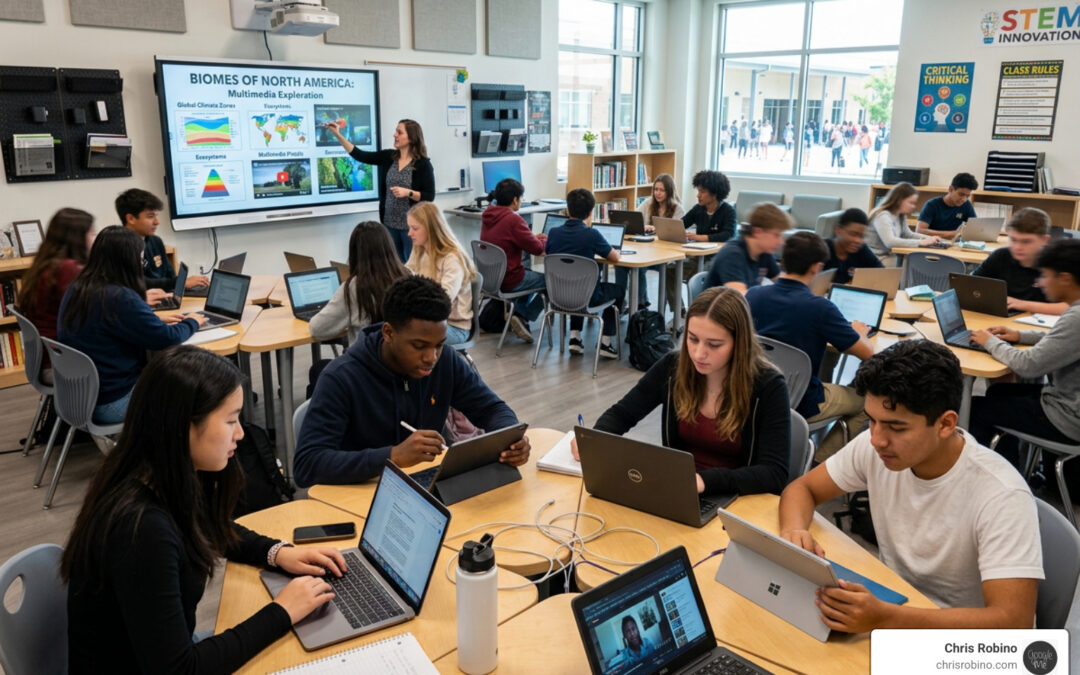
Media technology integration is the strategic process of combining digital tools, multimedia formats, and advanced technology platforms to revolutionize how content is created, delivered, and experienced. In the modern landscape, this integration is not merely a technical upgrade; it is the foundation for enterprise-level digital presence and search engine visibility. Whether in a classroom, a media studio, or a global distribution network, the goal is to create a seamless, interactive ecosystem.
For large-scale organizations, media technology integration is a critical component of a robust SEO strategy. When media assets are unified through a centralized technology stack, search engines can more effectively crawl, index, and rank rich media content. This is essential for maintaining visibility in an increasingly competitive digital landscape where video and interactive content dominate search results.
Here is a quick breakdown of what it includes:
- In education: Utilizing computers, animations, high-definition videos, interactive whiteboards, and mobile applications to transform passive learning into an active, participatory experience.
- In media production: Applying Artificial Intelligence (AI), Augmented Reality (AR), Virtual Reality (VR), and deep data analytics to accelerate content creation, minimize overhead costs, and expand global audience reach.
- In business operations: Unifying broadcast, streaming, and digital workflows into a single, efficient ecosystem that supports both internal collaboration and external marketing efforts.
The overarching objective across all sectors is to replace passive, one-way delivery with active, connected experiences that drive engagement and measurable results. The evidence supporting this shift is substantial. A study in Kenyan secondary schools demonstrated that students taught with integrated multimedia tools scored significantly higher on Chemistry tests than those taught with conventional methods, showing a mean gain of 3.01 versus just 1.11 for the control group. In the professional media sector, digital integration has been shown to cut creation time by 15%, reduce production costs by 20%, and grow audience interactions by a staggering 180%.
Despite these clear advantages, many organizations struggle with effective implementation. Challenges such as infrastructure gaps, inconsistent staff training, and fragmented vendor ecosystems often hinder progress. I’m Chris Robino, a digital strategy leader with over two decades of experience helping organizations navigate the complexities of media technology integration. From AI-driven search systems to full-scale digital transformation initiatives, this guide provides a research-backed blueprint to connect the pieces of your digital strategy.
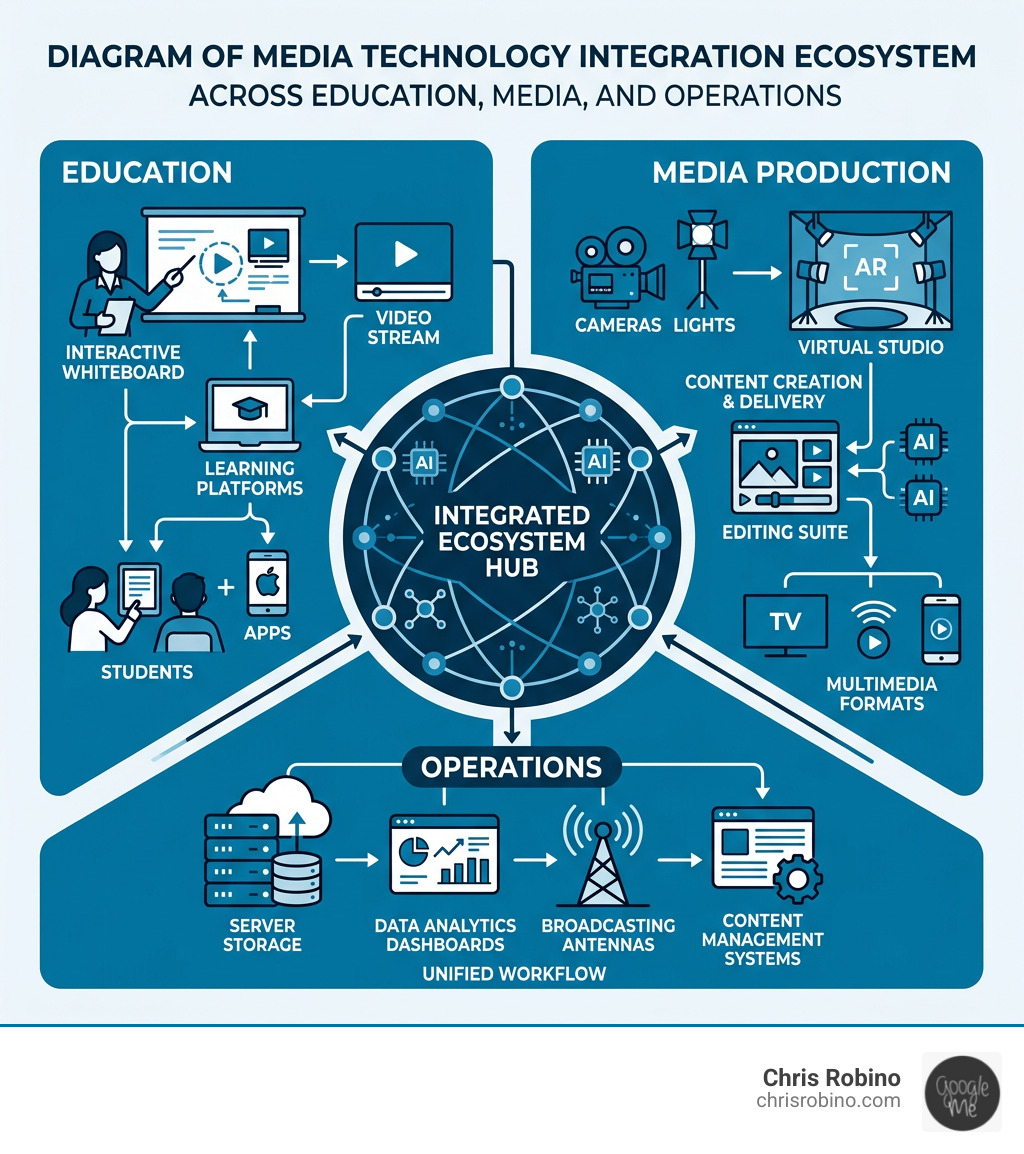
Simple guide to Media technology integration terms:
The Evolution and Impact of Media Technology Integration
To understand the future of media technology, we must examine its historical trajectory. The evolution of educational and media technology was a gradual process that accelerated significantly in the mid-1990s. In the United States, landmark legislation such as the Goals 2000: Educate America Act and the Telecommunications Act of 1996 provided the necessary framework for massive infrastructure growth. By 1996, nearly 98% of schools had access to computers, and the student-to-computer ratio reached a then-unprecedented low of 10:1.
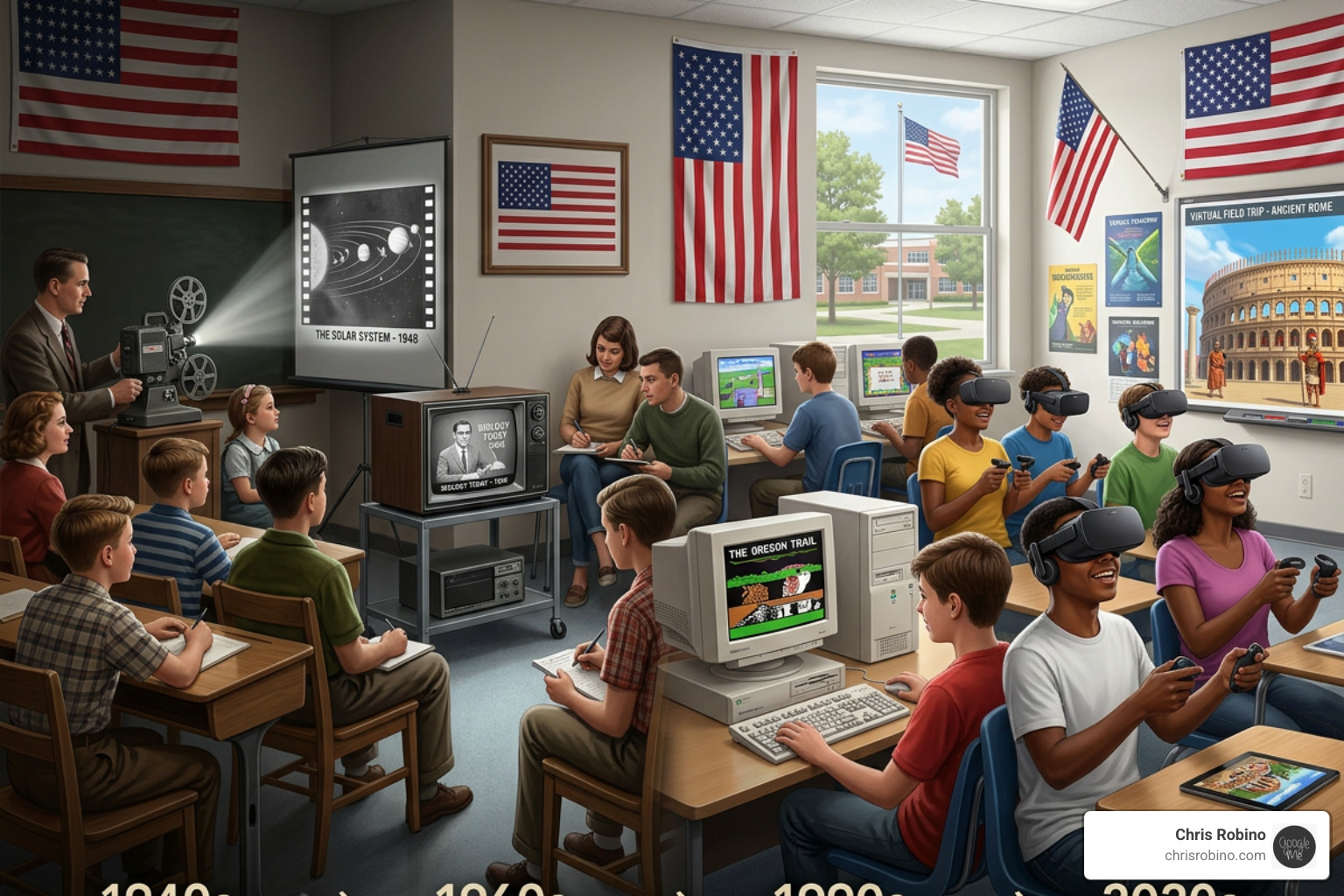
Today, successful technology integration is defined by the seamless weaving of tools into the core curriculum or business workflow. We utilize several sophisticated frameworks to measure this success:
- The SAMR Model: This model tracks integration through four distinct levels: Substitution, Augmentation, Modification, and Redefinition. It allows us to determine if we are merely replacing a physical tool with a digital one or if we are leveraging technology to perform tasks that were previously impossible, such as real-time global collaboration or immersive simulations.
- The TPACK Framework: Standing for Technological Pedagogical Content Knowledge, this framework emphasizes that true integration occurs at the intersection of subject expertise, pedagogical skill, and the strategic application of digital tools.
At the heart of this evolution is Constructivism—the principle that individuals learn and retain information best when they actively construct their own knowledge. By integrating media technology, we move away from rote memorization and toward the development of essential 21st-century skills, including critical analysis, collaboration, and creative production. For large enterprises, this translates into Digital Transformation for Media, where technology serves as the primary engine of innovation and market differentiation.
Enhancing Learning Outcomes through Media Technology Integration
The empirical data supporting Media technology integration is compelling. In Bomet County, Kenya, researchers investigated how Multimedia Technology Integration (MTI) influenced student achievement in Chemistry, specifically focusing on the complex “Mole” concept. The results were definitive: students in the experimental group using digital tools achieved significantly higher post-test mean scores (11.11) compared to the control group (9.20). The statistical significance (p=.000) confirms that technology directly facilitates the comprehension of abstract and difficult concepts.
This success is rooted in the management of cognitive load and the enhancement of retention. Using technology to increase student participation engages multiple senses simultaneously. When a user interacts with an animation while listening to an expert explanation and manipulating a simulation, the brain processes the information more deeply than through passive observation. This leads to higher retention rates and a more dynamic learning environment.
Driving Efficiency in Artistic Creation and Communication
The impact of integration extends into the professional arts and media sectors. Research into cross-border integration reveals that digital tools allow creators to transcend traditional physical and financial limitations. When comparing traditional methods to digital media technology (including VR, AR, and AI), the data indicates:
- 15% reduction in overall creation time.
- 20% decrease in total production costs.
- 3.8-fold rise in total viewership.
- 180% increase in audience interactions.
As we look toward Media Production Industry Trends 2026, it is evident that immersive storytelling is the new industry standard. By integrating AI-powered recommendation algorithms and real-time analytics, media companies can adapt content to audience needs instantaneously. This is not just about aesthetics; it is about using technology to build deep emotional connections and foster active participation.
Practical Tools for Successful Media Technology Integration
Implementing these strategies requires the right set of tools. Whether you are an educator or a media executive, these “power tools” are essential for success:
- Interactive Whiteboards and Displays: These facilitate kinesthetic learning and allow presenters to manipulate 3D environments in real-time.
- Student and Audience Response Systems: These systems allow for anonymous, real-time participation, ensuring all voices are heard.
- Mobile Learning and Differentiated Instruction: Using tablets and mobile devices allows for personalized learning paths, enabling each individual to progress at their own pace.
- CyberHunts and WebQuests: These structured digital activities teach users how to navigate, verify, and evaluate online information—a critical skill in the age of misinformation.
- AI and Immersive Tech: As detailed in our guide on Advanced Tech Solutions for Media Projects, AR and VR are practical tools for creating exploratory journeys that captivate audiences.
Strategies for Overcoming Implementation Challenges
While the benefits of Media technology integration are clear, the path to successful implementation is often fraught with challenges. It is a common misconception that simply acquiring hardware will lead to immediate results. True integration requires a comprehensive strategy that addresses infrastructure, professional development, and the digital divide.
Infrastructure planning must go beyond high-speed internet access. It requires a long-term vision for hardware maintenance, software updates, and ethical data usage policies. The “digital divide” remains a significant hurdle, as creators and students in resource-limited areas may lack the access necessary to compete in a high-tech world. To address this, we advocate for “resource mobilization,” encouraging stakeholders to view technology as a fundamental necessity. We provide Media Tech Solutions that focus on scalability, ensuring that technology can grow alongside the organization.
Navigating the TIS Model and Pedagogical Alignment
The Technology Integration Spectrum (TIS) provides a nuanced framework for evaluating how technology is used within an organization. This model categorizes use based on agency and intent:
- Free Use: The user has full agency to explore and create using the tools provided.
- Guided Use: There is a specific objective, but the user chooses the digital path to reach it.
- Instructional Use: Technology is used primarily by the leader to deliver information.
- Software-directed Use: The user follows a pre-programmed, linear path within an application.
A frequent pitfall for organizations is intending to foster “Free Use” but becoming stuck in “Software-directed Use.” This was particularly evident during the shift to remote work and learning, where individualized apps were often used as placeholders for true engagement. Innovation in Media Companies requires critical reflection on pedagogical and operational goals. Are the tools empowering the user, or are they merely automating a passive process?
SEO Strategies for Large-Scale Media Integration
For large companies, media technology integration is a powerful lever for SEO. In a landscape where content is abundant, discoverability is the ultimate competitive advantage. Large organizations should focus on the following SEO strategies within their media integration framework:
- AI-Driven Semantic Metadata: Large companies often have vast archives of video and audio content that are invisible to search engines. By integrating AI that automatically generates descriptive, keyword-rich transcripts and semantic tags, organizations can ensure their media assets are indexed for a wide range of long-tail search queries.
- Programmatic Media Hubs: Integration allows for the automated creation of optimized landing pages for specific media segments. This programmatic approach to SEO enables companies to scale their search footprint rapidly across thousands of niche topics.
- Technical SEO and Core Web Vitals: Media-heavy sites often struggle with load times. A unified media ecosystem should prioritize technical SEO by using advanced compression, lazy loading, and Content Delivery Networks (CDNs) to ensure that high-quality media does not negatively impact search rankings due to poor performance metrics.
Scaling Operations with Unified Media Ecosystems
For media conglomerates and large enterprises, the primary challenge is often “vendor soup”—a collection of disparate systems that do not communicate. The solution lies in a single-point-of-ingest model. By unifying broadcast, streaming, and digital workflows, organizations achieve:
- Workflow Simplification: A single point for all metadata management and content transformations.
- Operational Efficiency: Reducing the total cost of ownership by automating repetitive tasks through AI and Machine Learning (ML).
- Global Distribution: Reaching diverse audiences across multiple platforms and regions through a single, managed network.
As discussed in our overview of Cloud Solutions for Media, the goal is to create a direct, efficient line between content and the audience. In an era of content saturation, the ability to deliver high-quality, personalized, and searchable experiences is what defines industry leadership.
Conclusion: Building a Future-Ready Media Strategy
Media technology integration is no longer a luxury; it is a strategic imperative for any organization looking to thrive in 2026 and beyond. Whether you are an educator in Kenya or a media executive managing a global brand, the ability to weave technology into the fabric of your operations is the key to unlocking engagement and growth. By focusing on active participation, enterprise-level SEO strategies, and scalable innovation, we can build systems that are both inclusive and highly effective.
At ChrisRobino.com, we believe that technology should be an integral part of the narrative, not an afterthought. If you are ready to move beyond basic digital tool usage and start truly integrating media technology into your organizational DNA, explore our Emerging Tech Consultant Complete Guide. Let’s collaborate to future-proof your strategy and create connected experiences that deliver measurable impact.