
Why Video Content Trends in 2026 Will Reshape How Brands Win Online
Video content trends are shifting fast in 2026, and the brands that adapt early will pull ahead of those still running 2024 playbooks. For large companies, this shift is not merely about creative output; it is a fundamental change in how enterprise-level SEO and digital visibility are achieved. In an era where search engines prioritize multi-modal content, video has become the cornerstone of a successful organic growth strategy.
Here is a quick snapshot of the biggest shifts happening right now:
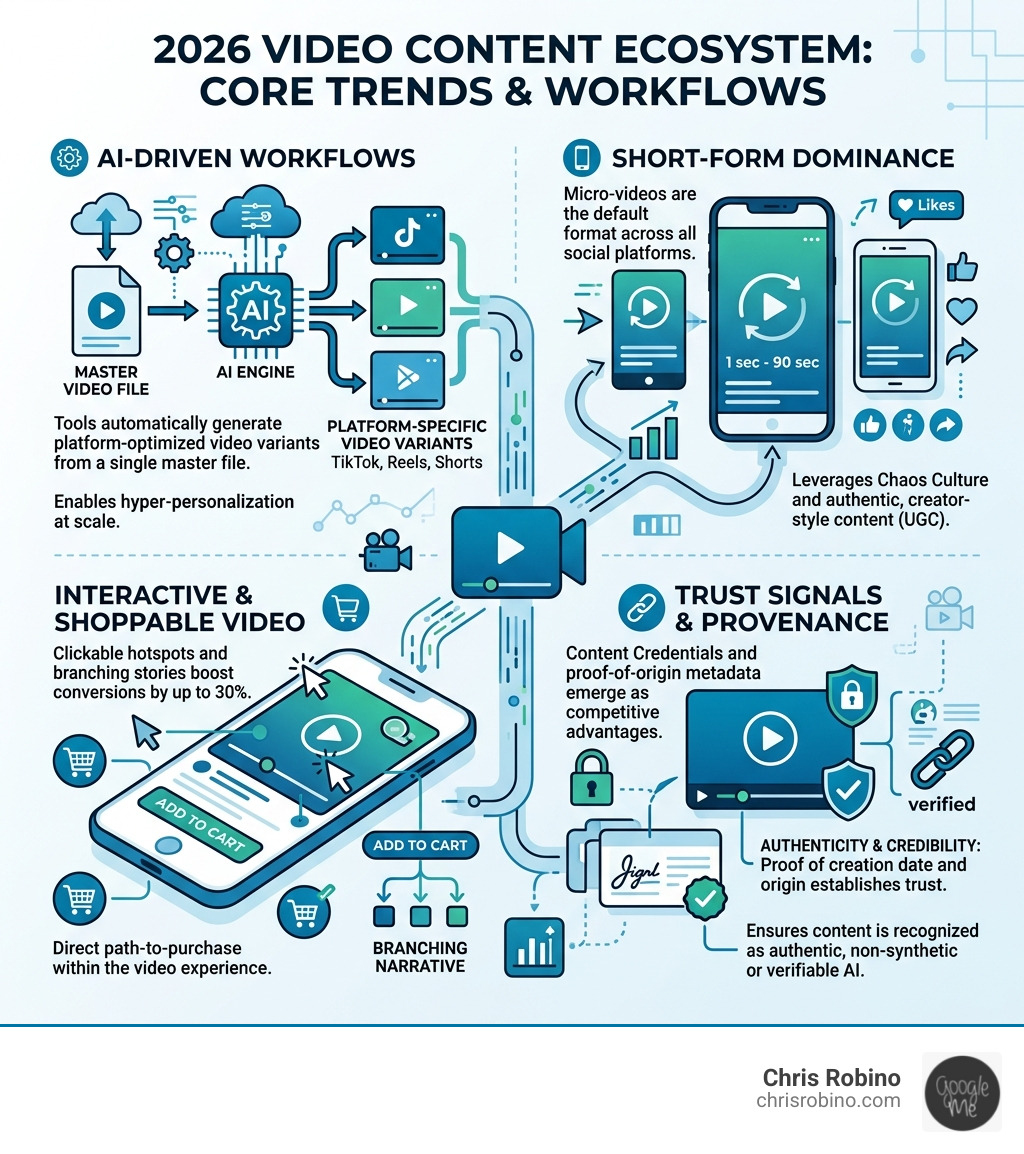
- AI-driven production – Tools now generate platform-specific video variants from a single master file automatically.
- Short-form dominance – Micro-videos from 1 to 90 seconds are the default format across TikTok, Reels, and YouTube Shorts.
- Interactive and shoppable video – Clickable hotspots and branching narratives boost conversions by up to 30%.
- Authenticity over polish – Lo-fi, creator-style content and UGC outperform high-budget brand spots.
- Hyper-personalization at scale – AI tailors video versions to different audience segments without multiplying production costs.
- Provenance and trust signals – Content Credentials and proof-of-origin metadata are emerging as competitive advantages.
- Micro-dramas and episodic series – Short social series are projected to generate $7.8 billion in revenue in 2026.
The scale of video dominance is hard to overstate. Video now accounts for over 82% of all internet traffic, and nearly 95% of internet users watch video every month. The average US adult spends more than 60% of their screen time watching video content. For large organizations, this means that traditional text-based SEO strategies must be augmented with robust video systems to maintain market share.
Yet volume alone no longer wins. Attention is scarcer, algorithms are smarter, and audiences have become skilled at scrolling past anything that feels generic or hollow. The real competition in 2026 is not brand versus brand. It is your content versus an ocean of synthetic, AI-generated noise flooding every feed. Large companies face the unique challenge of maintaining brand authority while producing the high volume of content required to stay relevant in a fast-moving digital landscape.
What cuts through is relevance, credibility, and the right format for the right platform at the right moment. This requires a sophisticated approach to SEO that integrates video metadata, semantic search optimization, and technical infrastructure that can handle massive content libraries.
I’m Chris Robino, a digital strategy and AI search expert with over two decades of experience helping brands turn emerging video content trends into measurable growth engines. In this guide, I will break down exactly what is working in 2026 and how to implement it without wasting budget on tactics that have already peaked.
Video content trends vocab to learn:
Top Video content trends Shaping 2026
The landscape of video content trends in 2026 is defined by a paradox: we are using more advanced technology than ever to create content that feels more “human” and less manufactured. As platforms become saturated with “AI slop”—repetitive, low-value synthetic media—the premium on high-intent, structured video has skyrocketed. For large companies, the strategy must focus on “Video SEO at Scale,” ensuring that every piece of content is discoverable by both users and search algorithms.
| Feature | Short-Form (15-90s) | Long-Form (3min+) |
|---|---|---|
| Primary Goal | Awareness & Discovery | Education & Trust |
| Completion Rate | 2.5x higher than long-form | Lower, but indicates high intent |
| Algorithm Reward | High (Viral potential) | Steady (Search & SEO) |
| 2026 Revenue | $7.8B (Micro-dramas) | High (Course/Subscription) |
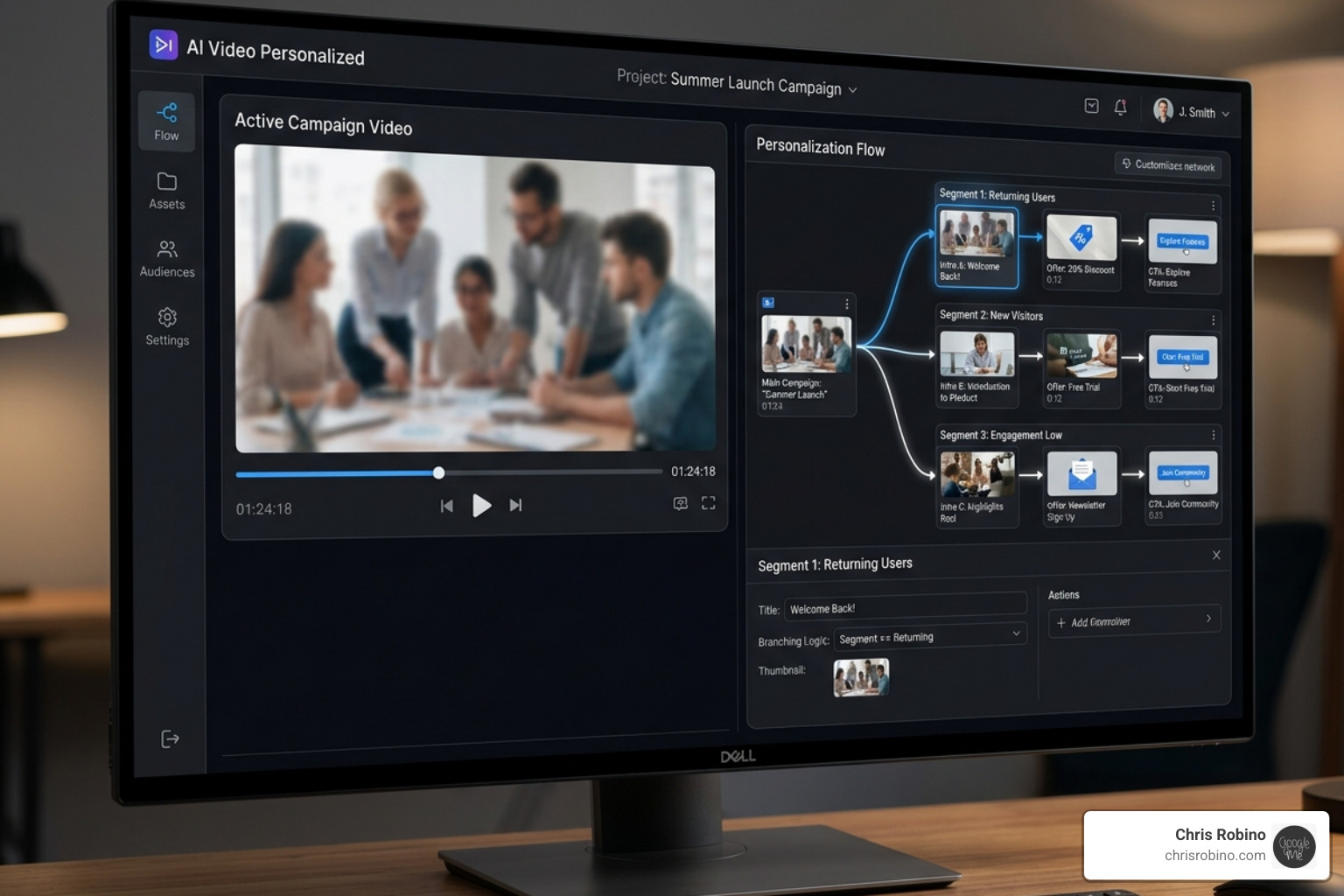
One of the most significant shifts is the move toward AI in Filmmaking. We are no longer just using AI to edit; we are using it to direct entire workflows. This includes hyper-personalization, where a single hero video is automatically remixed into hundreds of variations tailored to specific viewer demographics, locations, or past behaviors. For large companies, this allows for the creation of localized content that performs well in regional search results without the overhead of traditional production.
Research indicates that the focus has shifted from “making a video” to “building a video system.” This involves using technologies like 3D Gaussian Splatting to create immersive spatial captures from standard footage and implementing Content Credentials—digital nutrition labels that prove a video’s origin and authenticity. This is a critical SEO strategy for large companies, as search engines increasingly reward content that demonstrates high E-E-A-T (Experience, Expertise, Authoritativeness, and Trustworthiness).
The Rise of AI-Driven Video content trends
Generative AI has moved from a novelty to the backbone of production efficiency. By 2026, 86% of digital video ad buyers are either using or planning to use GenAI in their creative processes. The goal isn’t just speed; it’s AI Video Generation that allows for modular editing and outpainting.
Outpainting is a game-changer for video content trends. It allows AI to “fill in” the edges of a video, meaning we can take a horizontal 16:9 cinematic shot and expand it into a vertical 9:16 format without awkward cropping. This ensures your content looks native on every platform. However, the key is to Automate Your Media Not Your Sanity A Practical Guide to Workflow Efficiency. Large organizations use AI for the heavy lifting—transcription, metadata generation, and multi-language versioning—while keeping human “taste” at the center of the story to ensure brand consistency.
Short-Form Dominance and Micro-Video Evolution
Short-form video is no longer just “the TikTok format.” It is the universal language of the mobile-first era. While the 60-90 second range is the “sweet spot” for engagement, we are seeing the rise of sensory-rich micro-videos lasting only 1-3 seconds. These are designed as pattern interrupts—quick, high-impact visuals that grab attention in a crowded feed. For enterprise SEO, these micro-videos serve as powerful entry points into a brand’s ecosystem, capturing “zero-click” search intent directly within social platforms.
These video content trends are heavily influenced by “Chaos Culture” and Gen Alpha’s preference for absurdist memes. On platforms like TikTok, Reels, and YouTube Shorts, the hook must happen in the first 3 seconds. If you don’t grab them immediately, the retention graph drops off a cliff. As we noted in our look at Media Production Industry Trends 2025, the brands winning today are those that embrace the raw, often imperfect nature of social-first video. Large companies must learn to balance this raw aesthetic with their established brand guidelines to remain authentic.
Interactive and Shoppable Video content trends
In 2026, the distance between “seeing” and “buying” has vanished. Interactive shopping videos now boost conversion rates by up to 30% compared to traditional formats. This is driven by clickable hotspots and branching narratives—essentially a “choose-your-own-path” experience for the viewer.
These features create a frictionless ecommerce environment. Whether it’s a live Q&A where viewers can buy products in real-time or a gamified ad where choices lead to different product recommendations, interactivity is the ultimate tool for engagement. For large companies, this data provides invaluable insights into customer preferences, which can then be used to further refine SEO and content strategies.
Strategic Implementation and Success Metrics
To succeed with video content trends in 2026, you must balance high-tech tools with low-fi storytelling. Audiences are increasingly wary of “too-perfect” AI content. They crave the “real”—the unpolished, the behind-the-scenes, and the user-generated. For large companies, this means decentralizing content creation and empowering employees or customers to tell the brand story.
Authenticity is the new currency. 40% of adults report that UGC influences their purchase decisions, and 93% of marketers say UGC campaigns outperform traditional tactics. We recommend building a cohesive customer journey using video series rather than one-off posts. This “snowballing” effect builds repeat viewership and brand loyalty. For a deeper dive, check out our Media Production Trends Complete Guide.
Platform-Specific Optimization and Hybrid Formats
Every platform has its own “culture,” and your video must speak the native language. LinkedIn, for example, has seen a 36% year-over-year growth in video views. B2B audiences there want expertise and thought leadership, but they want it delivered in a way that feels personal. For large companies, a key SEO strategy is to create “content hubs” where video assets are cross-linked to relevant whitepapers, case studies, and product pages.
Modern video content trends also demand search-first optimization. Video discovery now relies on machine interpretation. This means your videos must have:
- Accurate AI-generated transcripts for accessibility and indexing.
- Detailed metadata and JSON-LD schema markup to help search engines understand context.
- Chapter markers for easy navigation, which also appear in Google Search results.
- Native editing styles (e.g., using platform-specific fonts and music) to increase dwell time.
As we discussed in Media Production Industry Trends 2023, the transition to “hybrid formats” is essential. A single piece of core content should be modular—able to be broken down into a podcast clip, a blog post, a vertical Reel, and a long-form YouTube tutorial. This modularity is the secret to enterprise SEO success, allowing a company to dominate multiple search result types with a single production effort.
Measuring Beyond the View: 2026 Success Metrics
In 2026, “views” are a vanity metric. What matters is intent and behavior. For large organizations, success is measured by how video contributes to the overall Knowledge Graph and organic visibility. We focus on:
- Watch Time & Retention Graphs: Identifying exactly where the audience loses interest to refine future scripts.
- Conversion Rates: Tracking how video interactions lead to direct actions like sign-ups or purchases.
- Qualified Leads: Video marketers see 66% more qualified leads per year by using video to pre-educate prospects.
- Shares & Saves: These signals indicate high-value resonance and are increasingly used by algorithms to determine content quality.
- Organic Search Visibility: Measuring the increase in branded and non-branded search traffic resulting from video content.
For those in the software space, SaaS Video Marketing relies heavily on these intent signals to qualify prospects before they even talk to a sales rep. If you need help navigating these metrics, a Video Marketing Consultant can help align your creative output with your business goals.
Future-Proofing with Chris Robino
The speed of change in video content trends can be overwhelming, but it is also a massive opportunity for those who stay agile. At ChrisRobino.com, we specialize in helping organizations navigate the intersection of emerging tech and media strategy. Large companies require a partner who understands the complexities of enterprise-level SEO and can implement systems that scale.
Whether you are looking to Unlock Your Potential Essential Media Production Software for Pros or need a New Tech Media Strategies Guide to overhaul your production pipeline, our goal is to provide the insights you need to win. From the Film Industry Video standards to the latest in AI-driven social content, we ensure your brand doesn’t just join the conversation—it leads it.
The future of video isn’t just about more content; it’s about smarter systems, deeper authenticity, and measurable results. Let’s get to work.