
Strategic Implementation and the Future of Work
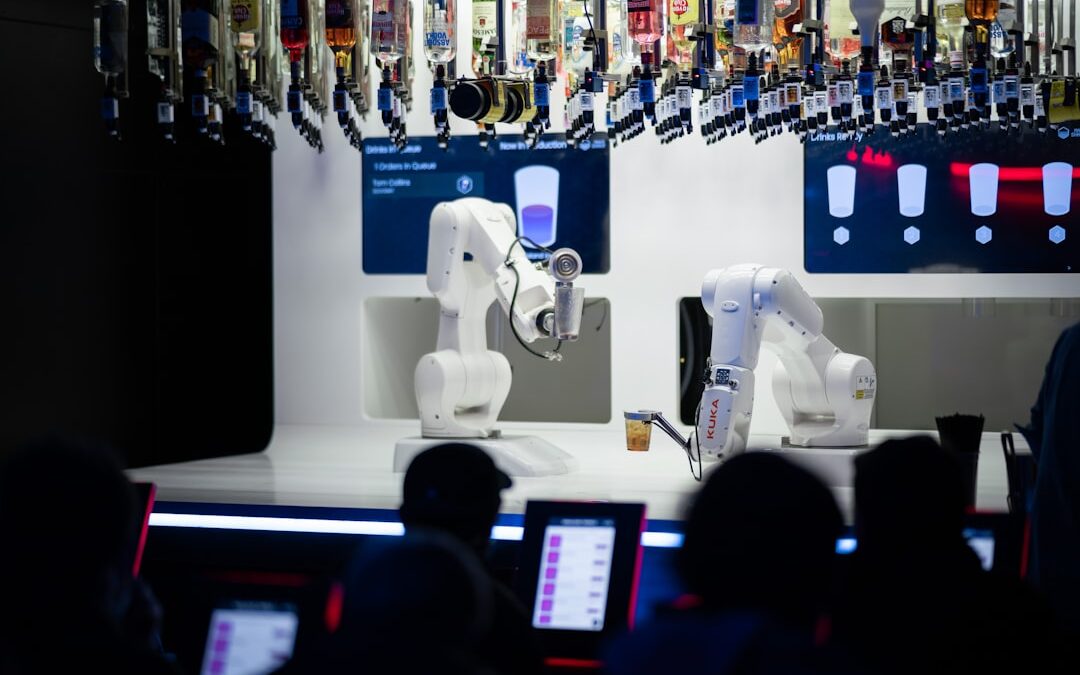
To understand robotic automation, we must look at it as a multi-layered ecosystem. It isn’t just a single piece of software or a mechanical arm; it is a convergence of digital and physical tools designed to streamline the modern enterprise. At the heart of this transformation is Robotic process automation, often referred to as RPA.
RPA is a form of business process automation that utilizes software robots (or “bots”) to execute rule-based tasks. Unlike traditional programming that relies on complex API integrations, RPA can operate at the “presentation layer” of a computer. This means it watches how a human interacts with a Graphical User Interface (GUI)—clicking buttons, moving files, and typing data—and then replicates those actions with perfect precision. This non-invasive nature allows companies to automate legacy systems that lack modern connectivity, effectively extending the life of older infrastructure while increasing throughput.
Today, we are moving beyond simple task-level bots into the realm of hyperautomation. This approach combines RPA with Robotics Process Automation frameworks, artificial intelligence, and process mining. Process mining acts as the “X-ray” for your business, identifying bottlenecks and manual inefficiencies before a single bot is even deployed. By integrating these tools, we create a seamless flow where data moves from legacy systems to modern cloud environments without human intervention. Hyperautomation is not just about doing things faster; it is about discovering what to automate and how to optimize the entire value chain.

Distinguishing RPA from Industrial Robotic Automation
A common point of confusion is the difference between software-based bots and the “heavy metal” of the factory floor. While both fall under the umbrella of robotic automation, their environments and architectures are vastly different.
- Software Bots (RPA): These operate in a virtual environment. They don’t have a physical presence; instead, they live on servers or virtual workstations. They are primarily used for “screen scraping,” data migration, and back-office clerical work. We categorize these into unattended bots (which run on servers without human supervision, handling high-volume batch processing) and attended bots (which live on a user’s desktop and act as a digital assistant, triggered by specific human actions).
- Industrial Robotics: These are physical machines designed for fixed automation. Think of the massive mechanical arms in automotive plants. They are programmed to perform high-speed, repetitive movements like welding or heavy lifting. While incredibly powerful, they traditionally require safety cages to keep human workers out of harm’s way. These systems are built for durability and high-cycle environments where physical force and speed are paramount.
Understanding this distinction is vital for strategy. If your bottleneck is in the warehouse or on the assembly line, you might find that Why Your Factory Needs a Robotic Best Friend is the key to unlocking productivity through physical hardware.
The Rise of Collaborative Robots and Physical AI
The most exciting development in physical robotic automation is the rise of the “cobot.” Collaborative robots are designed to bridge the gap between human dexterity and machine consistency. Unlike traditional industrial robots, cobots are equipped with advanced sensors that allow them to work safely alongside humans without the need for safety fencing. They can detect the slightest touch and stop immediately, preventing injury.
Modern cobots are powered by what we call Physical AI. This technology enables robots to handle complex tasks like machine tending, palletizing, and precision assembly with a repeatability down to ±0.03 mm (30 microns). This level of precision is virtually impossible for a human to maintain over an eight-hour shift, especially in high-stress or ergonomically challenging environments.
Furthermore, these systems are highly flexible. A cobot can be “taught” a new task in minutes by a worker simply moving the robot arm through the desired motions. This lowers the barrier to entry for small and medium-sized enterprises that need to automate but don’t have a team of dedicated robotics engineers on staff. This democratization of robotics is a cornerstone of the Industry 4.0 movement.

The Evolution Toward Agentic Robotic Automation
As we look at the landscape in May 2026, the most significant shift is the transition from “Task Automation” to Agentic Robotic Automation.
In the early 2010s, automation was about following a rigid script: “If A happens, do B.” Today, AI-Driven Automation leverages Large Language Models (LLMs) to act as “agents.” These agents don’t just follow instructions; they plan and reason. They can handle unstructured data, such as handwritten notes or complex emails, and determine the appropriate course of action based on context rather than just rules.
An agentic system can monitor an incoming customer email, understand the intent, check inventory across multiple systems, and determine the best workflow to resolve the request. The AI agent handles the “thinking” and planning, while the RPA robots act as the “execution layer,” logging into legacy ERP systems to update records. This autonomous adaptation allows businesses to automate end-to-end processes that were previously considered too complex or variable for robots. It represents a shift from “doing” to “deciding.”
Implementing robotic automation is no longer just a technical challenge; it is a strategic imperative. From autonomous mobile robot (AMR) fleets navigating warehouse floors to software bots reconciling millions of invoices, the impact is felt across the entire supply chain. Modern smart factories now use these technologies in tandem. For instance, a warehouse robotics system can process over 2 billion cases using AI-enabled picking, while blockchain technology ensures transparency. Integrating these systems allows for Unlocking the Power of the Chain: Your Guide to Blockchain in Supply Chain management, where every automated movement is recorded and verified in real-time.

Business Benefits, ROI, and Industry Impact
The return on investment for robotic automation is often dramatic and measurable. When organizations move repetitive, manual tasks to “always-on” bots, they see immediate gains in speed, accuracy, and compliance. The reduction in human error alone can save millions in industries like pharmaceuticals or aerospace, where precision is non-negotiable.
| Industry | Primary Use Case | Measured Impact |
|---|---|---|
| Banking & Finance | Loan processing & reconciliation | 80% reduction in process time |
| Healthcare | Claims & patient data management | 3.5 hours saved daily per employee |
| Manufacturing | Quality inspection & palletizing | 20% cost savings on average |
| Insurance | Disaster pay-outs & policy ingestion | 50% faster invoice turnaround |
Beyond the numbers, automation provides enterprise-grade scalability. A bot can work 24/7 without a coffee break or a vacation. This allows businesses to scale their operations during peak seasons without the lag time associated with hiring and training new staff. As we’ve seen with major public sector projects, automation can reduce claims processing times from 27 days down to just 12 hours. This agility is a competitive advantage in a volatile global market.
Navigating Challenges, Risks, and Workforce Evolution
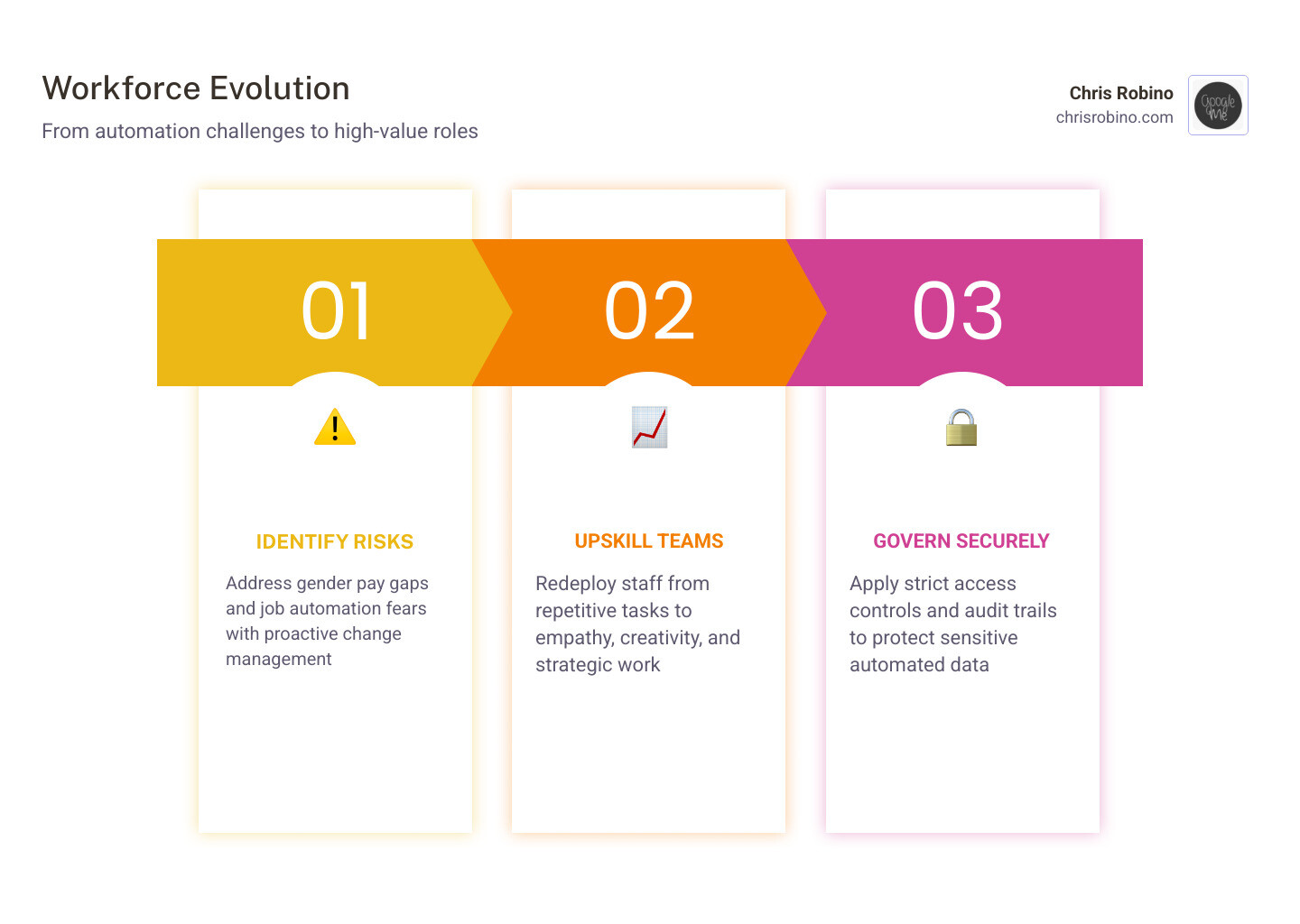
While the benefits are clear, we must address the challenges. The transition to an automated economy carries significant societal weight. Research suggests that the gender pay gap has increased in some sectors at a rate of 0.18% for every 1% increase in robotization, often because men and women occupy different roles within the industries being automated. This highlights the need for inclusive automation strategies.
Furthermore, the “fear of the robot” is a real hurdle in change management. With projections that 35% of jobs may be automated by 2035, the focus must shift toward upskilling. AI-Powered Automation should be viewed as a tool for redeployment, not just replacement. By offloading the “boring” work to robots, employees are freed to focus on high-value tasks like customer empathy, creative problem-solving, and strategic planning. Organizations that prioritize the “human-in-the-loop” model tend to see higher employee satisfaction and better long-term results.
There are also technical risks, such as maintenance complexity and security. Because RPA bots interact with sensitive data, they must be governed with strict role-based access controls and audit trails to ensure compliance. A robust Center of Excellence (CoE) is essential for managing these risks at scale.
Getting Started: Selection Criteria and Success Metrics
If you are ready to begin your journey with robotic automation, we recommend a “start small, scale fast” approach. Success begins with identifying high-value, high-volume tasks that are prone to human error. Avoid automating a broken process; optimize the process first, then apply automation.
When selecting a platform or solution, look for these key capabilities:
- Low-Code Tools: Empower “citizen developers” (business users who aren’t coders) to build their own automations, reducing the burden on IT.
- Centralized Governance: Ensure IT has oversight of every bot to prevent “shadow IT” and security breaches.
- AI Integration: The ability to add “skills” like document understanding and conversational AI to your robots.
- Open Architecture: Your automation tools should play well with others, integrating easily with SAP, Salesforce, and Microsoft ecosystems.
At ChrisRobino.com, we specialize in navigating these complex waters. Whether you are looking to implement your first cobot or build a sophisticated agentic AI workflow, our goal is to provide the expertise you need to succeed. For more tailored insights, you can find More info about AI-powered automation services on our platform.
The future of work is not a battle between humans and machines. It is a partnership where robotic automation handles the mundane, leaving the meaningful to us. Let’s get to work.
Strategic Visibility: SEO for Large-Scale Automation Enterprises
For large companies operating in the robotic automation space, digital visibility is as critical as the technology itself. Enterprise SEO requires a different playbook than standard small-business optimization, focusing on scalability, technical precision, and authority. When a corporation manages thousands of pages across multiple global regions, the primary challenge is ensuring search engines can efficiently crawl and understand the site’s architecture.
Technical Foundations and Crawl Budget Management
Large enterprises often struggle with “crawl budget”—the number of pages a search engine bot will crawl on a site within a given timeframe. To perform well, companies must eliminate technical debt such as duplicate content, broken redirects, and deep-nested URL structures. Implementing a clean, flat site architecture ensures that high-value pages regarding automation solutions are indexed quickly. Furthermore, leveraging server-side rendering for JavaScript-heavy applications is essential for ensuring that complex, interactive product demos are visible to search crawlers.
Content Architecture and Topic Clusters
Rather than targeting isolated keywords, large companies should utilize a “hub and spoke” content model. By creating a central pillar page for a broad topic like “Industrial Robotic Automation” and linking it to detailed sub-pages (the spokes) covering specific use cases like “robotic palletizing” or “cobot safety,” companies build semantic authority. This internal linking strategy signals to search engines that the site is a comprehensive resource, which is vital for ranking in highly competitive B2B sectors. This approach also improves the user journey, guiding potential clients from broad awareness to specific technical solutions.
Leveraging Brand Authority and E-E-A-T
In the automation industry, Experience, Expertise, Authoritativeness, and Trustworthiness (E-E-A-T) are paramount. Large companies can leverage their existing brand equity by featuring white papers, case studies, and expert insights from their engineering teams. High-quality, data-driven content not only attracts natural backlinks from industry publications but also establishes the company as a thought leader. For global enterprises, localized SEO is equally important; ensuring that content is correctly translated and optimized for regional search behaviors (using proper hreflang tags) allows a company to maintain a dominant presence in every market it serves. By combining technical excellence with a robust content strategy, automation giants can ensure their innovations reach the decision-makers who need them most.