
Why VR AR Marketing Is the Next Frontier for Brands
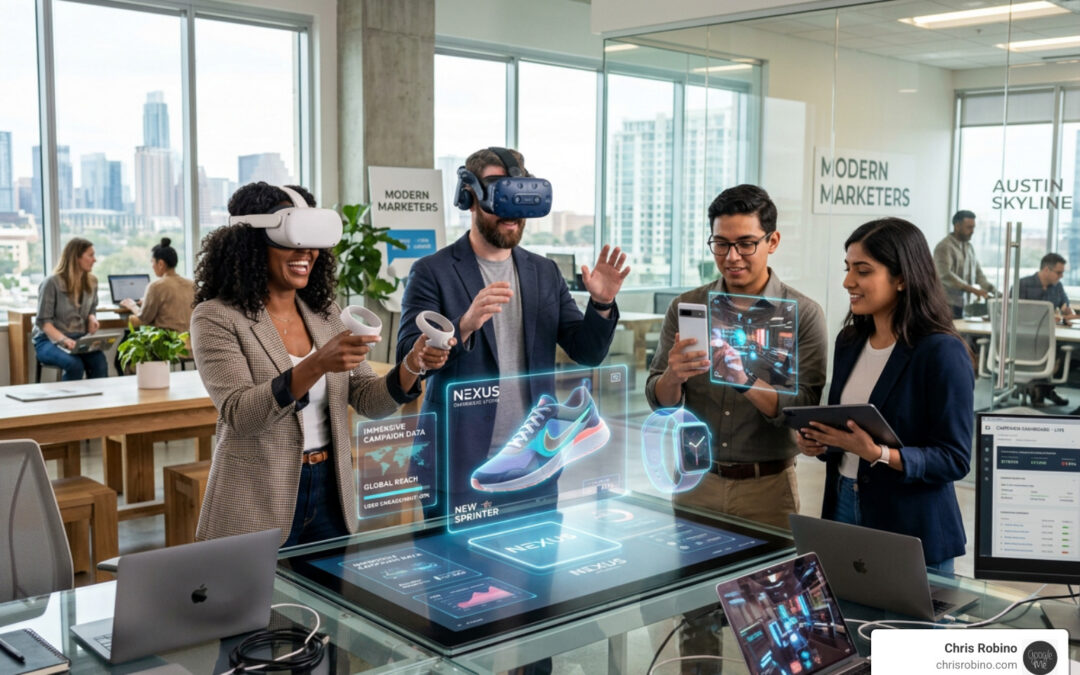
VR AR marketing is the use of augmented reality and virtual reality technologies to create immersive, interactive brand experiences that drive engagement, conversions, and loyalty. In an era where digital noise is at an all-time high, these technologies offer a way to break through the clutter and provide genuine value to the consumer. For large-scale enterprises, this isn’t just about a single campaign; it’s about integrating immersive tech into a broader digital transformation and SEO strategy that captures attention across the entire customer journey.
Here’s a quick breakdown of what it means in practice:
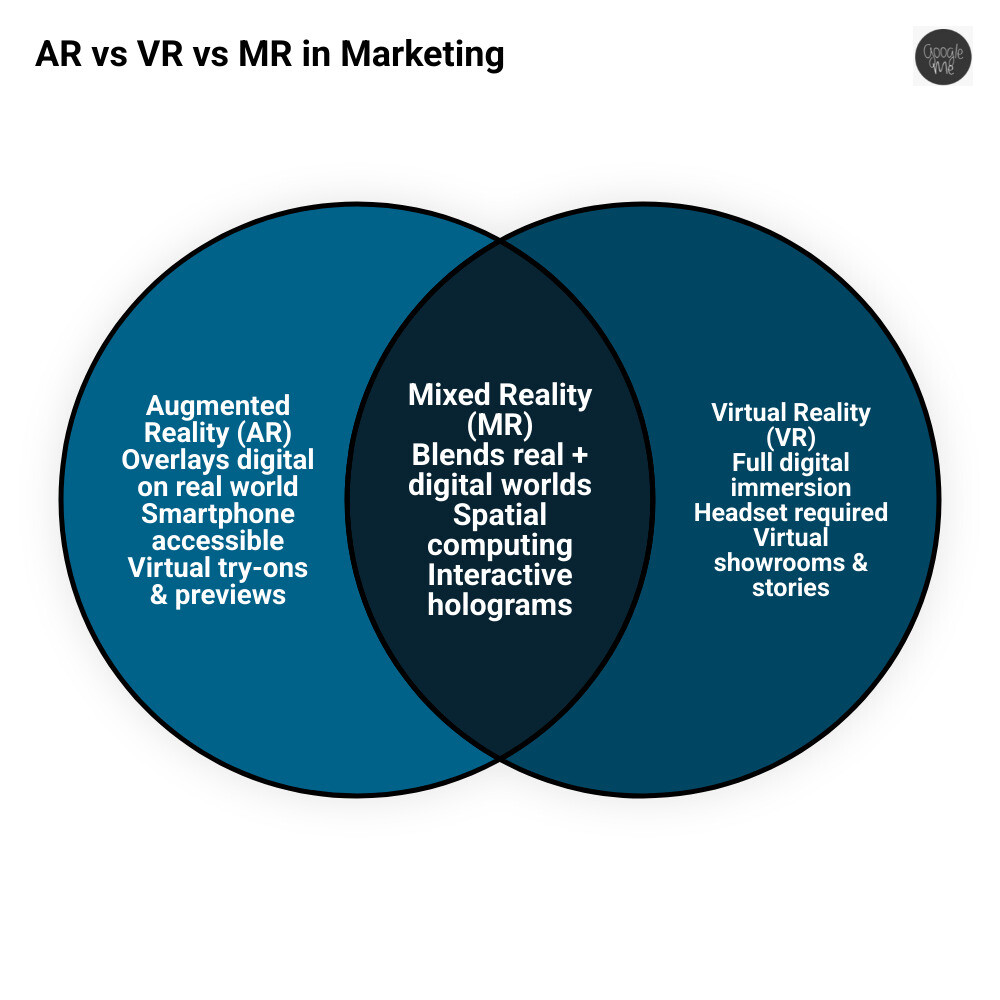
| Augmented Reality (AR) | Virtual Reality (VR) | |
|---|---|---|
| What it does | Overlays digital elements onto the real world | Replaces the real world with a fully digital environment |
| Device needed | Smartphone, tablet, or AR glasses | VR headset |
| Marketing use | Virtual try-ons, product previews, social filters | Immersive brand stories, virtual showrooms, event demos |
| Accessibility | High — most people already own a smartphone | Lower — requires dedicated hardware |
| Best for | Awareness, consideration, e-commerce | Deep engagement, complex product demos, storytelling |
The numbers behind this shift are hard to ignore. The global AR and VR market is expected to reach $296.9 billion, and brands using immersive tech are 70% more likely to be remembered than those relying on traditional media. Meanwhile, 71% of consumers say they’d shop more often if AR was part of their purchase journey. This data suggests that the “experience economy” is no longer a buzzword but a measurable driver of revenue and brand equity.
This isn’t a gimmick. It’s a fundamental shift in how consumers expect to interact with brands — and the gap between early adopters and everyone else is widening fast. For large companies, the challenge lies in scaling these experiences across global markets while maintaining technical performance and search visibility.
I’m Chris Robino, a digital strategy and AI search expert with over two decades of experience helping brands cut through complexity and drive measurable growth — including helping organizations explore and implement VR AR marketing as part of broader digital transformation strategies. In the sections ahead, I’ll walk you through everything you need to know to go from curious to confident, including how to align these technologies with high-performance SEO strategies for large-scale organizations.
Handy VR AR marketing terms:
- Marketing automation content
- content marketing strategies for tech companies
- content marketing tips for tech startups
The Evolution and Impact of VR AR Marketing
The journey of immersive technology from science fiction to a staple of the marketing mix has been shorter than many realize. We have moved beyond the “wow factor” and entered an era where VR AR marketing is a performance-driven channel. This evolution is fueled by the massive growth of the AR and VR display market, which is projected to climb from USD 1.8 billion in 2023 to USD 8.2 billion by 2028—a staggering compound annual growth rate (CAGR) of 35.6%. For large enterprises, this growth represents a significant opportunity to capture market share by being the first to provide high-utility immersive tools.
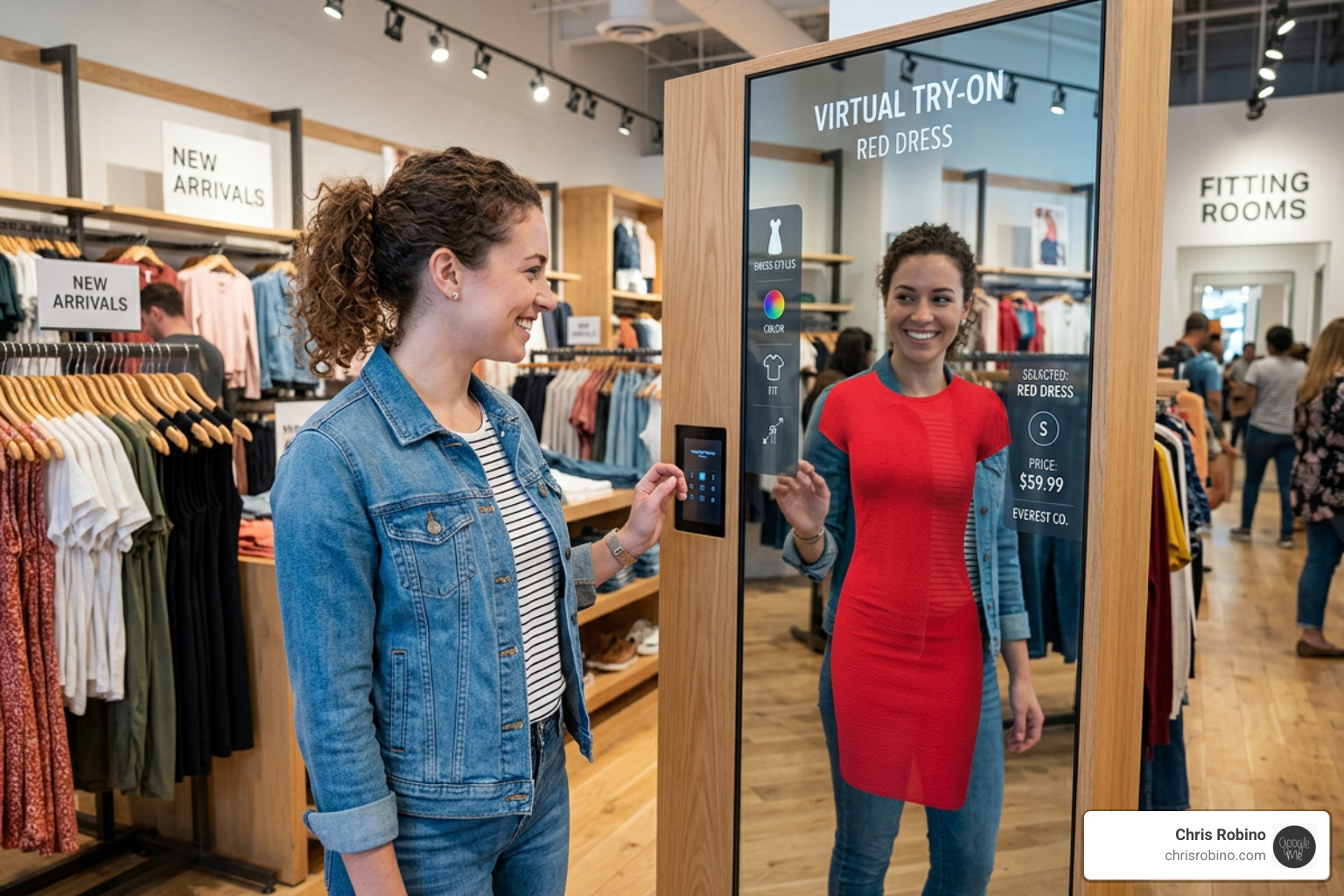
As digital transformation accelerates, the way we build consumer-brand relationships is changing. It is no longer enough to show a 2D image of a product. Today’s consumers want to inhabit the brand’s world. This shift is particularly evident in how we use these technologies to foster “psychological ownership.” When a customer can virtually place a piece of furniture in their room or see a watch on their own wrist, they begin to feel as though they already own the item, significantly shortening the distance between interest and purchase. This psychological bridge is a powerful tool for reducing the friction inherent in high-consideration purchases.
Defining AR vs. VR in Modern Marketing
To master VR AR marketing, we must first distinguish between the two core pillars. Augmented Reality (AR) is the ultimate tool for accessibility. By using the camera on a smartphone or tablet, AR overlays digital visuals—like text, 360-degree 3D models, or animations—onto the user’s actual surroundings. This makes it perfect for “try-before-you-buy” scenarios and interactive social media filters. For large retailers, AR can be integrated directly into mobile apps to enhance the in-store and at-home shopping experience simultaneously.
Virtual Reality (VR), on the other hand, is about total immersion. It requires a dedicated headset to transport the user into a completely synthetic environment. While AR is about enhancing our current reality, VR is about creating a new one. This makes it an unparalleled medium for emotional storytelling and complex B2B demonstrations where you need the user’s undivided attention. Large companies often use VR for high-stakes training or to provide virtual tours of facilities that are otherwise inaccessible to the public. To stay ahead of the curve, keep an eye on current Augmented Reality Trends.
The Business Case for VR AR Marketing: Stats and Benefits
The data supporting VR AR marketing is as immersive as the technology itself. We aren’t just talking about likes and shares; we are talking about the bottom line. Research shows that:
- Conversion Lift: Brands using AR in advertising have seen conversion rates improve by up to 40%.
- Reduced Friction: Retailers utilizing AR for product previews have witnessed product return rates drop by as much as 25%.
- Consumer Preference: 61% of shoppers prefer stores that offer AR technology, and 65% want product information delivered through these immersive layers.
- Brand Recall: Consumers are 70% more likely to remember a brand that uses AR or VR compared to those using conventional media.
Beyond the numbers, scientific research on VR/AR-based consumer brand experiences highlights that these technologies improve the consumer-brand relationship by satisfying the need for “flow”—a state of deep immersion and enjoyment. Educational experiences, in particular, have been shown to have the strongest impact on long-term brand satisfaction. For large organizations, this means that investing in educational AR/VR content can lead to higher customer lifetime value (CLV).
Successful Real-World Applications
We have seen some incredible pioneers pave the way. One of the most famous examples is the IKEA Place app AR launch, which allowed users to place furniture in their homes with 98% scaling accuracy. This simple utility solved a massive customer pain point: “Will this fit in my living room?” By solving a practical problem, IKEA moved AR from a novelty to a necessity.
Other brands have taken a more experiential route. Marriott Hotels introduced the “Teleporter,” a 4-D virtual reality experience that allowed guests to explore destinations worldwide through sensory-rich VR pods. Meanwhile, Pepsi’s AR Bus Shelter campaign in London turned a mundane commute into a viral sensation by showing alien invasions and tigers on a digital screen that looked like a transparent window. This single campaign amassed over 8 million views on YouTube, proving that VR AR marketing has massive potential for “newsjacking” and viral social sharing when executed with creativity and scale.
Strategic Implementation and Future Trends
Launching a campaign in this space requires moving beyond the “gimmick” phase and into strategic planning. For large companies, this means ensuring that immersive experiences are not siloed but are part of a cohesive digital ecosystem. We recommend starting with a clear “single promise”—what is the one thing you want the user to experience? Whether it’s seeing how a lipstick shade looks on their skin or taking a virtual tour of a factory, the goal must drive the technology choice.
High-Performance SEO Strategies for Large Companies
For large-scale enterprises, VR AR marketing must be supported by robust SEO strategies to ensure these experiences are discoverable. SEO for large companies requires a different playbook than standard small-business tactics. When managing thousands of pages and complex site architectures, the focus must shift toward scalability and technical excellence.
- Technical SEO at Scale: Large sites often struggle with crawl budget and indexation. Implementing a clean, hierarchical site structure and using automated tools to monitor for 404 errors and redirect loops is essential. For immersive content, ensure that 3D assets are optimized for speed to prevent negative impacts on Core Web Vitals.
- Visual Search Optimization: As Google Lens and other visual search tools gain popularity, large companies should optimize their product imagery and 3D models. Using Schema.org markup (specifically the
3DModeltype) allows search engines to understand and display your AR assets directly in the search results, driving high-intent traffic. - Content Hubs and Topical Authority: Instead of targeting fragmented keywords, large companies should build comprehensive content hubs around core topics. By creating a “pillar and spoke” model, you can establish authority in your niche. Integrating AR/VR experiences into these hubs increases dwell time, a key signal that tells search engines your content is valuable.
- Programmatic SEO: For enterprises with vast product catalogs, programmatic SEO allows for the creation of unique, high-quality landing pages at scale. Each page can feature an AR “try-on” or “view in room” option, providing a unique value proposition that competitors may lack.
How to Launch Your First VR AR Marketing Campaign
The technical barriers to entry are lower than ever. You don’t always need a custom-built app. Tools like Spark AR and Snap Lens Studio allow us to create social AR filters that leverage existing user bases. For e-commerce, WebAR is a game-changer, allowing users to launch AR experiences directly from a mobile browser without downloading anything. This is particularly effective for large companies looking to reduce friction in the conversion funnel.
When building your campaign, consider these steps:
- Define Your Goal: Are you driving awareness, or are you trying to reduce returns on a specific product line?
- Platform Selection: Choose where your audience lives. Snapchat is great for Gen Z, while WebAR is better for high-intent shoppers on your website.
- 3D Asset Pipeline: You need high-quality 3D models. We suggest keeping these assets under 5-8 MB to ensure sub-3-second load times, which is critical for both user experience and SEO.
- Promote and Collaborate: Use influencers to demonstrate how to use the AR/VR experience.
For a deeper dive into the organizational shift required, check out our guide on Augmented Reality Strategy: The New Interface for Innovation.
Measuring Success and ROI
Measuring VR AR marketing requires looking past vanity metrics. While “views” are great, we focus on interaction depth and dwell time. How long did the user play with the 3D model? Did they change the color of the car? Did they click the “Buy Now” button after the experience? Industry research on VR effectiveness has found that VR participants were 4x faster to train and 3.75x more emotionally connected to the content than classroom learners. In a marketing context, this emotional connection translates directly into brand loyalty and purchase intent.
Future Horizons: XR, MR, and Sustainability
As we look toward 2025 and beyond, the lines between these technologies are blurring into what we call Extended Reality (XR) and Mixed Reality (MR). MR glasses allow us to see digital data projected onto the real world while still interacting with our physical environment. With the integration of 5G and AI, these experiences will become even more seamless and personalized. Furthermore, VR AR marketing is becoming a pillar of sustainability. By allowing for virtual sampling, brands can significantly reduce the carbon footprint associated with shipping and returns.
At ChrisRobino.com, we are committed to helping you navigate this AR/VR Business landscape. Whether you are a large corporation looking for a competitive edge or a growing brand ready to innovate, we invite you to explore our New Tech Media Strategies Guide to start your journey beyond the screen. The future of marketing isn’t just something we watch; it’s something we experience. Are you ready to step inside?