

Why Automated Content Generation Is Transforming Modern Marketing
Automated content generation is the use of AI, machine learning, and natural language processing to produce written, visual, or audio content at scale — with minimal manual effort.
For large companies, the challenge isn’t just creating content; it’s managing the sheer volume required to maintain visibility across thousands of keywords and multiple regions. Traditional manual workflows often fail at this scale, leading to content silos and missed SEO opportunities. Automation solves this by providing a centralized engine that can produce high-quality, brand-aligned assets in seconds.
| What It Does | Why It Matters |
|---|---|
| Generates blog posts, ad copy, emails, and social content automatically | Frees your team for strategy and creative work |
| Uses advanced AI models to analyze data and produce human-like text | No coding or prompt engineering required |
| Connects to your existing tools via no-code workflows | Fits into your current stack without disruption |
| Maintains brand voice across hundreds of pieces | Consistent output at any volume |
| Optimizes content for SEO from the start | Drives organic traffic without extra effort |
The Enterprise SEO Challenge
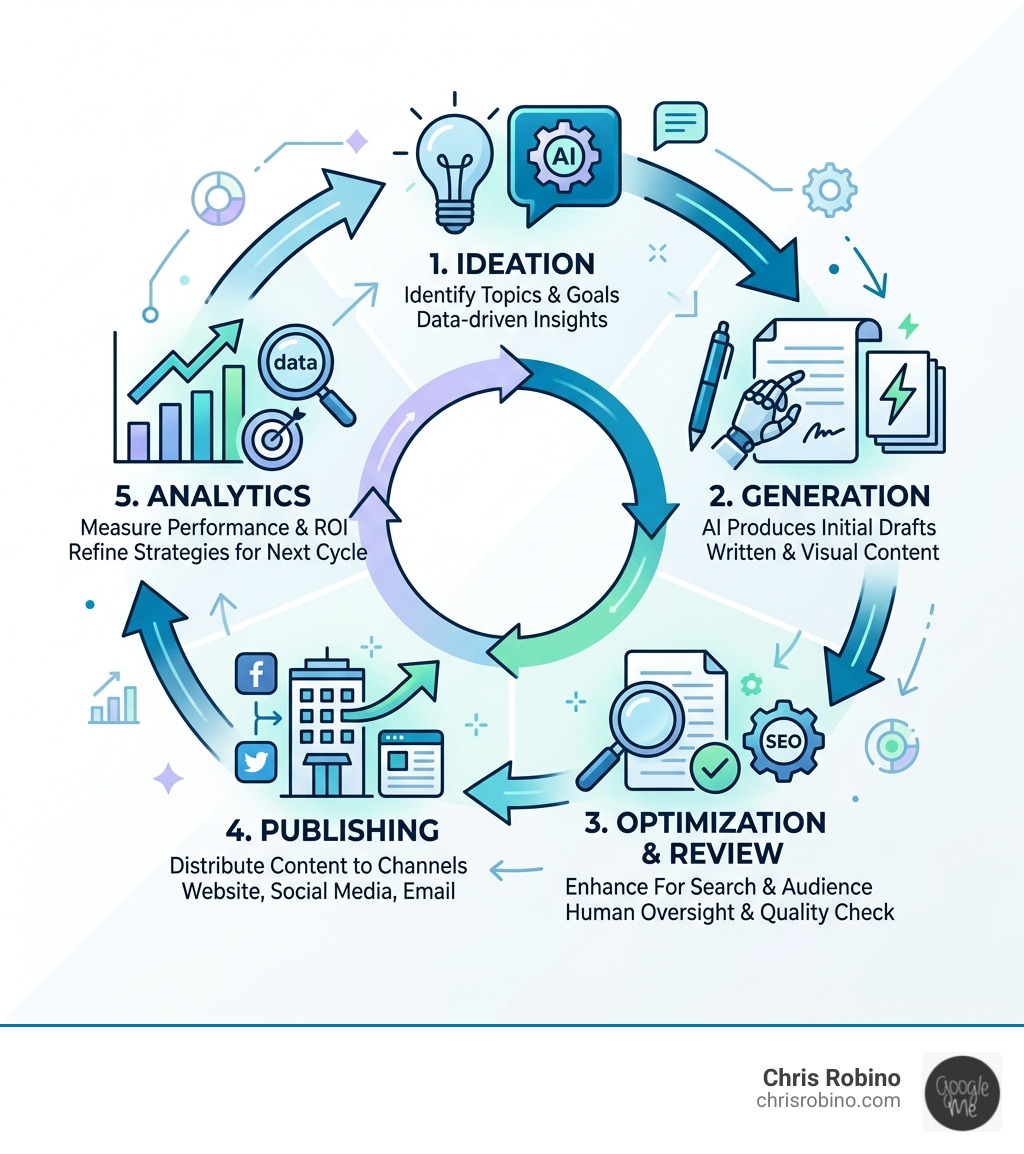
In the enterprise space, SEO is a game of “content velocity.” Search engines prioritize sites that demonstrate consistent authority and freshness. However, most marketing teams are still stuck in the same slow, manual cycle: research, write, edit, publish, repeat. One piece at a time. This bottleneck is real and costly — not just in time, but in the loss of market share to more agile competitors who leverage technology to dominate search results.
The good news? 87% of marketers are already using AI for content automation. The shift isn’t coming. It’s already here. Teams that embrace automated content generation are reporting dramatic results — some scaling from 2 blog posts per week to 20, with up to 85% less time spent on production. That’s not a small efficiency gain. That’s a fundamentally different way of working.
And the benefits go beyond speed. Businesses are seeing more SEO keywords covered, higher conversion rates, and content that reaches audiences across languages and channels — all without proportionally growing headcount. This guide walks you through exactly how to make that happen.
I’m Chris Robino, a digital strategy leader and AI search expert with over two decades of experience helping organizations — from startups to enterprise — harness automated content generation to drive measurable growth. In the sections ahead, I’ll break down the mechanics, the strategy, and the practical steps you need to build a content engine that scales.
Automated content generation helpful reading:
The Mechanics and Benefits of Automated Content Generation
At its core, automated content generation isn’t just about clicking a “generate” button. It is a sophisticated orchestration of technologies designed to replicate the human creative process at a fraction of the cost and time. For large companies, this means the ability to execute complex SEO strategies that were previously impossible due to resource constraints.
The impact on business economics is staggering. Research indicates that an AI-driven content engine can scale production by 10x without sacrificing quality. For a typical marketing department, this translates to roughly 85% time saved on drafting and scheduling. Instead of spending 32 hours a week on content creation, a team might spend only 5 hours, refocusing the remaining time on high-level strategy and audience engagement.
Advanced SEO Strategies for Large Companies
Beyond mere speed, the SEO benefits are undeniable. Automated systems can increase keyword reach significantly—in some cases moving from 140 tracked keywords to over 820 in a short period. This leads to a 3x increase in organic traffic and a substantial boost in conversion rates, often doubling or even tripling the effectiveness of landing pages.
One of the most effective strategies for large companies is Semantic Intent Mapping. Automation tools can analyze thousands of search queries to identify “content gaps” where your site lacks coverage. By automatically generating targeted articles for these gaps, you can build a comprehensive “topic cluster” that signals deep authority to search engines. This is far more effective than targeting isolated keywords.
How Automated Content Generation Works
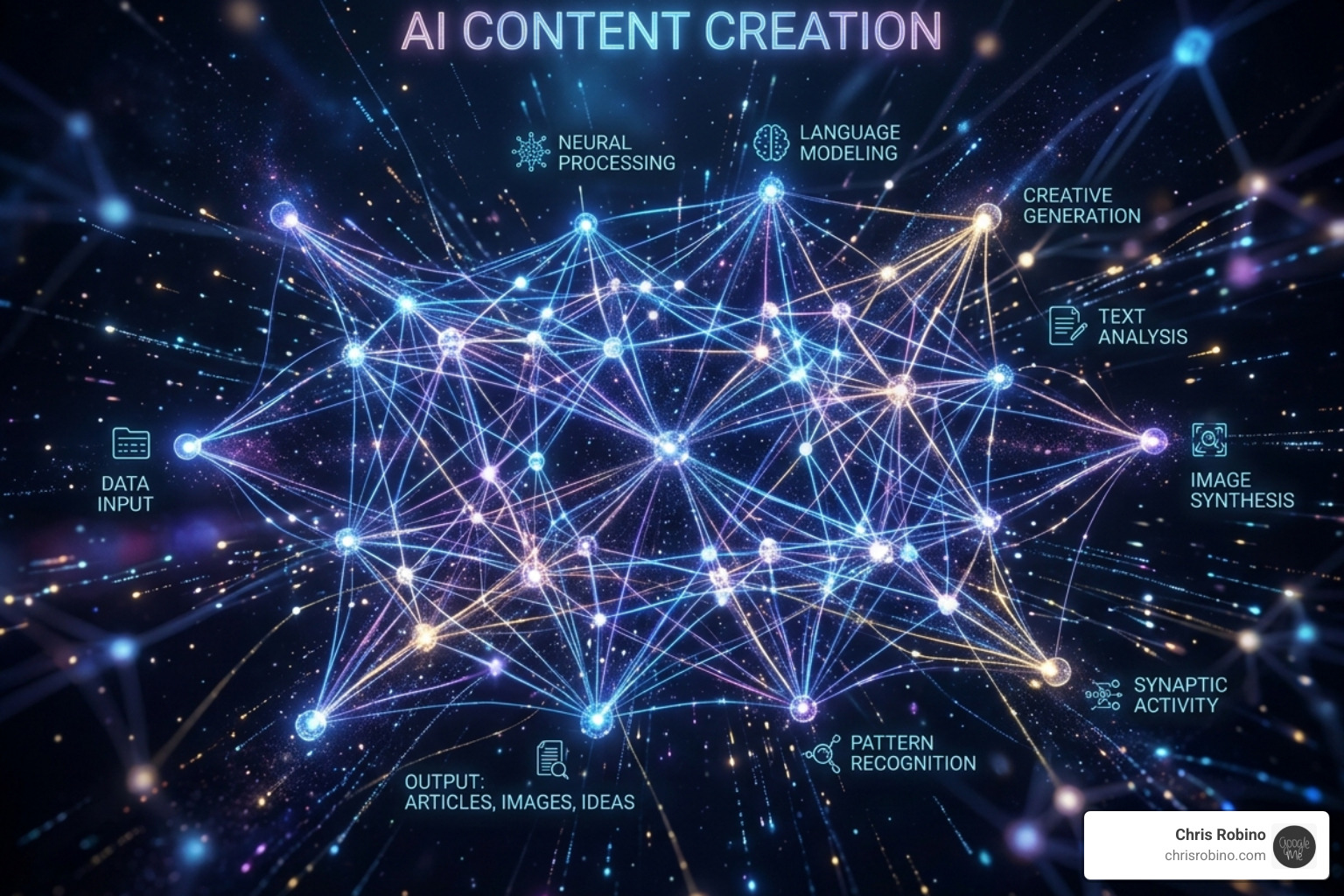
The “magic” behind the curtain relies on Machine Learning (ML) and Natural Language Processing (NLP). These systems use computer algorithms to analyze vast datasets, identifying patterns, structures, and emotional triggers that resonate with human readers. Today’s leading tools utilize advanced Large Language Models (LLMs). These models perform semantic analysis to understand the intent behind a query, not just the keywords. By using generative AI content techniques, the software can take a simple data point—like a product feature list—and expand it into a persuasive, formatted blog post or product description.
The process typically follows a structured path:
- Data Input: You provide raw data, a keyword, or a brief.
- Analysis: The AI references its training data to understand the context and required tone.
- Generation: The model assembles the content using template structures or free-form generation.
- Optimization: Real-time processing applies SEO rules, such as header placement and keyword density.
Diversifying Your Output: Text, Images, and Video
Automation isn’t limited to the written word. A comprehensive strategy covers the entire media spectrum:
- Text: From 2,000-word deep dives to punchy ad copy and personalized email marketing messages.
- Images: AI can generate social graphics, infographics, and blog headers that match your brand’s aesthetic.
- Video: Using AI video generation technology, businesses can transform blog posts into video scripts, add AI-generated voiceovers, and even produce product demos using stock footage and text-to-speech.
- Multilingual Support: Automation allows for instant translation and cultural adaptation, enabling brands to reach global markets in over 50 languages without hiring an army of translators.
Overcoming Challenges in Automated Content Generation
While the benefits are massive, we must address the hurdles. The most common risk is the “hallucination”—where AI confidently presents false information as fact. This makes human-led fact-checking non-negotiable. Quality control is another pillar. If left unchecked, automated tools can produce “thin” content that lacks emotional depth or fails to meet search intent.
Furthermore, search engines have become more discerning. To succeed, your automated content must prioritize technical SEO and demonstrate real value to the user, rather than just filling a page with words. Check out more on content automation explained to see how to balance these risks.
Implementing a Scalable Strategy for Enterprise Growth
For large organizations, automated content generation is the only way to maintain a “content-velocity” that keeps up with the market. Manual writing is increasingly viewed as an obsolete bottleneck that strains budgets and disrupts publishing schedules. To transition to an automated model, we recommend a phased implementation that focuses on high-impact SEO strategies.
| Production Metric | Manual Production | Automated Production |
|---|---|---|
| Weekly Output | 1–2 Posts | 20+ Posts |
| Time per Article | 5–8 Hours | 10–15 Minutes |
| Cost per Piece | $300 – $1,000+ | $1 – $10 |
| Scalability | Linear (Requires Hire) | Exponential (Software) |
Programmatic SEO for Enterprise Scale
One of the most powerful strategies for large companies is Programmatic SEO (pSEO). This involves using automation to create thousands of high-quality landing pages based on a specific database or set of parameters. For example, a global travel company might use pSEO to generate unique pages for “Best hotels in [City Name]” for 5,000 different cities. Automation ensures that each page is unique, helpful, and optimized for local search intent, which is impossible to achieve manually. For a deeper look at this process, explore our AI-driven content strategy resources.
Automated Content Refreshing and Pruning
Large websites often suffer from “content decay,” where older posts lose their rankings as information becomes outdated. An automated SEO strategy includes a “refresh engine” that monitors your existing library. When a post’s traffic dips or its information becomes stale, the AI can automatically suggest updates, add new statistics, or rewrite sections to align with current search trends. This keeps your entire domain fresh and authoritative without requiring a massive editorial team.
Best Practices for Quality and Brand Consistency
Consistency is what separates a professional brand from a spam bot. To maintain high standards, we follow these best practices:
- Develop Detailed Style Guides: Input your brand’s tone, preferred reading level, and “banned words” into the AI’s settings.
- Follow E-E-A-T Guidelines: Ensure content demonstrates Experience, Expertise, Authoritativeness, and Trustworthiness. AI should handle the “grunt work” of drafting, while humans provide the unique insights and “E” (Experience).
- Use Keyword Clustering: Instead of targeting one keyword, use automation to build topic clusters—groups of interlinked articles that establish your site as a topical authority.
- Automated Internal Linking: Use AI to analyze your site structure and automatically insert relevant internal links. This helps distribute PageRank across your site and improves crawlability for search engines.
Ethical Considerations and Human Oversight
We believe that automated content generation is most effective when used as a “human-in-the-loop” system. Transparency is key; audiences value authenticity, and being open about AI assistance can actually build trust if the quality remains high. Ethical risks include bias in AI models and the potential for spreading disinformation. This is why editorial review is crucial. A human editor should always be the final gatekeeper, ensuring the content is not only accurate but also culturally sensitive and aligned with AI in broadcasting ethics or relevant industry regulations.
Integrating Automation into Existing Workflows
Automation should simplify your life, not complicate it. The most successful implementations integrate directly with the tools you already use:
- CMS Integration: Use plugins for platforms like WordPress to send auto-generated drafts directly to your dashboard.
- Asset Management: Store your AI-generated images and videos in cloud storage for easy access across the team.
- Project Management: Tools like Asana can trigger AI workflows the moment a task is moved to the “In Progress” column.
- Performance Tracking: Monitor your results using Google Search Console. If an automated post performs well, use that data to refine the prompts for the next batch.
Whether you are looking into AI in filmmaking or scaling a B2B blog, the goal is a seamless flow from idea to impact.
The Future of Content is Automated
The shift toward automated content generation is a necessity in a digital landscape where “content is king” but time is a finite resource. For large companies, this technology is the key to unlocking massive SEO growth and maintaining a competitive edge in an increasingly crowded search environment. By embracing these tools, you aren’t just working faster; you’re working smarter, allowing your team to focus on the creative sparks and high-level strategy that AI cannot yet replicate.
Ready to see how these strategies can work for your specific business? At ChrisRobino.com, we specialize in bridging the gap between emerging tech and practical marketing results.